Borut Robič - Böcker
Visar alla böcker från författaren Borut Robič. Handla med fri frakt och snabb leverans.
5 produkter
5 produkter
Introduction to Parallel Computing
From Algorithms to Programming on State-of-the-Art Platforms
Häftad, Engelska, 2018
302 kr
Skickas inom 5-8 vardagar
Advancements in microprocessor architecture, interconnection technology, and software development have fueled rapid growth in parallel and distributed computing. However, this development is only of practical benefit if it is accompanied by progress in the design, analysis and programming of parallel algorithms.This concise textbook provides, in one place, three mainstream parallelization approaches, Open MPP, MPI and OpenCL, for multicore computers, interconnected computers and graphical processing units. An overview of practical parallel computing and principles will enable the reader to design efficient parallel programs for solving various computational problems on state-of-the-art personal computers and computing clusters.Topics covered range from parallel algorithms, programming tools, OpenMP, MPI and OpenCL, followed by experimental measurements of parallel programs’ run-times, and by engineering analysis of obtained results for improved parallel execution performances.Many examples and exercises support the exposition.
987 kr
Skickas inom 10-15 vardagar
This monograph surveys architectural mechanisms and implementation techniques for exploiting fine-grained and coarse-grained parallelism within microprocessors. It starts with a review of past techniques, continues with a comprehensive account of state-of-the-art techniques used in microprocessors that covers both the concepts involved and implementations in sample processors, and ends with a thorough review of the research techniques that will lead to future microprocessors.
641 kr
Skickas inom 10-15 vardagar
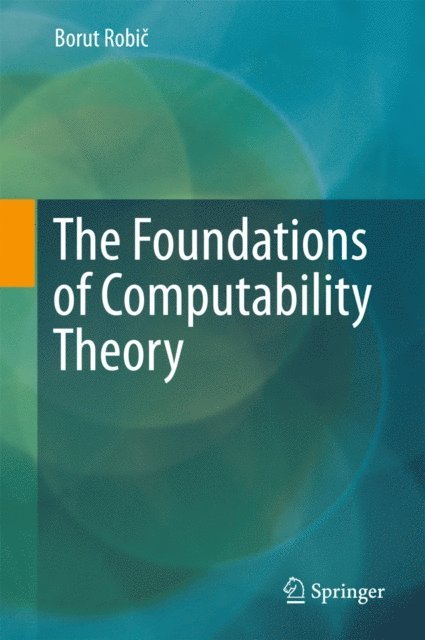
This book offers an original and informative view of the development of fundamental concepts of computability theory. The treatment is put into historical context, emphasizing the motivation for ideas as well as their logical and formal development. In Part I the author introduces computability theory, with chapters on the foundational crisis of mathematics in the early twentieth century, and formalism; in Part II he explains classical computability theory, with chapters on the quest for formalization, the Turing Machine, and early successes such as defining incomputable problems, c.e. (computably enumerable) sets, and developing methods for proving incomputability; in Part III he explains relative computability, with chapters on computation with external help, degrees of unsolvability, the Turing hierarchy of unsolvability, the class of degrees of unsolvability, c.e. degrees and the priority method, and the arithmetical hierarchy. This is a gentle introduction from the origins of computability theory up to current research, and it will be of value as a textbook and guide for advanced undergraduate and graduate students and researchers in the domains of computability theory and theoretical computer science.
1 064 kr
Skickas inom 10-15 vardagar
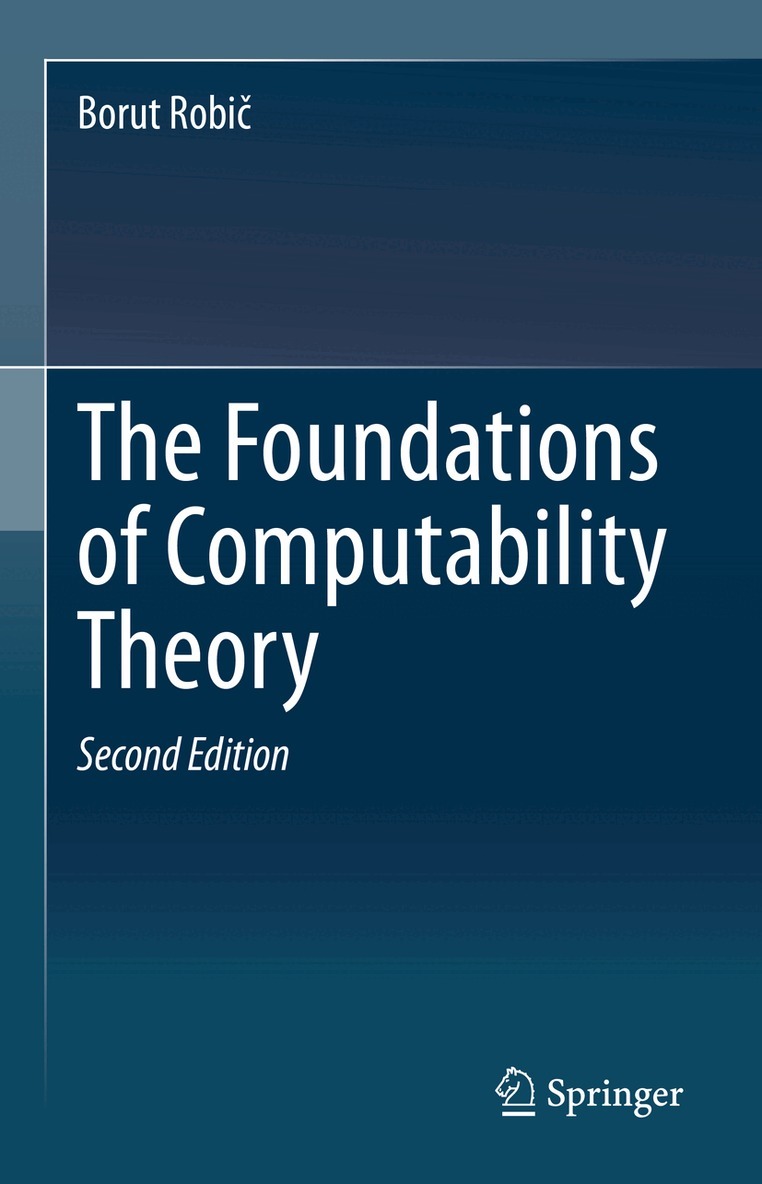
This book offers an original and informative view of the development of fundamental concepts of computability theory. The treatment is put into historical context, emphasizing the motivation for ideas as well as their logical and formal development. In Part I the author introduces computability theory, with chapters on the foundational crisis of mathematics in the early twentieth century, and formalism. In Part II he explains classical computability theory, with chapters on the quest for formalization, the Turing Machine, and early successes such as defining incomputable problems, c.e. (computably enumerable) sets, and developing methods for proving incomputability. In Part III he explains relative computability, with chapters on computation with external help, degrees of unsolvability, the Turing hierarchy of unsolvability, the class of degrees of unsolvability, c.e. degrees and the priority method, and the arithmetical hierarchy. Finally, in the new Part IV the author revisits thecomputability (Church-Turing) thesis in greater detail. He offers a systematic and detailed account of its origins, evolution, and meaning, he describes more powerful, modern versions of the thesis, and he discusses recent speculative proposals for new computing paradigms such as hypercomputing. This is a gentle introduction from the origins of computability theory up to current research, and it will be of value as a textbook and guide for advanced undergraduate and graduate students and researchers in the domains of computability theory and theoretical computer science.This new edition is completely revised, with almost one hundred pages of new material. In particular the author applied more up-to-date, more consistent terminology, and he addressed some notational redundancies and minor errors. He developed a glossary relating to computability theory, expanded the bibliographic references with new entries, and added the new part described above and other new sections.
747 kr
Skickas inom 10-15 vardagar
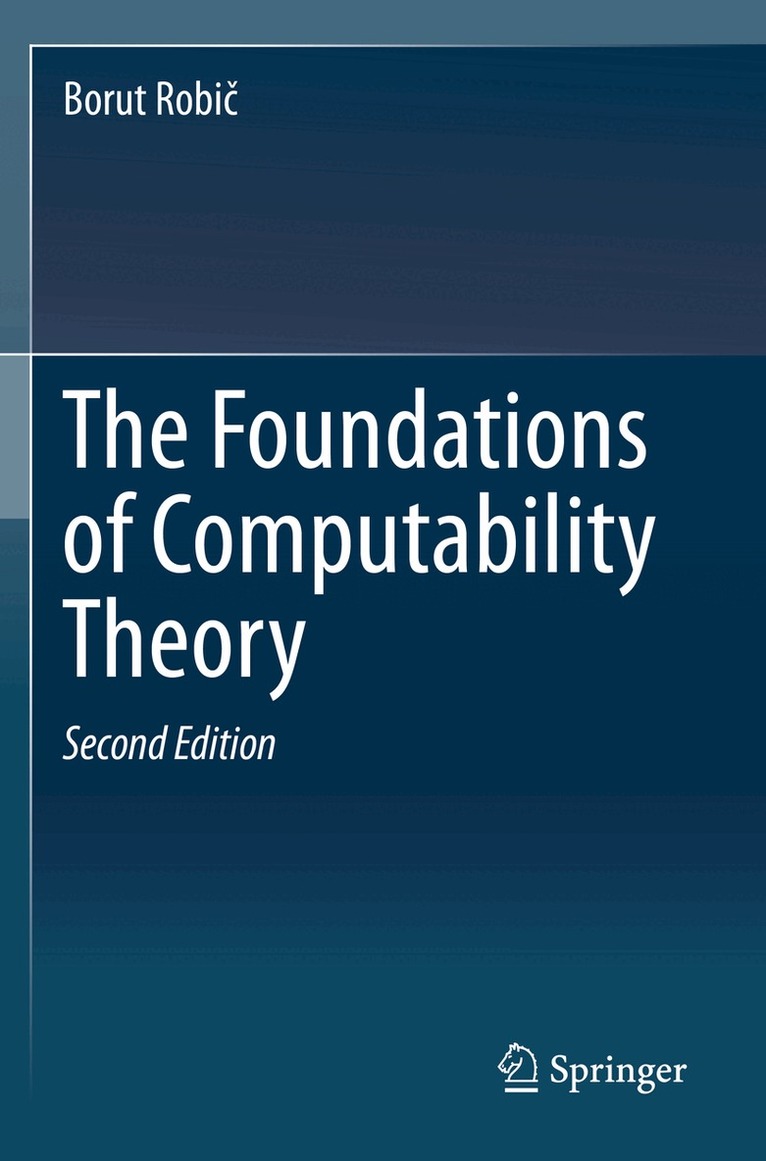
This book offers an original and informative view of the development of fundamental concepts of computability theory. The treatment is put into historical context, emphasizing the motivation for ideas as well as their logical and formal development. In Part I the author introduces computability theory, with chapters on the foundational crisis of mathematics in the early twentieth century, and formalism. In Part II he explains classical computability theory, with chapters on the quest for formalization, the Turing Machine, and early successes such as defining incomputable problems, c.e. (computably enumerable) sets, and developing methods for proving incomputability. In Part III he explains relative computability, with chapters on computation with external help, degrees of unsolvability, the Turing hierarchy of unsolvability, the class of degrees of unsolvability, c.e. degrees and the priority method, and the arithmetical hierarchy. Finally, in the new Part IV the author revisits thecomputability (Church-Turing) thesis in greater detail. He offers a systematic and detailed account of its origins, evolution, and meaning, he describes more powerful, modern versions of the thesis, and he discusses recent speculative proposals for new computing paradigms such as hypercomputing. This is a gentle introduction from the origins of computability theory up to current research, and it will be of value as a textbook and guide for advanced undergraduate and graduate students and researchers in the domains of computability theory and theoretical computer science.This new edition is completely revised, with almost one hundred pages of new material. In particular the author applied more up-to-date, more consistent terminology, and he addressed some notational redundancies and minor errors. He developed a glossary relating to computability theory, expanded the bibliographic references with new entries, and added the new part described above and other new sections.