• Fri frakt över 249 kr
  • •
  • Snabba leveranser
  • •
  • Billiga böcker
Kundservice

Du är på sajten för privatpersoner.

Företag, bibliotek eller offentlig verksamhet?

Du handlar på classic.bokus.com, där alla dina funktioner finns intakta.
Till classic.bokus.com
Bokus logotyp. Gå till startsidan.
  • Erbjudanden
  • Nyheter
  • Student
  • Topplistor
  • Barn & ungdom
  • Bokus Play
  • E-böcker
  • Pocketböcker
  • Spel & pussel

10% studentrabatt med kod TERM26

Sidfot

Mina sidor

    Hjälp

    • Kundservice
    • Vanliga frågor och svar
    • Frakt och leverans
    • Retur vid ångerrätt
    • Reklamera vara
    • Betalning
    • Köpvillkor
    • Allmänna villkor
    • Information om webbplatsens tillgänglighet

    Om Bokus

    • Om oss
    • Pressrum
    • För studenter
    • För företag
    • För bibliotek och offentlig verksamhet
    • För leverantörer
    • Hållbarhet

    Populärt

    • Aktuella erbjudanden
    • Presentkort
    • Studentlitteratur
    • Nya böcker
    • Topplistor
    • Signerade böcker
    • Engelska böcker

    Inspiration

    • Boktips
    • BookTok
    • Populära bokserier
    • Barnbokskaraktärer
    • Populära författare
    Logotyp för Bokus
    Följ oss på Facebook (extern länk)Följ oss på Instagram (extern länk)Följ oss på YouTube (extern länk)Följ oss på TikTok (extern länk)
    bokus @ CookiesAnpassa cookiesIntegritetspolicyKöpvillkor
    Till Citymail hemsida (extern länk)Till Budbee hemsida (extern länk)Till Postnord hemsida (extern länk)Till Schenker hemsida (extern länk)Till Early Bird hemsida (extern länk)Till Walleys hemsida (extern länk)
    1. Ekonomi och Ledarskap
    2. Nationalekonomi
    3. Miljöekonomi

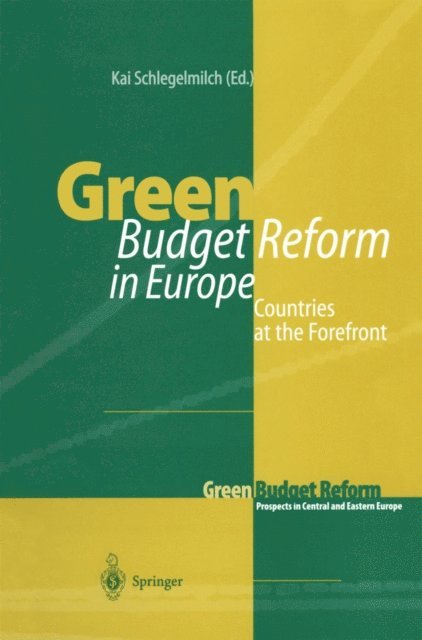
    Green Budget Reform in Europe

    Countries at the Forefront

    AvKai Schlegelmilch

    Häftad, Engelska, 2012

    505 kr

    Beställningsvara. Skickas inom 10-15 vardagar. Fri frakt över 249 kr.

    Beskrivning

    Budgets have a big influence on the economy and society. With many countries, about 50 percent of total expenditures and income pass through the budget via taxes, charges and expenditures. In recent years many countries, e. g. in the OECD and the EU, have tended to use this influence in an environmentally rational way. Tradi­ tional environmental policy has relied on command-and-control and cnd-olpipc technologies that have proven to be insufficient in coping with the challenge of glo­ bal change. Hence, many countries have started to investigate the environmental impacts of their budgets by looking at existing taxes and charges, as well as tax allowances and exemptions and other relevant regulations and expenditures -even to have a special impact on the environment. The implementation of those not meant such findings is now broadly discussed in these countries. This publication will contribute to the debate. It is a result of a wider project called Green Budget Reform -Prospects in Central and Eastern Europe. initiated by Vida Ogorelec Wagner, managing Director of Umanotera, The Sloven ian Founda­ tion for Sustainable Development, and then jointly developed. proposed to the EC and carried out in partnership with Kai Schlegelmich of the Wuppertal Institute in Germany. The project comprised an international seminar on Green Budget Reform in April 1997 at Lake Bled, Slovenia, and the Case Study of Sloveilla.

    Produktinformation

    • Utgivningsdatum:2012-11-13
    • Mått:155 x 235 x 26 mm
    • Vikt:721 g
    • Format:Häftad
    • Språk:Engelska
    • Antal sidor:443
    • Förlag:Springer-Verlag Berlin and Heidelberg GmbH & Co. KG
    • ISBN:9783642636769

    Utforska kategorier

    • Miljöekonomi inom Ekonomi och Ledarskap
    • Kemi inom Naturvetenskap och teknik
    • Miljö-, transport- och planeringsrätt inom Juridik

    Innehållsförteckning

    • I. Green Budget Reform in European Countries -Proceedings of the International Seminar, Slovenia, 1997.- I.1 Introduction to the Green Budget Reform Seminar.- I.2. Opportunities for Increased Use of Environmental Taxes and Charges in EU Member States and CEECs.- I.3. Green Budget Reform: Macroeconomic Impacts and Impacts on Innovation.- I.4. Empirical Assessment of an Energy Tax Proposal for Austria.- I.5. Cohesion Countries: Experience in Countries on the European Periphery.- I.6. Green Tax Reform in Denmark.- I.7. Green Tax Reforms: Some Experiences from Sweden.- I.8. Policies for a Better Environment and High Employment.- I.9. Report on the Concrete Steps of Green Budget/Tax Reform in the Netherlands -Retrospective and Outlook.- I.10. Ecological Tax Reform - What is Happening in Switzerland?.- I.11. Polish Experience with Environmental Fees, Fines and Taxes, and Simulations of Some Economic Effects of Elements of Green Tax Reform Using the Computable General Equilibrium Model.- I.12. Coordinating Environmental and Fiscal Policy in Hungary: Possibilities and Constraints.- I.13. Proposed Modifications to the 1997 State Budget Bill of Hungary Clean Air Action Group/Trade Union of Culture, presented by.- I.14. Economic Instruments and Environmental Funds for Environmental Policy in Central and Eastern Europe.- I.15. Subsidies and the Environment: What Subsidies and Tax Incentives Affect Production Decisions to the Detriment of the Environment.- I.16. Green Budget/Ecological Tax Reform Commissions.- II. Green Budget Reform in Slovenia Case Study Tanja Markovi?-Hribernik, Kai Schlegelmilch.- II.1. Studies on Green Budget Reform and their Relevance for Slovenia.- II.2. Instruments for the Protection of the Environment-i.a. Environmental Taxes.- II.4. Expenditures/Subsidies.- II.5. Concluding Recommendations.- References.- Exchange Rates.- Appendices.- Appendix I: Sales Tax Rates on Oil Derivates.- Appendix II: Subsidies for a Better Environment.- Appendix III: Subsidies Potentially Damaging the Environment.- Appendix IV: Guarantees.- Appendix V: New Approaches to Environmental Problems and the Particular Role Of SMEs.- Integrated Technology.- Least-Cost Planning/Demand-Side Management/Integrated Resource Planing Contracting.- Selling Services Instead of Products.- Small and Medium-Sized Enterprises (SME).- Appendix VI: Macroeconomic Circumstances.- State and Structure of the Economy.- Accession to the EU.- Appendix VII: Fiscal Policy.- Government Revenues.- Government Expenditures.- Fiscal Deficit.- Public Debt.- Labour Taxation.- Appendix VIII: State of Environment in Slovenia.- Sulphur Dioxide.- Nitrogen Oxides.- Carbon Dioxide/Energy.- Transport.- Agriculture.- Quality of Ground Water Standards.- Notes.