• Fri frakt över 249 kr
  • •
  • Snabba leveranser
  • •
  • Billiga böcker
Kundservice

Du är på sajten för privatpersoner.

Företag, bibliotek eller offentlig verksamhet?

Du handlar på classic.bokus.com, där alla dina funktioner finns intakta.
Till classic.bokus.com
Bokus logotyp. Gå till startsidan.
  • Erbjudanden
  • Student
  • Topplistor
  • Barn & ungdom
  • Bokus Play
  • E-böcker
  • Ljudböcker
  • Pocketböcker
  • Spel och pussel

Pocketfynda! Hundratals böcker för 49 kr/st →

Sidfot

Mina sidor

    Hjälp

    • Kundservice
    • Vanliga frågor och svar
    • Frakt och leverans
    • Retur vid ångerrätt
    • Reklamera vara
    • Betalning
    • Köpvillkor
    • Allmänna villkor
    • Information om webbplatsens tillgänglighet

    Om Bokus

    • Om oss
    • Pressrum
    • För studenter
    • För företag
    • För bibliotek och offentlig verksamhet
    • För leverantörer
    • Hållbarhet

    Populärt

    • Aktuella erbjudanden
    • Presentkort
    • Studentlitteratur
    • Nya böcker
    • Topplistor
    • Signerade böcker
    • Engelska böcker

    Inspiration

    • Boktips
    • BookTok
    • Barnbokskaraktärer
    • Populära författare
    Logotyp för Bokus
    Följ oss på Facebook (extern länk)Följ oss på Instagram (extern länk)Följ oss på YouTube (extern länk)Följ oss på TikTok (extern länk)
    bokus @ CookiesAnpassa cookiesIntegritetspolicyKöpvillkor
    Till Citymail hemsida (extern länk)Till Budbee hemsida (extern länk)Till Postnord hemsida (extern länk)Till Schenker hemsida (extern länk)Till Early Bird hemsida (extern länk)Till Walleys hemsida (extern länk)
    1. Medicin
    2. Medicin: allmänt

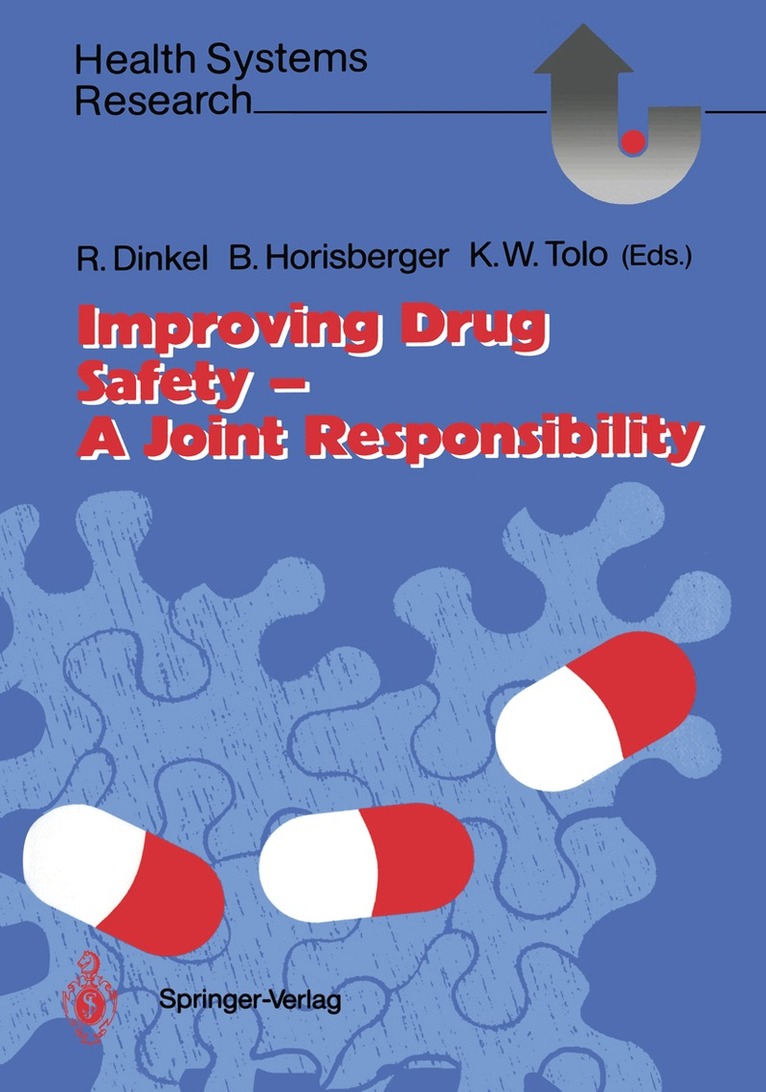
    Improving Drug Safety — A Joint Responsibility

    AvRolf Dinkel,Bruno Horisberger

    Häftad, Engelska, 2011

    Del i serien Health Systems Research

    1 662 kr

    Beställningsvara. Skickas inom 10-15 vardagar. Fri frakt över 249 kr.

    Beskrivning

    As the focus on pharmaceuticals has broadened from concern for their cost and effectiveness to their real and potential risks and benefits, a critical question has been raised: whose responsibility is it to improve drug safety? In April 1990, this question became the theme for a conference at Wolfsberg, Switzerland, near the shores of Lake Constance. Called an "international dialogue conference" by its organizers, the meeting brought together leaders from the pharmaceutical industry, regulatory authorities, academia, medicine, consumer organizations and the media. Opening addresses were given by representatives of the Council for International Organizations of Medical Sciences (CIOMS), the International Federation of Pharmaceutical Manufacturers Associations (IFPMA), the Swiss International Pharmaceutical Agency, and the RAD-AR Consortium. This book documents the papers presented and discussions held at this conference, which took the topic of risks and benefits of drug therapy one step further to responsibility. It includes a rich menu of issues for those who care about the evaluation of drug therapy, the ethics behind it, the expectations of the patient, and the role of traditional and nontraditional drug safety communica­ tions. The ideas expressed here come from different parts of the world but relate to common drug safety problems, observations, and scientific assessments; they provide insights into innovative approaches, cautious changes, and desired actions. The papers in this volume are broadly divided into conceptual perspectives (ethics, how the knowledge about drug risks and benefits is generated and appraised, the expectations in drug safety) and operational perspectives (communication, discussion, and action).

    Produktinformation

    • Utgivningsdatum:2011-09-26
    • Mått:170 x 242 x 20 mm
    • Vikt:623 g
    • Format:Häftad
    • Språk:Engelska
    • Serie:Health Systems Research
    • Antal sidor:338
    • Förlag:Springer-Verlag Berlin and Heidelberg GmbH & Co. KG
    • ISBN:9783642647628

    Utforska kategorier

    • Medicin: allmänt inom Medicin
    • Farmakologi inom Medicin

    Innehållsförteckning

    • I: The Wolfsberg Dialogue.- 1. From Questions to Missions and Actions.- 2. The RAD-AR Agenda.- II: Welcoming Addresses.- 3. Council for International Organizations of Medical Sciences.- 4. International Federation of Pharmaceutical Manufacturers Associations.- 5. Intercantonal Office for the Control of Medicines.- 6. RAD-AR Consortium.- III: Ethical Perspectives.- 7. The Discipline of Ethics.- 8. Ethics and Health.- 9. A Biomedical Ethical Perspective.- 10. Corporate Ethics.- 11. Discussion.- IV: Generating Knowledge About Drug Risks.- 12. Categories of Risk and Worldwide Resources.- 13. International Risk Assessment.- 14. Resources Needed for Risk Assessment.- V: Generating Knowledge About Drug Benefits.- 15. Quality of Life and Health Status: Innovative Outcome Variables for Research in Population Health.- 16. The Socioeconomic Evaluation of Medicines: A New Dimension.- 17. Expanding Measures of Benefit in Socioeconomic Studies.- VI: Assessing the Risk/Benefit Relationship.- 18. Challenges in Benefit/Risk Appraisal.- 19. Analysis and Synthesis of Adverse Drug Reaction Evidence.- 20. The Complexities of Assessment.- 21. A Review of the Regulatory Process in Japan.- 22. Postmarketing Surveillance in Japan: An Industry View.- 23. Distortions in Risk Assessment.- 24. Weighing Risk/Benefit Assessment: Views of a Swedish “Regulator”.- 25. Scientific Evaluations and Personal Judgments.- 26. Discussion.- VII: Expections in Drug Safety Communication.- 27. The Challenge of Communicating Drug Safety Information.- 28. The Media Perspective.- 29. The Culture of Weighing.- 30. Patient Package Inserts: Carriers of Consensus Information.- 31. The Patients’ View.- 32. Patient Motivation.- 33. Japans’s Other Drug Market: Exports via Tourists.- 34. Controlling Drug Safety:Making Cautious Changes.- 35. Discussion.- VIII: Experiences in Drug Safety Communication Through Traditional Channels.- 36. Principles, Experiences, and Desired Actions.- 37. Physician-Patient Communication and Decision Making.- 38. Problem-Oriented Drug Information Services.- IX: Responses Beyond Traditional Communication Channels.- 39. Manufacturer Standards for Communicating Risks and Benefits.- 40. Health Behavior Change via Community Education.- 41. Risk Perception: Analyzing Images and Fears.- 42. New Channels for the Patients.- 43. The Patients-in-the-Know Program.- 44. Information for the Public: A Swedish Example.- 45. Discussion.- X: RAD-AR Activities.- 46. International Overview.- 47. RAD-AR Council Japan.- XI: Reports and Recommendations from the Working Groups.- 48. Generating and Assessing Knowledge.- 49. Dialogue and Communication.- XII: Ethical Perspectives Revisited.- 50. Applying Ethics.- 51. Moral Common Sense.- 52. Guiding Principles.- XIII: An Agenda for Action.- 53. Future Directions.- 54. Wolfsberg Think Pieces.- 55. Bibliography.- 56. RAD-AR Bibliography.- 57. Curriculum Vitae of Authors and Editors.- 58. International Life Sciences Institute.- 59. International Medical Benefit/Risk Foundation — RAD-AR.- 60. Subject Index.