Häftad, Engelska, 2011
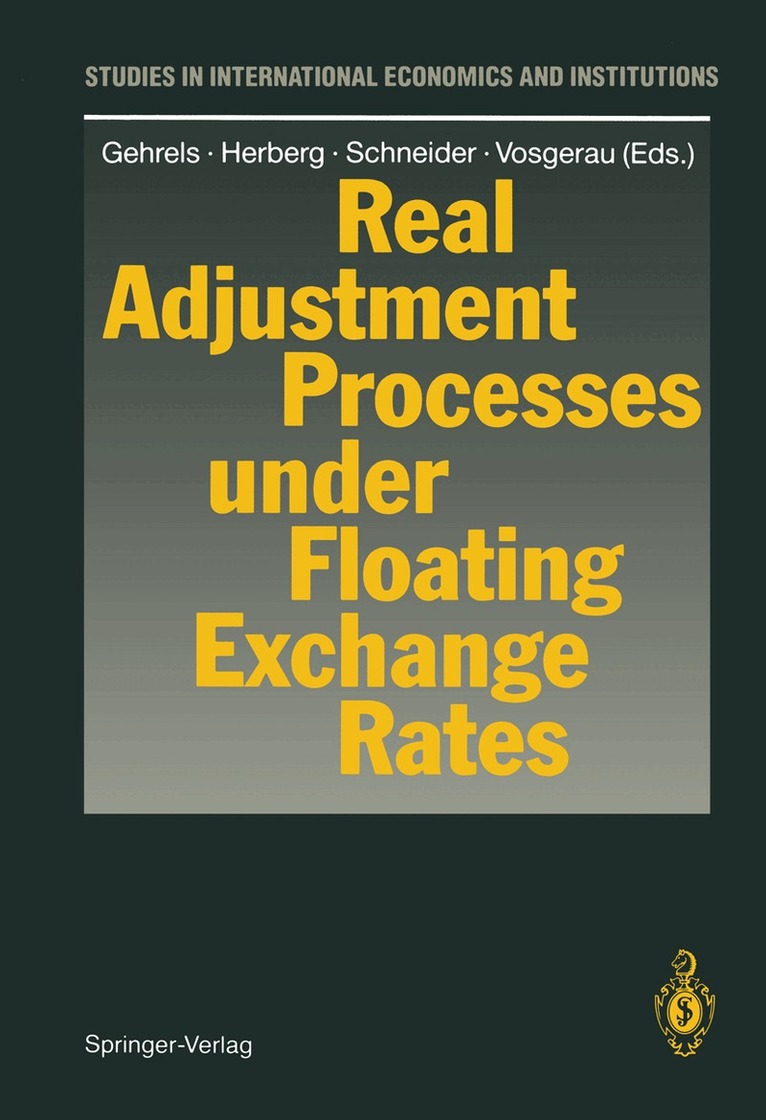
Real Adjustment Processes under Floating Exchange Rates
Av Franz Gehrels, Horst Herberg, Helmut Schneider, Hans-Jürgen Vosgerau
1128 kr
Beställningsvara. Skickas inom 10-15 vardagar. Fri frakt över 249 kr.
Beskrivning
Helmut Schneider 1. The Formulation of the Research Programme 1. In the late sixties the acceleration of US inflation revived the discussion of the fifties about the superiority of flexible exchange rates: The US balance of payments deteriorated since 1965, the dollar shortage after World War II changed to a dollar surplus. The import of US inflation by their main trading partners intensified political pressures so that at the beginning of the seventies most leading countries decided, contrary to the rules of the Bretton Woods agreement, to stop their intervention in the market for foreign exchange and to let the exchange rates be determined by market forces. It is worthwhile recalling that at that time one had only very limited experience with the regime of flexible exchange rates: The most important case, the floating of Canadian against the US dollar, could not be generalized to a world where nearly all important countries adhered to the regime of flexible exchange rates. ! - But one really had rich experience with destabilizing capital flows (or "hot money") that forced monetary authorities to adjust exchange rates in a system of managed flexibility to the expecta tions of "speculators".
Produktinformation
- Utgivningsdatum: 2011-12-15
- Mått: 170 x 244 x undefined mm
- Vikt: 542 g
- Format: Häftad
- Språk: Engelska
- Serie: Studies in International Economics and Institutions
- Antal sidor: 302
- Förlag: Springer-Verlag Berlin and Heidelberg GmbH & Co. KG
- ISBN: 9783642842009
Utforska kategorier
Betyg & recensioner
0 recensioner
Inga recensioner tillgängliga.