
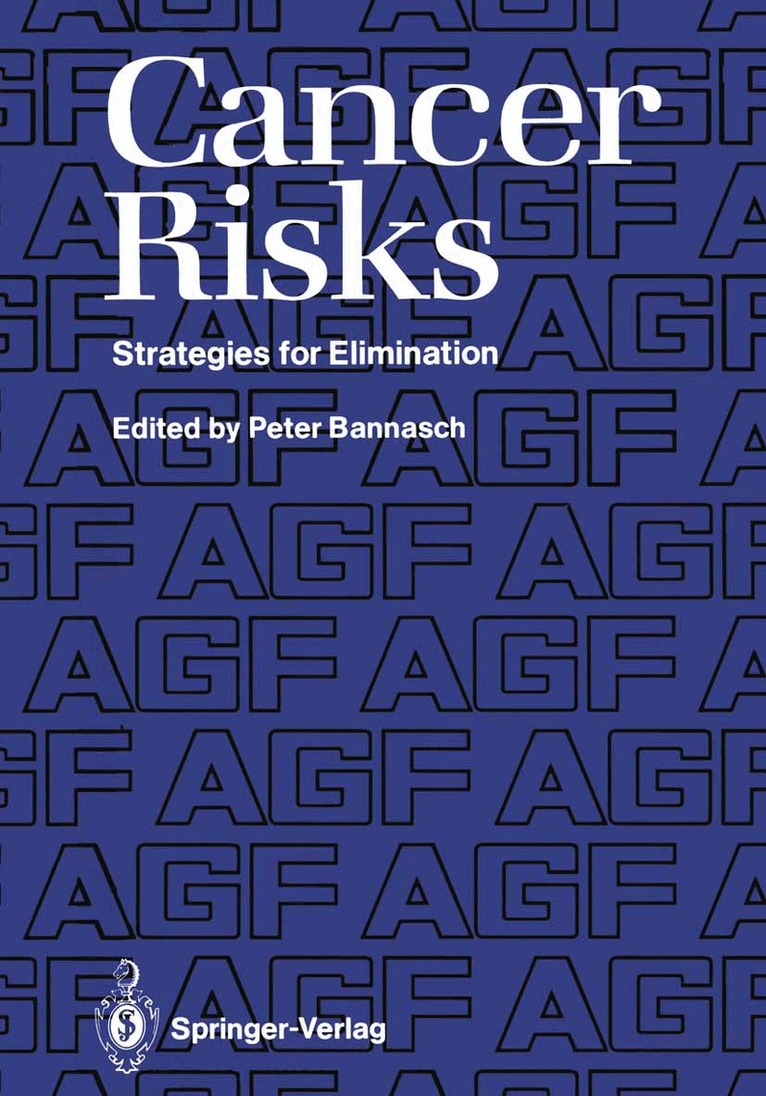
Cytoplasm of Hepatocytes during Carcinogenesis
Electron- and Lightmicroscopical Investigations of the Nitrosomorpholine-intoxicated Rat Liver
571 kr
Beställningsvara. Skickas inom 10-15 vardagar. Fri frakt över 249 kr.
Beskrivning
The transformation of a normal cell into a cancer cell is not a sudden but a slow continuous process which may take years. A systematic study of the morphological and structural changes that take place during this cellular transformation has only become possible since methods were developed to induce a high incidence of tumors in experimental animals. The growth of such tumors can be followed during all stages of their development. For several reasons, rat liver has proved to be particularly suitable. For more than thirty years it has been known that one can induce tumors in rat liver experimentally with many different substances. The azo dyes which were used originally (YOSHIDA, 1932; KINOSITA, 1937) have since been replaced by more potent carcinogens. The recently discovered nitrosamines, dimethylnitrosamine (MAGEE and BARNES, 1956), diethylnitrosamine (SCHMAHL et aI. , 1960) and N-nitrosomorpholine (DRUCKREY et aI. , 1961) should be mentioned in this context. Used in the proper dose, these carcinogens lead within a few months to the formation of multicentric hepatomas in practically 100 Ufo of the experimental animals, and are therefore a very useful tool for studies of the cytogenesis of cancer (see BUCHNER, 1961; GRUND MANN, 1961; GRUNDMANN and SIEBURG, 1962; OEHLERT and HARTJE, 1963; BAN NASCH and MULLER, 1964). The liver parenchyma as such offers a very big technical advantage because it consists of a rather homogenous cell population.
Produktinformation
Utforska kategorier
Innehållsförteckning
Hoppa över listan

Du kanske också är intresserad av
- 10% rabatt på allt
- 10% rabatt på allt
Del 3
- Signerad!
Del 3
- 10% rabatt på allt
Del 4