• Fri frakt över 249 kr
  • •
  • Snabba leveranser
  • •
  • Billiga böcker
Kundservice

Du är på sajten för privatpersoner.

Företag, bibliotek eller offentlig verksamhet?

Du handlar på classic.bokus.com, där alla dina funktioner finns intakta.
Till classic.bokus.com
Bokus logotyp. Gå till startsidan.
  • Erbjudanden
  • Nyheter
  • Student
  • Topplistor
  • Barn & ungdom
  • Bokus Play
  • E-böcker
  • Pocketböcker
  • Spel & pussel

10% rabatt på allt med kod: NYSTART10 →

Sidfot

Mina sidor

    Hjälp

    • Kundservice
    • Vanliga frågor och svar
    • Frakt och leverans
    • Retur vid ångerrätt
    • Reklamera vara
    • Betalning
    • Köpvillkor
    • Allmänna villkor
    • Information om webbplatsens tillgänglighet

    Om Bokus

    • Om oss
    • Pressrum
    • För studenter
    • För företag
    • För bibliotek och offentlig verksamhet
    • För leverantörer
    • Hållbarhet

    Populärt

    • Aktuella erbjudanden
    • Presentkort
    • Studentlitteratur
    • Nya böcker
    • Topplistor
    • Signerade böcker
    • Engelska böcker

    Inspiration

    • Boktips
    • BookTok
    • Populära bokserier
    • Barnbokskaraktärer
    • Populära författare
    Logotyp för Bokus
    Följ oss på Facebook (extern länk)Följ oss på Instagram (extern länk)Följ oss på YouTube (extern länk)Följ oss på TikTok (extern länk)
    bokus @ CookiesAnpassa cookiesIntegritetspolicyKöpvillkor
    Till Citymail hemsida (extern länk)Till Budbee hemsida (extern länk)Till Postnord hemsida (extern länk)Till Schenker hemsida (extern länk)Till Early Bird hemsida (extern länk)Till Walleys hemsida (extern länk)
    1. Psykologi och pedagogik
    2. Psykologi
    3. Arbetspsykologi
    • Nyhet

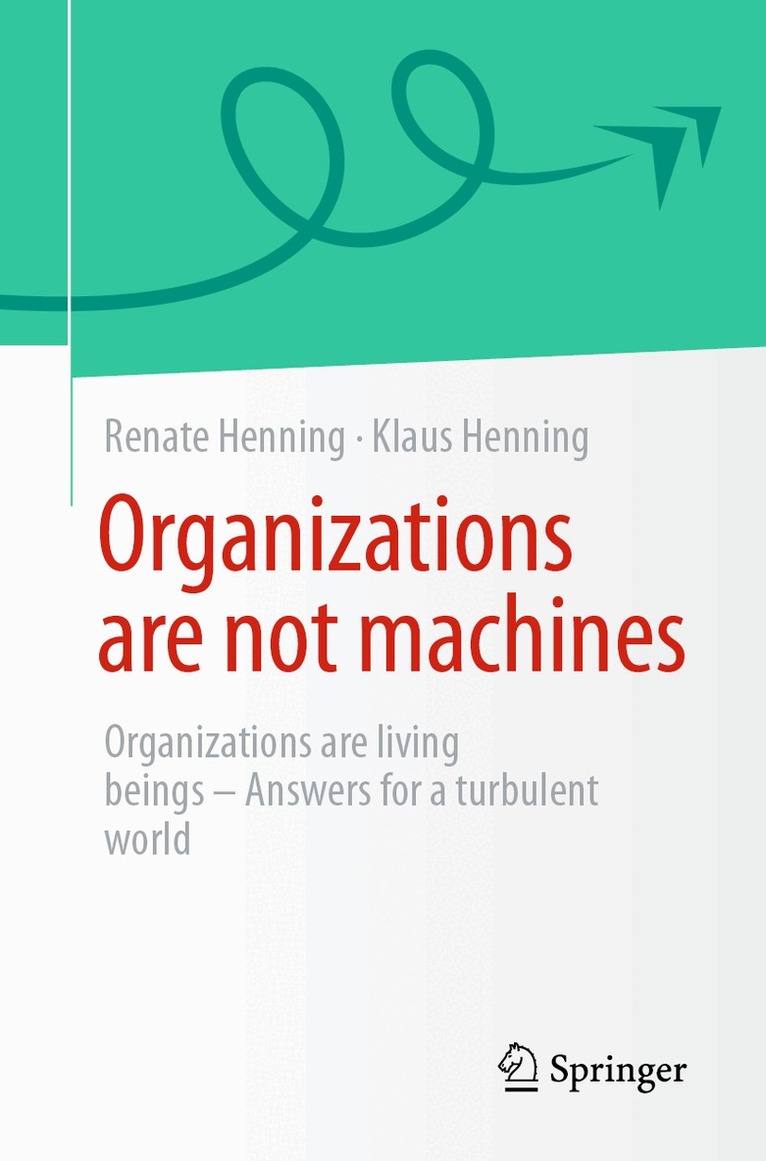
    Organizations are not Machines

    Organizations are Living Beings: Answers for a Turbulent World

    AvRenate Henning,Klaus Henning

    Häftad, Engelska, 2026

    426 kr

    Beställningsvara. Skickas inom 10-15 vardagar. Fri frakt över 249 kr.

    Beskrivning

    Growing complexity and dynamism characterize this world and most organizations. This book aims to provide a better understanding of the associated increase in turbulence of organizations and how to master it. It shows that organizations are not machines but should be understood and managed as living beings. The authors describe how this systemic way of thinking has been found in many disciplines since the mid-1940s and, as a cybernetic approach, is networked with biological, sociological, psychological, technical, and chaos theory approaches.

    Produktinformation

    • Utgivningsdatum:2026-07-31
    • Mått:155 x 235 x 9 mm
    • Vikt:236 g
    • Format:Häftad
    • Språk:Engelska
    • Antal sidor:119
    • Förlag:Springer-Verlag Berlin and Heidelberg GmbH & Co. KG
    • ISBN:9783662731161

    Utforska kategorier

    • Arbetspsykologi inom Psykologi och pedagogik

    Mer om författaren

    Dipl.-Päd. Renate Henning founded OSTO-Systemberatung GmbH in 1992. Shehas successfully handed over the company to the next generation, which uses theOSTO-system approach as the basis for her  consulting work in various companies.Today, she works as an independent consultant for companies, large hospitals, and public institutions.Prof. Dr.-Ing. Klaus Henning was a professor at RWTH Aachen University for 25 yearsand has supervised over 150 dissertations. Among other things, he was dean of theFaculty of Mechanical Engineering for several years, a member of the presidium of the Association of German Engineers and has been working as a consultant for complex transformation processes for decades.The authors have been working with organizations for many decades: many are looking for guidance on how to better understand and realign the complexity and dynamics of their specific business situation. In their consulting work, Renate and Klaus Henning use the OSTO system model, which they learned about from Heijo Rieckmann and have implemented and further developed in theory and practice together with many colleagues.

    Innehållsförteckning

    • Forwords.- 1. A world of growing turbulence.- Limits of perception and controllability.- 3. Dynaxibility - the ability to deal with dynaxity.- 4. Organizations between rationality and emotionality.- 6. How did the systemic understanding of organizations come about.- 7. Development of the OSTO system model as an orientation in dynaxity.