• Fri frakt över 249 kr
  • •
  • Snabba leveranser
  • •
  • Billiga böcker
Kundservice

Du är på sajten för privatpersoner.

Företag, bibliotek eller offentlig verksamhet?

Du handlar på classic.bokus.com, där alla dina funktioner finns intakta.
Till classic.bokus.com
Bokus logotyp. Gå till startsidan.
  • Erbjudanden
  • Nyheter
  • Student
  • Topplistor
  • Barn & ungdom
  • Bokus Play
  • E-böcker
  • Pocketböcker
  • Spel & pussel

10% rabatt på allt med kod NYSTART10 →

Sidfot

Mina sidor

    Hjälp

    • Kundservice
    • Vanliga frågor och svar
    • Frakt och leverans
    • Retur vid ångerrätt
    • Reklamera vara
    • Betalning
    • Köpvillkor
    • Allmänna villkor
    • Information om webbplatsens tillgänglighet

    Om Bokus

    • Om oss
    • Pressrum
    • För studenter
    • För företag
    • För bibliotek och offentlig verksamhet
    • För leverantörer
    • Hållbarhet

    Populärt

    • Aktuella erbjudanden
    • Presentkort
    • Studentlitteratur
    • Nya böcker
    • Topplistor
    • Signerade böcker
    • Engelska böcker

    Inspiration

    • Boktips
    • BookTok
    • Populära bokserier
    • Barnbokskaraktärer
    • Populära författare
    Logotyp för Bokus
    Följ oss på Facebook (extern länk)Följ oss på Instagram (extern länk)Följ oss på YouTube (extern länk)Följ oss på TikTok (extern länk)
    bokus @ CookiesAnpassa cookiesIntegritetspolicyKöpvillkor
    Till Citymail hemsida (extern länk)Till Budbee hemsida (extern länk)Till Postnord hemsida (extern länk)Till Schenker hemsida (extern länk)Till Early Bird hemsida (extern länk)Till Walleys hemsida (extern länk)
    1. Ekonomi och Ledarskap
    2. Nationalekonomi
    3. Mikroekonomi

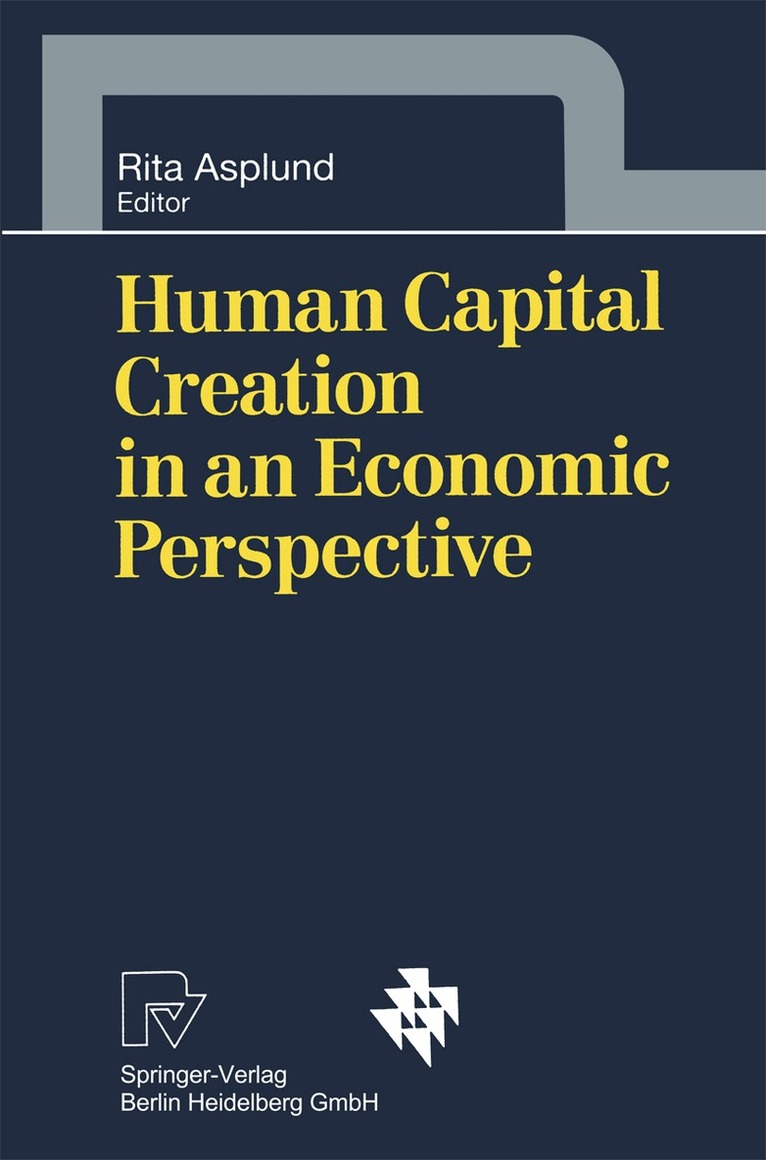
    Human Capital Creation in an Economic Perspective

    AvRita Asplund

    Häftad, Engelska, 1994

    563 kr

    Beställningsvara. Skickas inom 10-15 vardagar. Fri frakt över 249 kr.

    Beskrivning

    The past few decades have seen a revolutionary increase in interest in the economic role of education and training at the societal, business, and individual levels. This is mainly due to the strong post-war growth in industrialized economies, which has been driven by rapid technological progress and far-reaching structural change and, in the end, has resulted in increasingly skill-intensive production and growing demandfor more educated labour. Today it is frequently argued that with the increasing importance of the role of know-how, the workforce has become the most important single input in the production process. Simultaneously the dramatic increase in the availability of large micro-Ievel databases has opened enormous possibilities to study the economic role of human capital creation also empirically. The economic perspective of human capital accumulation is, however, of utmost importance also in times of deep economic recession. Periods of economic slowdown and rapidly increasing unemployment tend to in crease the demandfor advanced education and training in particular. This brings up, in turn, questions regarding overeducation and satisfying both private and social retums on investments in human capital.

    Produktinformation

    • Utgivningsdatum:1994-11-25
    • Mått:155 x 235 x 13 mm
    • Vikt:353 g
    • Format:Häftad
    • Språk:Engelska
    • Antal sidor:213
    • Förlag:Physica-Verlag GmbH & Co
    • ISBN:9783790808155

    Utforska kategorier

    • Mikroekonomi inom Ekonomi och Ledarskap

    Innehållsförteckning

    • 1 Introduction and Summary.- 2 Schooling, Learning and Worker Productivity.- 3 Human Capital and Earnings in the Nordic Countries.- 4 The Impact of Family Background on the Returns on and Length of Schooling in Sweden.- 5 Regional and Occupational Wage Differences — Evidence from Workers in Norwegian Manufacturing Industries.- 6 Workplace Skill Accumulation and its Impact on Earnings and Labor Mobility: The U.S. Experience.- 7 Trends in Lifelong Learning in Europe.- 8 Continuing Education and Schumpeterian Competition: Elements for a Theoretical Framework.- 9 Education, Competence Development and Economic Growth — A Microeconomic Explanation to Macroeconomic Growth.- 10 Uncertainty, Multivalence and Growth.