• Fri frakt över 249 kr
  • •
  • Snabba leveranser
  • •
  • Billiga böcker
Kundservice

Du är på sajten för privatpersoner.

Företag, bibliotek eller offentlig verksamhet?

Du handlar på classic.bokus.com, där alla dina funktioner finns intakta.
Till classic.bokus.com
Bokus logotyp. Gå till startsidan.
  • Erbjudanden
  • Nyheter
  • Student
  • Topplistor
  • Barn & ungdom
  • Bokus Play
  • E-böcker
  • Pocketböcker
  • Spel & pussel

10% rabatt på allt med kod: NYSTART10 →

Sidfot

Mina sidor

    Hjälp

    • Kundservice
    • Vanliga frågor och svar
    • Frakt och leverans
    • Retur vid ångerrätt
    • Reklamera vara
    • Betalning
    • Köpvillkor
    • Allmänna villkor
    • Information om webbplatsens tillgänglighet

    Om Bokus

    • Om oss
    • Pressrum
    • För studenter
    • För företag
    • För bibliotek och offentlig verksamhet
    • För leverantörer
    • Hållbarhet

    Populärt

    • Aktuella erbjudanden
    • Presentkort
    • Studentlitteratur
    • Nya böcker
    • Topplistor
    • Signerade böcker
    • Engelska böcker

    Inspiration

    • Boktips
    • BookTok
    • Populära bokserier
    • Barnbokskaraktärer
    • Populära författare
    Logotyp för Bokus
    Följ oss på Facebook (extern länk)Följ oss på Instagram (extern länk)Följ oss på YouTube (extern länk)Följ oss på TikTok (extern länk)
    bokus @ CookiesAnpassa cookiesIntegritetspolicyKöpvillkor
    Till Citymail hemsida (extern länk)Till Budbee hemsida (extern länk)Till Postnord hemsida (extern länk)Till Schenker hemsida (extern länk)Till Early Bird hemsida (extern länk)Till Walleys hemsida (extern länk)
    1. Ekonomi och Ledarskap
    2. Nationalekonomi
    3. Mikroekonomi

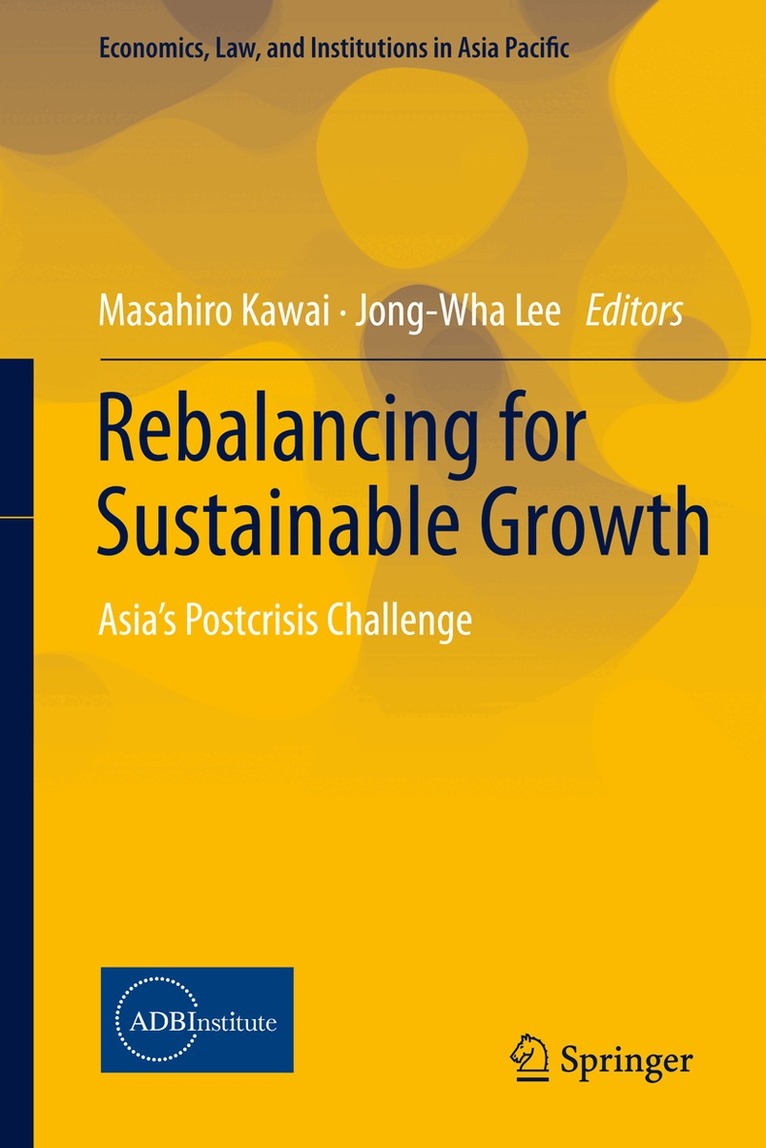
    Rebalancing for Sustainable Growth

    Asia’s Postcrisis Challenge

    AvMasahiro Kawai,Jong-Wha Lee

    Inbunden, Engelska, 2015

    Del i serien Economics, Law, and Institutions in Asia Pacific

    563 kr

    Beställningsvara. Skickas inom 10-15 vardagar. Fri frakt över 249 kr.

    Beskrivning

    The Asian model of export-led growth served it well in the post-war period, but prolonged sluggish growth of the developed economies following the global financial crisis, together with growing inequality and rising environmental problems, point to the need for a new growth model. The purpose of this book is to describe the challenges facing Asian economies in the post-global financial crisis environment and to identify structural issues and policies that can help guide Asian policymakers to expand the growth potential of domestic and regional demand in coming years, and thereby create a basis for balanced, sustainable, and inclusive long-term growth. These issues and policies span a variety of dimensions, including macroeconomic policy (monetary, fiscal, and foreign currency management), real sector issues (trade and industrial structure), infrastructure development, labor market and social policy, financial sector reform and regulation, and regional cooperation and architecture. Key recommendations to achieve these goals include measures to: deepen social protection to support social resilience; increase infrastructure investment to create a “seamless Asia”; enhance productivity in the services sector; establish a region-wide free trade agreement to encourage intraregional trade in goods and services and investment through economies of scale and dynamic efficiency of a larger market; promote a shift to a low-carbon society and support green growth; and deepen and integrate financial markets to facilitate the recycling of Asia’s high savings for investment within the region.

    Produktinformation

    • Utgivningsdatum:2015-05-18
    • Mått:155 x 235 x 21 mm
    • Vikt:594 g
    • Format:Inbunden
    • Språk:Engelska
    • Serie:Economics, Law, and Institutions in Asia Pacific
    • Antal sidor:266
    • Upplaga:2015
    • Förlag:Springer Verlag, Japan
    • ISBN:9784431553205

    Utforska kategorier

    • Mikroekonomi inom Ekonomi och Ledarskap

    Mer om författaren

    EditorsMasahiro Kawai is a project professor, Graduate School of Public Policy, University of Tokyo. Previously, he was dean and CEO of ADBI from 2007 through 2014 after serving as head of ADB’s Office of Regional Economic Integration. He was formerly a professor of economics at the University of Tokyo. He also served as deputy vice minister of finance for international affairs of Japan’s Ministry of Finance and chief economist for the World Bank’s East Asia and the Pacific region. He was a consultant at the Board of Governors of the Federal Reserve System and the International Monetary Fund and special research advisor at the Institute of Fiscal and Monetary Policy in Japan’s Ministry of Finance. He earned his PhD in economics from Stanford University.Jong-Wha Lee is a professor of Economics at Korea University, Seoul, Republic of Korea. Previously he was ADB’s Chief Economist and the chief spokesperson on economic forecasts and trends, oversaw the Economics and Research Department and was also head of ADB’s Office of Regional Economic Integration from 2007 to 2009. He has over 20 years of professional experience in economics and academia, and has published numerous books and journal articles in English and Korean, especially on topics relating to human capital, growth, financial crisis, and economic integration. He obtained his PhD and master’s degree in economics from Harvard University, and master’s and bachelor’s degrees in economics from Korea University.

    Innehållsförteckning

    • 1 Introduction and Overview (Masahiro Kawai and Jong-Wha Lee).- 2 Crisis Impacts (Yung Chul Park).- 3 Improving Macroeconomic Stability (Masahiro Kawai and Shinji Takagi).- 4 Rebalancing production (Willem Thorbecke, Biswa Nath Bhattacharyay, Hank Lim, Gloria Pasadilla, and Venkatachalam Anbumozhi).- 5 Enhancing Social Protection (Gloria O. Pasadilla and Bart W. Édes).- 6 Deepening the Financial System (David G. Mayes, Peter J. Morgan, and Hank Lim).- 7 Forging Regional Cooperation (Chalongphob Sussangkarn).- 8 Beyond the Crisis: Toward Balanced and Sustainable Growth (Masahiro Kawai and Jong-Wha Lee).