• Fri frakt över 249 kr
  • •
  • Snabba leveranser
  • •
  • Billiga böcker
Kundservice

Du är på sajten för privatpersoner.

Företag, bibliotek eller offentlig verksamhet?

Du handlar på classic.bokus.com, där alla dina funktioner finns intakta.
Till classic.bokus.com
Bokus logotyp. Gå till startsidan.
  • Erbjudanden
  • Nyheter
  • Student
  • Topplistor
  • Barn & ungdom
  • Bokus Play
  • E-böcker
  • Pocketböcker
  • Spel & pussel

10% rabatt på allt med kod: NYSTART10 →

Sidfot

Mina sidor

    Hjälp

    • Kundservice
    • Vanliga frågor och svar
    • Frakt och leverans
    • Retur vid ångerrätt
    • Reklamera vara
    • Betalning
    • Köpvillkor
    • Allmänna villkor
    • Information om webbplatsens tillgänglighet

    Om Bokus

    • Om oss
    • Pressrum
    • För studenter
    • För företag
    • För bibliotek och offentlig verksamhet
    • För leverantörer
    • Hållbarhet

    Populärt

    • Aktuella erbjudanden
    • Presentkort
    • Studentlitteratur
    • Nya böcker
    • Topplistor
    • Signerade böcker
    • Engelska böcker

    Inspiration

    • Boktips
    • BookTok
    • Populära bokserier
    • Barnbokskaraktärer
    • Populära författare
    Logotyp för Bokus
    Följ oss på Facebook (extern länk)Följ oss på Instagram (extern länk)Följ oss på YouTube (extern länk)Följ oss på TikTok (extern länk)
    bokus @ CookiesAnpassa cookiesIntegritetspolicyKöpvillkor
    Till Citymail hemsida (extern länk)Till Budbee hemsida (extern länk)Till Postnord hemsida (extern länk)Till Schenker hemsida (extern länk)Till Early Bird hemsida (extern länk)Till Walleys hemsida (extern länk)
    1. Medicin
    2. Klinisk medicin och internmedicin
    3. Sjukdomar och rubbningar
    4. Infektionssjukdomar och smittsamma sjukdomar

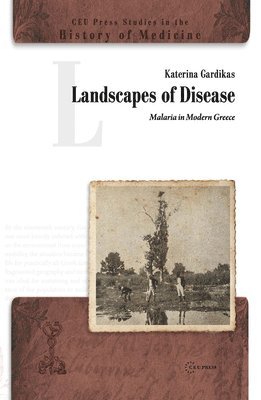
    Landscapes of Disease

    Malaria in Modern Greece

    AvKaterina Gardikas

    Inbunden, Engelska, 2017

    Del i serien CEU Press Studies in the History of Medicine

    1 929 kr

    Beställningsvara. Skickas inom 10-15 vardagar. Fri frakt över 249 kr.

    Beskrivning

    Malaria has existed in Greece since prehistoric times. Its prevalence fluctuated depending on climatic, socioeconomic and political changes. The book focuses on the factors that contributed to the spreading of the disease in the years between independent statehood in 1830 and the elimination of malaria in the 1970s. By the nineteenth century, Greece was the most malarious country in Europe and the one most heavily infected with its lethal form, falciparum malaria. Owing to pressures on the environment from economic development, agrarian colonization and heightened mobility, the situation became so serious that malaria became a routine part of everyday life for practically all Greek families, further exacerbated by wars. The country's highly fragmented geography and its variable rainfall distribution created an environment that was ideal for sustaining and spreading of diseases, which, in turn, affected the tolerance of the population to malaria.In their struggle with physical suffering and death, the Greeks developed a culture of avid quinine consumption and were likewise eager to embrace the DDT spraying campaign of the immediate post WW II years, which, overall, had a positive demographic effect.

    Produktinformation

    • Utgivningsdatum:2017-11-15
    • Mått:236 x 166 x 25 mm
    • Vikt:610 g
    • Format:Inbunden
    • Språk:Engelska
    • Serie:CEU Press Studies in the History of Medicine
    • Antal sidor:220
    • Förlag:Central European University Press
    • ISBN:9786155211980

    Utforska kategorier

    • Infektionssjukdomar och smittsamma sjukdomar inom Medicin
    • Medicinhistoria inom Medicin

    Mer om författaren

    Katerina Gardikas is associate professor at the Department of History at the National and Kapodistrian University of Athens

    Recensioner i media

    "The multidisciplinary and interdisciplinary approach adopted by Gardikas’s study is a strength. Expertly bridging the natural and social sciences and operating within a proper historical context, the central question of this study, as stated in the introduction, 'is how malaria interacted with the new social and economic realities that emerged in Greece after independence.' The quality of the microlevel analysis and the sensitivity to the complexity, diversity, and variability of local conditions (climatic, ecological, geographic, and socioeconomic) is one of the most impressive features of this book. Gardikas’s work effectively demonstrates the centrality of malaria in the story of modern Greece and provides further evidence of disease as a central feature of the human experience, both historically and today."

    Innehållsförteckning

    • List of TablesList of FiguresList of MapsAcknowledgementsIntroductionChapter 1: Malaria: An Ancient and Global DiseaseChapter 2: The Fragmented Geography of the DiseaseChapter 3: Malaria in Peace and WarChapter 4: Patients, Doctors, and CuresConclusionAppendicesBibliographyIndex