• Fri frakt över 249 kr
  • •
  • Snabba leveranser
  • •
  • Billiga böcker
Kundservice

Du är på sajten för privatpersoner.

Företag, bibliotek eller offentlig verksamhet?

Du handlar på classic.bokus.com, där alla dina funktioner finns intakta.
Till classic.bokus.com
Bokus logotyp. Gå till startsidan.
  • Erbjudanden
  • Nyheter
  • Student
  • Topplistor
  • Barn & ungdom
  • Bokus Play
  • E-böcker
  • Pocketböcker
  • Spel & pussel

10% rabatt på allt med kod: NYSTART10 →

Sidfot

Mina sidor

    Hjälp

    • Kundservice
    • Vanliga frågor och svar
    • Frakt och leverans
    • Retur vid ångerrätt
    • Reklamera vara
    • Betalning
    • Köpvillkor
    • Allmänna villkor
    • Information om webbplatsens tillgänglighet

    Om Bokus

    • Om oss
    • Pressrum
    • För studenter
    • För företag
    • För bibliotek och offentlig verksamhet
    • För leverantörer
    • Hållbarhet

    Populärt

    • Aktuella erbjudanden
    • Presentkort
    • Studentlitteratur
    • Nya böcker
    • Topplistor
    • Signerade böcker
    • Engelska böcker

    Inspiration

    • Boktips
    • BookTok
    • Populära bokserier
    • Barnbokskaraktärer
    • Populära författare
    Logotyp för Bokus
    Följ oss på Facebook (extern länk)Följ oss på Instagram (extern länk)Följ oss på YouTube (extern länk)Följ oss på TikTok (extern länk)
    bokus @ CookiesAnpassa cookiesIntegritetspolicyKöpvillkor
    Till Citymail hemsida (extern länk)Till Budbee hemsida (extern länk)Till Postnord hemsida (extern länk)Till Schenker hemsida (extern länk)Till Early Bird hemsida (extern länk)Till Walleys hemsida (extern länk)
    1. Djur och Natur
    2. Naturböcker
    3. Växtböcker

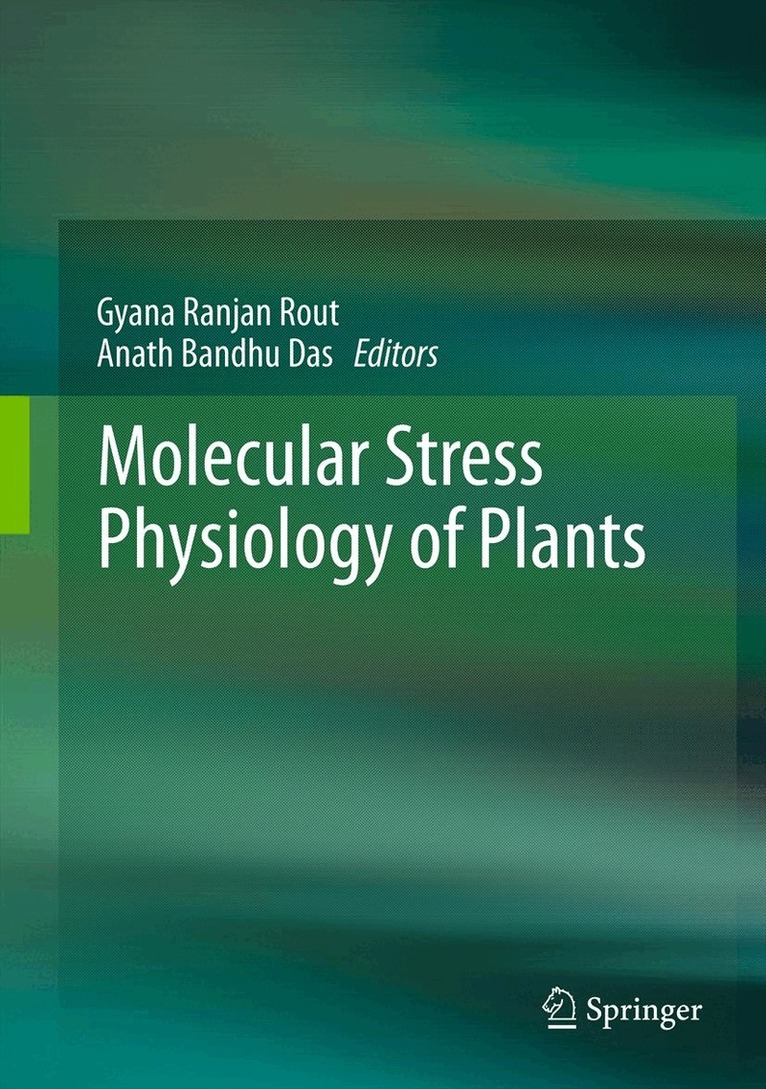
    Molecular Stress Physiology of Plants

    AvGyana Ranjan Rout,Anath Bandhu Das

    Inbunden, Engelska, 2013

    2 165 kr

    Beställningsvara. Skickas inom 10-15 vardagar. Fri frakt över 249 kr.

    Beskrivning

    Crop growth and production is dependent on various climatic factors. Both abiotic and biotic stresses have become an integral part of plant growth and development. There are several factors involved in plant stress mechanism. The information in the area of plant growth and molecular mechanism against abiotic and biotic stresses is scattered. The up-to-date information with cited references is provided in this book in an organized way. More emphasis has been given to elaborate the injury and tolerance mechanisms and growth behavior in plants against abiotic and biotic stresses. This book also deals with abiotic and biotic stress tolerance in plants, molecular mechanism of stress resistance of photosynthetic machinery, stress tolerance in plants: special reference to salt stress - a biochemical and physiological adaptation of some Indian halophytes, PSII fluorescence techniques for measurement of drought and high temperature stress signal in crop plants: protocols and applications, salicylic acid: role in plant physiology & stress tolerance, salinity induced genes and molecular basis of salt tolerance mechanism in mangroves, reproductive stage abiotic stress tolerance in cereals, calorimetry and Raman spectrometry to study response of plant to biotic and abiotic stresses, molecular physiology of osmotic stress in plants and mechanisms, functions and toxicity of heavy metals stress in plants, submergence stress tolerance in plants and adoptive mechanism, Brassinosteroid modulated stress responses under temperature stress, stress tolerant in plants: a proteomics approach, Marker-assisted breeding for stress resistance in crop plants, DNA methylation associated epigenetic changes in stress tolerance of plants and role of calcium-mediated CBL-CIPK network in plant mineral nutrition & abiotic stress. Each chapter has been laid out with introduction, up-to-date literature, possible stress mechanism, and applications. Under abiotic stress, plant produces a large quantity of free radicals, which have been elaborated. We hope that this book will be of greater use for the post-graduate students, researchers, physiologist and biotechnologist to sustain the plant growth and development.

    Produktinformation

    • Utgivningsdatum:2013-02-20
    • Mått:178 x 254 x 30 mm
    • Vikt:1 056 g
    • Format:Inbunden
    • Språk:Engelska
    • Antal sidor:440
    • Upplaga:2013
    • Förlag:Springer, India, Private Ltd
    • ISBN:9788132208068

    Utforska kategorier

    • Växtböcker inom Djur och Natur
    • Botanik inom Naturvetenskap och teknik

    Mer om författaren

    Prof. Gyana Ranjan Rout is the Head of Department of Agricultural Biotechnology, Orissa University of Agriculture & Technology, Bhubaneswar, India. Prof. Rout has worked in various aspects of plant sciences for over 25 years. He has made significant contributions in the field of plant improvement and propagation of various plant species, heavy metal toxicity and its tolerant mechanism, reclamation of mine through phytoremediation and DNA fingerprinting. Prof. Rout was elected as a Fellow of National Academy of Sciences, India (FNASc) in 1999 in the field of Plant Biotechnology and Molecular Biology. He is awarded Samanta Chandra Shekhar award in 2005 honored by Orissa Bigyan Academy, Govt. of Odisha, for contributions to Life Sciences. Prof. Rout has 25 years of research and teaching experience in the field of plant biotechnology and heavy metal stress mechanism. He has published 175 research papers and 16 review chapters published in national and international peer reviewed journals and 20 book chapters in contributory volumes. He has also been a Principal Investigator of 10 major research projects funded by ICAR, DBT and NMPB. Dr. Anath Bandhu is a Associate Professor in Department of Agricultural Biotechnology, Orissa University of Agriculture and Technology, Bhubaneswar, Odisha, India. Dr. Das has worked assiduously in various aspects of plant sciences for over 26 years. He has made significant contributions in the field of cytotaxonomy, cytometry, DNA fingerprinting and molecular physiology in various groups of medicinal plants, mangroves, cacti, orchids and sweet gourd. He has reported for the first time chromosome number, karyotype and genome size in ~350 species of angiosperms, especially on Indian mangroves that underpinned mining of de novo genomic diversity in diploids and polyploids. Molecular phylogeny of mangroves using various DNA markers resolved many discrepancies in taxonomic classifications. He is also working in molecular basis of high salt adaptation of secretor and non-secretor mangroves to find out salt stress resistant gene. His work on salt stress on mangroves has generated interest to study these fascinating processes of molecular physiology in other laboratories as evidenced by extensive citation of his work. He has published more than 150 research papers in international journals, 2 books, 10 book chapters, 10 review articles. Dr. Das is honored with Hiralal Chakrabarty Award of ISCA and Samanta Chandra Sekhar award by Orissa Bigya Academy and recipient of DBT Overseas and National Associateships, Govt. of India; RI-LAT Fellowship (UK), MIF Fellowship (Japan).

    Innehållsförteckning

    • 1.Title: Abiotic and biotic stress tolerance in plants.- 2.Title: Molecular Mechanism of stress-resistance of photosynthetic machinery.- 3.Title: Salinity induced genes and molecular basis of salt tolerance strategies in mangroves.- 4.Title: PSII fluorescence techniques for measurement of drought and high temperature stress signal in crop plants: protocols and applications.- 5.Title: Salt tolerance in cereals: Molecular mechanism and applications.- 6.Title: Salt stress: A biochemical and physiological adaptation of some Indian halophytes of Sundarbans.- 7.Title: Molecular physiology of osmotic stress in plants.- 8.Title: The physiology of reproductive - stage abiotic stress tolerance in cereals.- 9.Title: Salicylic acid: role in plant physiology and stress tolerance.- 10.Title: Role of calcium-mediated CBl-CIPK network in plant mineral nutrition and abiotic stress.- 11.Title: Isothermal calorimetry and Raman spectroscopy to study response of plants to abiotic and biotic stress.- 12. Title: Mechanism of plant tolerance in response to heavy metals.- 13.Title: Brassinosteroids - Biosynthesis and role in growth development and thermo tolerance responses.- 14.Title: Submergence stress tolerance in crop plants.- 15. Title: Stress tolerance in plants: a proteomics approach.-16.Title: Marker-Assisted Breeding (MBA for stress resistance in crop plants.- 17.Title: DNA Methylation Associated Epigenetic Changes in Stress Tolerance of Plants.