• Fri frakt över 249 kr
  • •
  • Snabba leveranser
  • •
  • Billiga böcker
Kundservice

Du är på sajten för privatpersoner.

Företag, bibliotek eller offentlig verksamhet?

Du handlar på classic.bokus.com, där alla dina funktioner finns intakta.
Till classic.bokus.com
Bokus logotyp. Gå till startsidan.
  • Erbjudanden
  • Nyheter
  • Student
  • Topplistor
  • Barn & ungdom
  • Bokus Play
  • E-böcker
  • Pocketböcker
  • Spel & pussel

10% rabatt på allt med kod: NYSTART10 →

Sidfot

Mina sidor

    Hjälp

    • Kundservice
    • Vanliga frågor och svar
    • Frakt och leverans
    • Retur vid ångerrätt
    • Reklamera vara
    • Betalning
    • Köpvillkor
    • Allmänna villkor
    • Information om webbplatsens tillgänglighet

    Om Bokus

    • Om oss
    • Pressrum
    • För studenter
    • För företag
    • För bibliotek och offentlig verksamhet
    • För leverantörer
    • Hållbarhet

    Populärt

    • Aktuella erbjudanden
    • Presentkort
    • Studentlitteratur
    • Nya böcker
    • Topplistor
    • Signerade böcker
    • Engelska böcker

    Inspiration

    • Boktips
    • BookTok
    • Populära bokserier
    • Barnbokskaraktärer
    • Populära författare
    Logotyp för Bokus
    Följ oss på Facebook (extern länk)Följ oss på Instagram (extern länk)Följ oss på YouTube (extern länk)Följ oss på TikTok (extern länk)
    bokus @ CookiesAnpassa cookiesIntegritetspolicyKöpvillkor
    Till Citymail hemsida (extern länk)Till Budbee hemsida (extern länk)Till Postnord hemsida (extern länk)Till Schenker hemsida (extern länk)Till Early Bird hemsida (extern länk)Till Walleys hemsida (extern länk)
    1. Samhälle och politik
    2. Sociologi och antropologi
    3. Antropologi

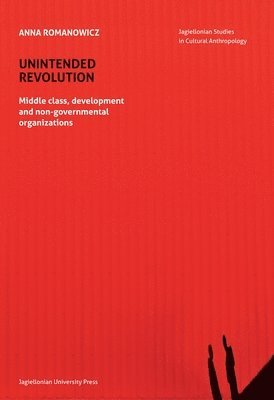
    Unintended Revolution – Middle Class, Development, and Non–Governmental Organizations

    AvAnna Romanowicz

    Häftad, Engelska, 2018

    374 kr

    Beställningsvara. Skickas inom 5-8 vardagar. Fri frakt över 249 kr.

    Beskrivning

    Unintended Revolution describes the ways in which development performed in and by nongovernmental organizations in an Indian metropolis serves as a tool for reinforcing and improving social standing. Anna Romanowicz argues that the NGO environment gives a particular opportunity to middle class members whose cultural and economic capital are (re)produced in such an environment. She concludes that the ineffectiveness of development lies in the interest of this group and as such reflects neoliberal policies more broadly. She also argues that class status is the most important factor in acquiring a job position in a contemporary NGO, and that this cuts across gender, caste, and nationality, as well as other identities.

    Produktinformation

    • Utgivningsdatum:2018-03-06
    • Mått:161 x 234 x 11 mm
    • Vikt:296 g
    • Format:Häftad
    • Språk:Engelska
    • Antal sidor:188
    • Förlag:Uniwersytet Jagiellonski, Wydawnictwo
    • ISBN:9788323342380

    Utforska kategorier

    • Antropologi inom Samhälle och politik

    Mer om författaren

    Anna Romanowicz is assistant professor in the Department of Ethnology and Cultural Anthropology at the Jagiellonian University. Her research interests include class analysis, nongovernmental organizations, women’s rights, and anthropology of development and globalization.

    Recensioner i media

    An extremely important study with a provocative argument on class and development. . . . A significant new addition to existing studies in class theory and the literature on postdevelopment studies. The book demonstrates that practices of development and women’s empowerment are not some faceless discourses. Actors involved in the discourses of development and empowerment carry forward the logic of contemporary capitalism. NGOs are complicit in the expansion of capital in the neoliberal era. In a compelling combination of useful theory and literature and enlightening personal anecdote, this book is remarkably readable. Anna Romanowicz’s Unintended Revolution promises to become an indispensable book for anyone who wants to understand the class dimension and the roles of social and cultural capital used to work in the areas of women’s empowerment and development.