• Fri frakt över 249 kr
  • •
  • Snabba leveranser
  • •
  • Billiga böcker
Kundservice

Du är på sajten för privatpersoner.

Företag, bibliotek eller offentlig verksamhet?

Du handlar på classic.bokus.com, där alla dina funktioner finns intakta.
Till classic.bokus.com
Bokus logotyp. Gå till startsidan.
  • Erbjudanden
  • Nyheter
  • Student
  • Topplistor
  • Barn & ungdom
  • Bokus Play
  • E-böcker
  • Pocketböcker
  • Spel & pussel

10% rabatt på allt med kod: NYSTART10 →

Sidfot

Mina sidor

    Hjälp

    • Kundservice
    • Vanliga frågor och svar
    • Frakt och leverans
    • Retur vid ångerrätt
    • Reklamera vara
    • Betalning
    • Köpvillkor
    • Allmänna villkor
    • Information om webbplatsens tillgänglighet

    Om Bokus

    • Om oss
    • Pressrum
    • För studenter
    • För företag
    • För bibliotek och offentlig verksamhet
    • För leverantörer
    • Hållbarhet

    Populärt

    • Aktuella erbjudanden
    • Presentkort
    • Studentlitteratur
    • Nya böcker
    • Topplistor
    • Signerade böcker
    • Engelska böcker

    Inspiration

    • Boktips
    • BookTok
    • Populära bokserier
    • Barnbokskaraktärer
    • Populära författare
    Logotyp för Bokus
    Följ oss på Facebook (extern länk)Följ oss på Instagram (extern länk)Följ oss på YouTube (extern länk)Följ oss på TikTok (extern länk)
    bokus @ CookiesAnpassa cookiesIntegritetspolicyKöpvillkor
    Till Citymail hemsida (extern länk)Till Budbee hemsida (extern länk)Till Postnord hemsida (extern länk)Till Schenker hemsida (extern länk)Till Early Bird hemsida (extern länk)Till Walleys hemsida (extern länk)
    1. Naturvetenskap och teknik
    2. Teknik och industri
    3. Energiteknik

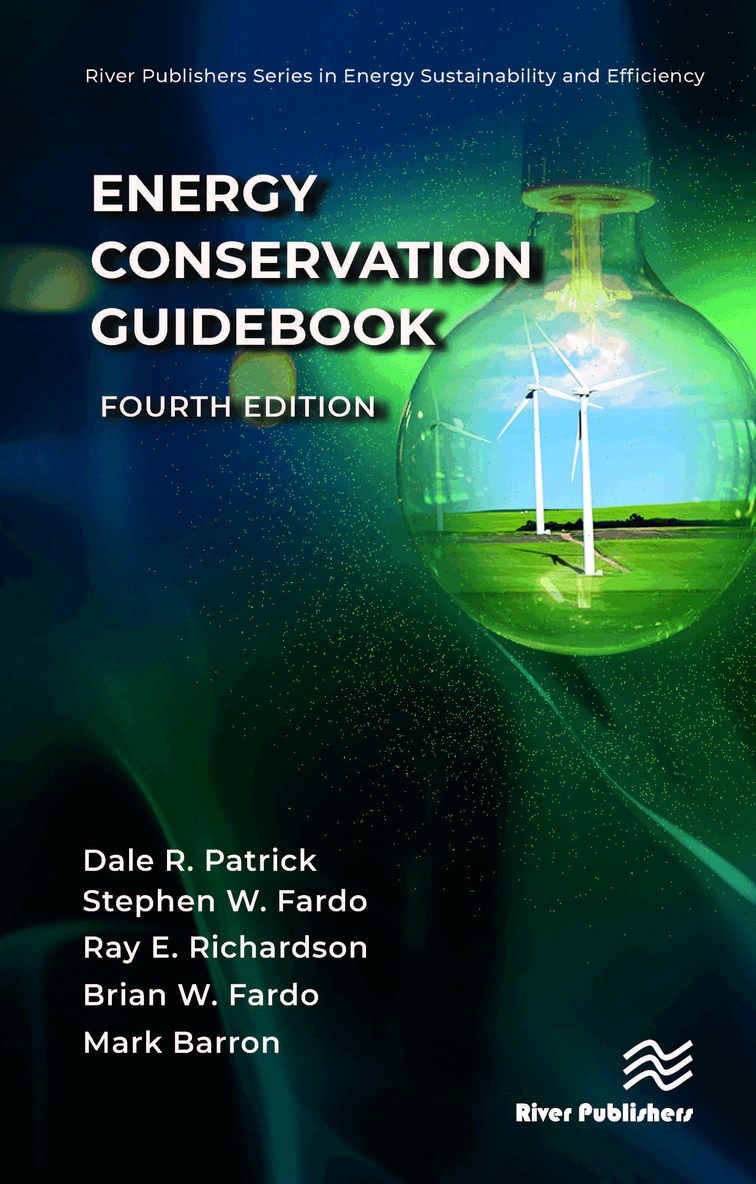
    Energy Conservation Guidebook

    AvDale R. Patrick,Stephen W. Fardo

    Inbunden, Engelska, 2023

    Del i serien River Publishers Series in Energy Sustainability and Efficiency

    1 902 kr

    Beställningsvara. Skickas inom 10-15 vardagar. Fri frakt över 249 kr.

    Beskrivning

    Efficient energy management and effective conservation procedures have been very important considerations for our society for many years. An oil embargo in the 1970s and early 1980s brought about a new awareness of energy conservation. Because of various factors like loss of tax credits and efficiency standards imposed by the government, public interest dropped considerably in regard to energy conservation. A revival in energy conservation among the general public occurred following the Persian Gulf War in the early 1990s.What does the 21st century hold? Conflicts in the Middle East, high prices for petroleum, and increasing population worldwide will all be significant influences on energy and its conservation. Considerable discussion of climate change, global warming, and increased concerns in regard to our electricity supply have provided motivation for building energy demand to be more flexible. Energy Management and Conservation, Fourth Edition, provides a very practical discussion of how energy can be managed and saved in most types of buildings. This edition not only updates the previous edition but adds updated content concerning energy cost reduction/going green to improve the environment. The authors of this book have written several books that use the systems approach. Through the use of the systems approach, the reader will be able to grasp how different parts of a building fit together to form a unit that uses energy efficiently. This text provides a thorough and practical discussion of the operation of systems that are found in most types of buildings. Each system is discussed with energy management and conservation in mind/going green to save money and improve the environment. There are many ways to manage a building to accomplish efficient energy conservation. Several of the chapters have checklists at the end to summarize ways of conserving energy that relate to the chapter.Important changes in this edition include coverage of governmental requirements from agencies such as Environmental Protection Agency (EPA), United States Department of Energy (USDOE), and American Society of Refrigerating, Heating and Air-Conditioning Engineering (ASHRAE), updated as of 2022 standards. Instrumentation updates include types of sensors and the concept of "smart" devices such as meters. Addition of computer building maintenance management systems and new updates for renewable energy resources are included. Enhancements to existing systems content (such as variable frequency drives for pumps) have been carefully added.

    Produktinformation

    • Utgivningsdatum:2023-12-14
    • Mått:156 x 234 x 33 mm
    • Vikt:1 020 g
    • Format:Inbunden
    • Språk:Engelska
    • Serie:River Publishers Series in Energy Sustainability and Efficiency
    • Antal sidor:490
    • Upplaga:4
    • Förlag:River Publishers
    • ISBN:9788770229579

    Utforska kategorier

    • Energiteknik inom Naturvetenskap och teknik
    • Maskinteknik och material inom Naturvetenskap och teknik

    Mer om författaren

    Dale R. Patrick served as a Professor in the Department of Applied Engineering and Technology at Eastern Kentucky University. His experience includes teaching and organizing laboratory classes in electrical engineering/electronics technology for many years. He completed Bachelor of Science and Graduate Degrees at Indiana State University. His experience also includes research projects, technical teacher training, and energy consulting for business and industry. He and Dr. Fardo have co-authored over 30 textbooks and laboratory manuals.Stephen W. Fardo is currently a Foundation Professor in the Department of Applied Engineering and Technology at Eastern Kentucky University. His experience includes teaching and organizing laboratory classes in electrical engineering/electronics technology for many years and coordinating/advising technical teacher programs for the State of Kentucky. He completed Bachelor of Science, Master of Science and Doctoral Degrees at Eastern Kentucky University and University of Kentucky. His experience also includes research projects, technical teacher education, and energy consulting for business and industry. He and Dale Patrick have co-authored over 30 textbooks and laboratory manuals.Ray E. Richardson is currently is a Professor in the Department of Applied Engineering and Technology at Eastern Kentucky University. His experience includes teaching and organizing lecture and laboratory classes in electrical engineering/electronics technology since 1985 as well as teaching technical seminars, technical writing, and classes in the graduate program. He completed Bachelor of Science and Master of Science Degrees at Eastern Illinois University, and doctorate level at the University of Illinois. He is a certified Technology Manager at the Senior level by ATMAE. Other experience includes research projects in technical education and consulting in the manufacturing, food, and electronics areas.Brian W. Fardo served as an Adjunct Professor in the Department of Applied Engineering and Technology and the Noel Studio for Academic Creativity at Eastern Kentucky University. His experience includes teaching classes in applied creative thinking, electrical systems, materials and processes, transportation, manufacturing, construction, engineering graphics, and quality control. He has a B.Sc. Degree in Industrial Distribution and Logistics, an M.Sc. in Technology Systems from East Carolina University, and an M.Sc. in Career and Technical Education Eastern Kentucky University. He has completed coursework for a Doctoral Degree in Engineering/Technology Education at North Carolina State University. He currently owns and operates a telecommunications business.Mark Barron is an environmental and sustainability project manager with CBRE. Mr. Barron has been involved with HVAC and building management systems since 1998. He has been an Association of Energy Engineers certified energy manager since 2016. He completed Bachelor of Science and Master of Science degrees at Eastern Kentucky University.

    Innehållsförteckning

    • 1. Introduction/Green Energy Concept 2. Energy Basics/Foundation for Understanding 3. The Building Structure/Saving Money 4. Comfort Heating Systems/Saving Natural Resources 5. Summer Air Conditioning Systems/Saving Natural Resources 6. Lighting Systems/Improved Efficiency 7. Water Systems/Saving Our Valuable Resource 8. Electrical Power Systems/Improved Efficiency 9. Solar Energy Systems 10. Instrumentation and Measurement 11. Energy Management/For Going Green 12. Renewable Energy Systems 13. Energy Cost Reduction/Going Green 14. Appendix: Basic Electrical Symbols