• Fri frakt över 249 kr
  • •
  • Snabba leveranser
  • •
  • Billiga böcker
Kundservice

Du är på sajten för privatpersoner.

Företag, bibliotek eller offentlig verksamhet?

Du handlar på classic.bokus.com, där alla dina funktioner finns intakta.
Till classic.bokus.com
Bokus logotyp. Gå till startsidan.
  • Erbjudanden
  • Nyheter
  • Student
  • Topplistor
  • Barn & ungdom
  • Bokus Play
  • E-böcker
  • Pocketböcker
  • Spel & pussel

10% rabatt på allt med kod: NYSTART10 →

Sidfot

Mina sidor

    Hjälp

    • Kundservice
    • Vanliga frågor och svar
    • Frakt och leverans
    • Retur vid ångerrätt
    • Reklamera vara
    • Betalning
    • Köpvillkor
    • Allmänna villkor
    • Information om webbplatsens tillgänglighet

    Om Bokus

    • Om oss
    • Pressrum
    • För studenter
    • För företag
    • För bibliotek och offentlig verksamhet
    • För leverantörer
    • Hållbarhet

    Populärt

    • Aktuella erbjudanden
    • Presentkort
    • Studentlitteratur
    • Nya böcker
    • Topplistor
    • Signerade böcker
    • Engelska böcker

    Inspiration

    • Boktips
    • BookTok
    • Populära bokserier
    • Barnbokskaraktärer
    • Populära författare
    Logotyp för Bokus
    Följ oss på Facebook (extern länk)Följ oss på Instagram (extern länk)Följ oss på YouTube (extern länk)Följ oss på TikTok (extern länk)
    bokus @ CookiesAnpassa cookiesIntegritetspolicyKöpvillkor
    Till Citymail hemsida (extern länk)Till Budbee hemsida (extern länk)Till Postnord hemsida (extern länk)Till Schenker hemsida (extern länk)Till Early Bird hemsida (extern länk)Till Walleys hemsida (extern länk)
    1. Filosofi och religion
    2. Religion och tro
    3. Religion: allmänt

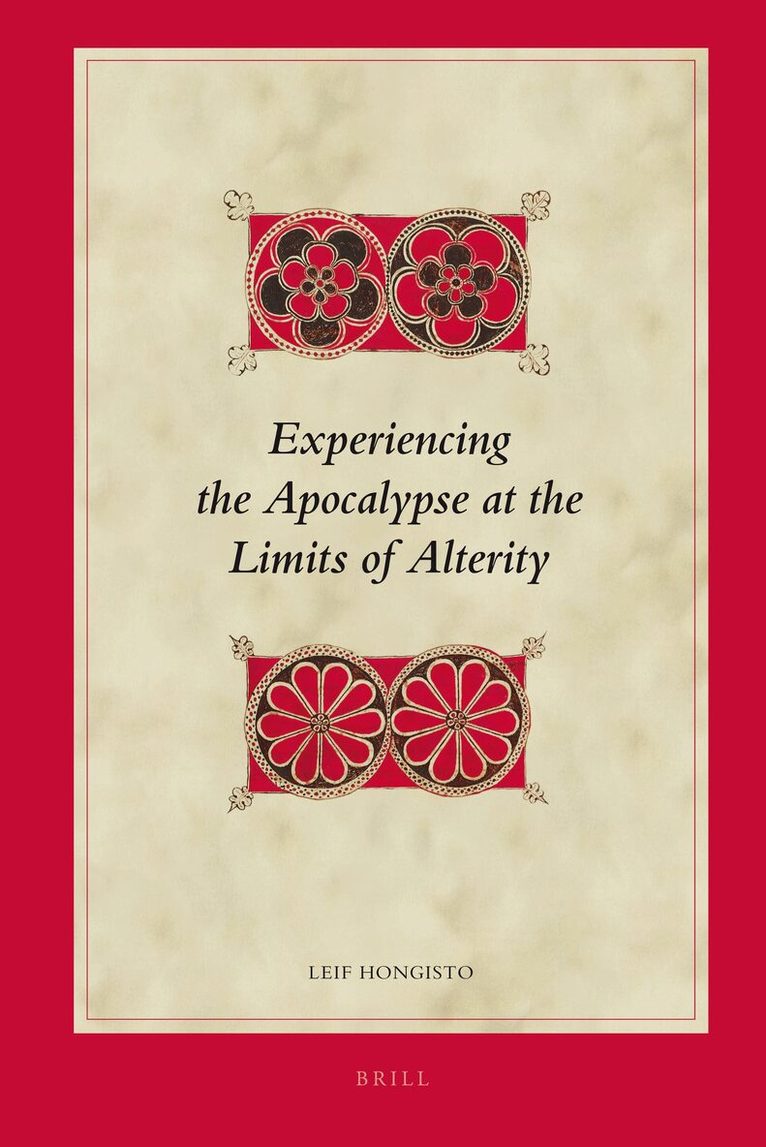
    Experiencing the Apocalypse at the Limits of Alterity

    AvLeif Hongisto

    Inbunden, Engelska, 2010

    Del 102 i serien Biblical Interpretation Series

    2 514 kr

    Beställningsvara. Skickas inom 5-8 vardagar. Fri frakt över 249 kr.

    Beskrivning

    Applying current narrative criticism to the study of the Apocalypse, Hongisto underscores the oral nature of the narrative vis-à-vis the roles of the readers/listeners. EXPERIENCING THE APOCALYPSE AT THE LIMITS OF ALTERITY probes the interplay of meaning creation as readers/listeners encounter the narrative. The author shows how readers/listeners alike partake in the narrative design and become constructors of the narrative, given their own life experiences. Thus, the overarching reading context assists in the creation of a narrativity for the text. The form of the Apocalypse along with its imagistic quality convey a message that is not primarily cognitive, but is delivered and grasped by a sense of alterity encompassing the imaginary world of the text and the real world of the readers/listeners.

    Produktinformation

    • Utgivningsdatum:2010-08-18
    • Mått:160 x 240 x 23 mm
    • Vikt:660 g
    • Format:Inbunden
    • Språk:Engelska
    • Serie:Biblical Interpretation Series
    • Antal sidor:292
    • Förlag:Brill
    • ISBN:9789004185630

    Utforska kategorier

    • Religion: allmänt inom Filosofi och religion

    Mer om författaren

    Leif Ilmari Hongisto received his PhD in New Testament Exegesis from Åbo Akademi University, Finland. He is a long-time educator and his research interest lies in the application of Cognitive Narratology to biblical texts. He is now President of Middle East University in Beirut, Lebanon.

    Innehållsförteckning

    • contentsIntroductionPart oneApocalypse , a text looking for a readingChapter OneCritical Orientation1.1 Questions and Method1.1.1 Focus and Boundaries 1.1.2 Task1.2 Some Definitions and Assumptions1.3 Modalities of Reading1.3.1 Realist and Non-realist Relation to the Other 1.3.2 A Virtual Text1.3.3 Shifts in Viewpoints1.3.4 Text and ‘Site’Chapter TwoReading the Form of the Apocalypse2.1 Defining the Form and Function of the Artefact 2.1.1 The Notion of a Setting2.2 Framing a Hybrid Text2.2.1 The Role of a Frame2.3 The Scripture Profile of the Apocalypse2.3.1 Literary Freedom2.4 The Apocalypse as Oral Performance2.4.1 Word-pictures2.5 Historical, Narrative and Imaginative Qualities2.6 The Trait of Construction2.6.1 The Necessity of Selectivity2.6.2 TransactionChapter ThreeApocalypticality: An Integrating Function3.1 Imagining the ‘Other’3.1.1 The Spectacular3.1.2 Sequels to Repeated Readings3.1.3 Staged ‘as if ’3.2 Prismatic Reflections3.2.1 Experience of Cognitive Dissonance3.3 From Plain Words to Powerful Metaphors3.3.1 Communal Cognitions3.3.2 Collective Experience3.4 Search for a Setting3.4.1 Exegetical Assumptions and Spiritual ExperiencePart twoTake up and readTake Up and ReadChapter FourNarrative Positioning – Aligning Experiences4.1 The Narrative Situation – the First Meeting with the ‘Other’4.2 Visions of Jesus: Experiencing the Known Anew4.2.1 Visionary Experiences of Jesus4.2.2 Corpus of Visionary Sayings4.3 The Medium of Sharing God’s Knowledge4.3.1 Deictic Expressions4.3.2 Gave ‘Him’4.3.3 ‘He’ Sent4.4 The Form of Visionary Appropriation4.4.1 John’s Own Vision4.4.2 As He Saw It4.5 The Sweet Bitterness of ReadingChapter FiveNarrator Perspectives – Affirming Narration5.1 The Narrator as the Experiencer5.2 Co-Narrator5.3 Alternating Between Narrator and Co-narratorChapter SixThe Narratee’s Experience – Connectedness of Life6.1 ‘You’ as Narrative Identity6.2 The Other as Oneself6.3 When Narrative Voices Clash6.4 The Art of SupplenessChapter SevenTowards an Anatomy of Apocalypticality7.1 Action Day7.1.1 Time of Action7.1.2 Secular and Sacred7.1.3 Sinners and Saints7.2 Conceptual Blends and Shifts7.2.1 Imagistic Cognitions7.2.2 Alterations7.2.3 Merging of Time and Eons7.3 Concentric SpacesConclusionPostscriptTwelve Storyboards of the ApocalypseBibliographyIndex