• Fri frakt över 249 kr
  • •
  • Snabba leveranser
  • •
  • Billiga böcker
Kundservice

Du är på sajten för privatpersoner.

Företag, bibliotek eller offentlig verksamhet?

Du handlar på classic.bokus.com, där alla dina funktioner finns intakta.
Till classic.bokus.com
Bokus logotyp. Gå till startsidan.
  • Erbjudanden
  • Nyheter
  • Student
  • Topplistor
  • Barn & ungdom
  • Bokus Play
  • E-böcker
  • Pocketböcker
  • Spel & pussel

10% rabatt på allt med kod NYSTART10 →

Sidfot

Mina sidor

    Hjälp

    • Kundservice
    • Vanliga frågor och svar
    • Frakt och leverans
    • Retur vid ångerrätt
    • Reklamera vara
    • Betalning
    • Köpvillkor
    • Allmänna villkor
    • Information om webbplatsens tillgänglighet

    Om Bokus

    • Om oss
    • Pressrum
    • För studenter
    • För företag
    • För bibliotek och offentlig verksamhet
    • För leverantörer
    • Hållbarhet

    Populärt

    • Aktuella erbjudanden
    • Presentkort
    • Studentlitteratur
    • Nya böcker
    • Topplistor
    • Signerade böcker
    • Engelska böcker

    Inspiration

    • Boktips
    • BookTok
    • Populära bokserier
    • Barnbokskaraktärer
    • Populära författare
    Logotyp för Bokus
    Följ oss på Facebook (extern länk)Följ oss på Instagram (extern länk)Följ oss på YouTube (extern länk)Följ oss på TikTok (extern länk)
    bokus @ CookiesAnpassa cookiesIntegritetspolicyKöpvillkor
    Till Citymail hemsida (extern länk)Till Budbee hemsida (extern länk)Till Postnord hemsida (extern länk)Till Schenker hemsida (extern länk)Till Early Bird hemsida (extern länk)Till Walleys hemsida (extern länk)
    1. Ekonomi och Ledarskap
    2. Nationalekonomi
    3. Ekonomisk historia

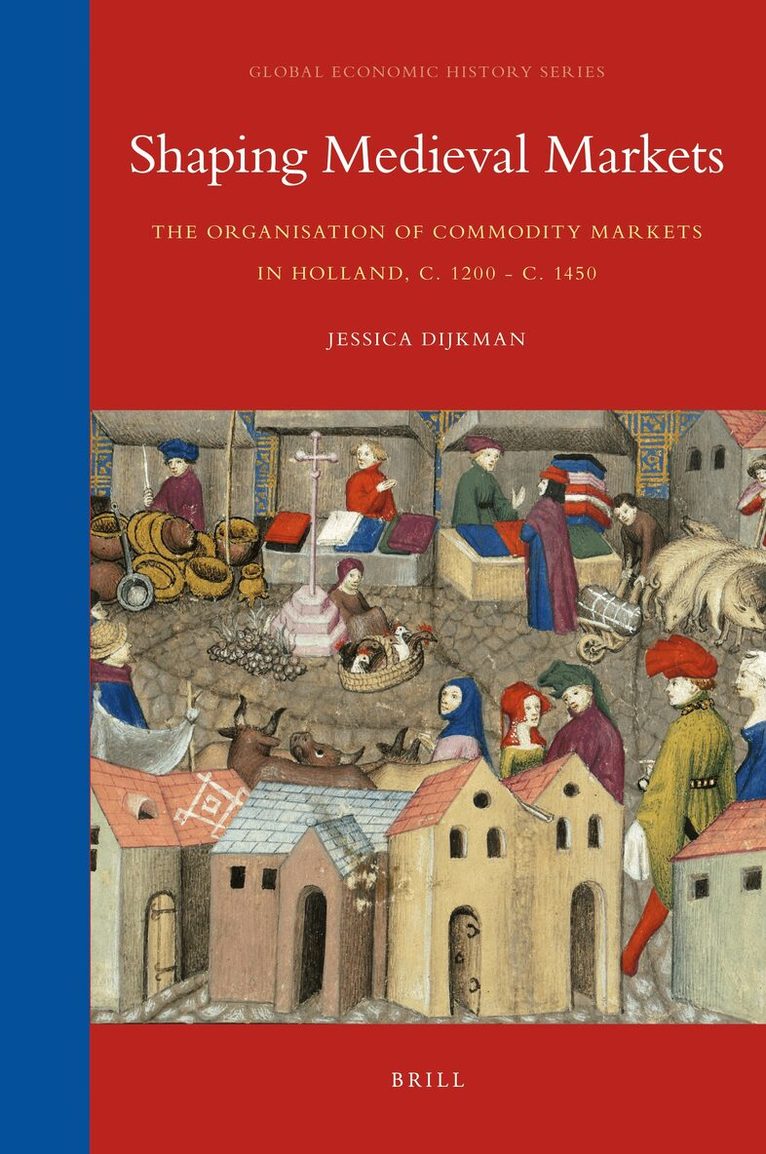
    Shaping Medieval Markets

    The Organisation of Commodity Markets in Holland, c. 1200 - c. 1450

    AvJessica Dijkman

    Inbunden, Engelska, 2011

    Del 8 i serien Global Economic History Series

    3 070 kr

    Beställningsvara. Skickas inom 5-8 vardagar. Fri frakt över 249 kr.

    Beskrivning

    The late Middle Ages witnessed the transformation of the county of Holland from a peripheral agrarian region to a highly commercialised and urbanised one. This book examines how the organisation of commodity markets contributed to this remarkable development. Comparing Holland to England and Flanders, the book shows that Holland’s specific history of reclamation and settlement had given rise to a favourable balance of powers between state, nobility, towns and rural communities that reduced opportunities for rent-seeking and favoured the rise of efficient markets. This allowed burghers, peasants and fishermen to take full advantage of new opportunities presented by changing economic and ecological circumstances in the late fourteenth and early fifteenth centuries.

    Produktinformation

    • Utgivningsdatum:2011-08-11
    • Mått:160 x 240 x 31 mm
    • Vikt:945 g
    • Format:Inbunden
    • Språk:Engelska
    • Serie:Global Economic History Series
    • Antal sidor:448
    • Förlag:Brill
    • ISBN:9789004201484

    Utforska kategorier

    • Ekonomisk historia inom Ekonomi och Ledarskap
    • Historia inom Historia och arkeologi

    Mer om författaren

    Jessica Dijkman, Ph.D. (2010) in History, Utrecht University, is a postdoc researcher at the department of Economic and Social History in Utrecht. She publishes on institutions regulating trade and production in the Middle Ages.

    Recensioner i media

    "[Shaping medieval markets] deepens our understanding of the economy of Holland. But more than that, Dijkman has succeeded in presenting an original and valuable contribution to the ongoing debates on the institutional preconditions for economic growth in the late middle ages and early modern era." - Job Weststrate, in: Economic History Society, Vol. 66, No. 2 (2013), pp. 664-665"[…] Shaping medieval markets [is] een meer dan voorbeeldige studie […], perfect op het kruispunt van theorie en bron, en een bijzonder inspirerende leidraad voor verder onderzoek naar de oorzaken van economische groei én stagnatie binnen en buiten de Nederlanden." - Jord Hanus, in: Tijdschrift voor Sociale en Economische Geschiedenis / The Low Countries Journal of Social and Economic History (t-seg), Vol. 9, No. 4 (2012), pp. 83-85

    Innehållsförteckning

    • List of TablesList of IllustrationsList of AbbreviationsPreface1. IntroductionPART I: THE INSTITUTIONAL FRAMEWORK: TRADE VENUES2. Fairs3. Rural markets c. 1200 – c. 1350: a late start?4. New institutions for rural trade (c. 1350 – c. 1450)5. The Dordrecht staplePART II: THE INSTITUTIONAL FRAMEWORK: RULES AND PRACTICES6. Weighing and measuring7. Contract enforcementPART III: MARKET PERFORMANCE: QUANTITATIVE TESTS8. Market integration9. Market orientation10. ConclusionsAPPENDICESAppendix A. Survey of fairsAppendix B. Rural weigh houses in the north of Holland around 1400Appendix C. Charters of urban libertiesAppendix D. Wheat pricesReferencesIndex