• Fri frakt över 249 kr
  • •
  • Snabba leveranser
  • •
  • Billiga böcker
Kundservice

Du är på sajten för privatpersoner.

Företag, bibliotek eller offentlig verksamhet?

Du handlar på classic.bokus.com, där alla dina funktioner finns intakta.
Till classic.bokus.com
Bokus logotyp. Gå till startsidan.
  • Erbjudanden
  • Nyheter
  • Student
  • Topplistor
  • Barn & ungdom
  • Bokus Play
  • E-böcker
  • Pocketböcker
  • Spel & pussel

10% rabatt på allt med kod: NYSTART10 →

Sidfot

Mina sidor

    Hjälp

    • Kundservice
    • Vanliga frågor och svar
    • Frakt och leverans
    • Retur vid ångerrätt
    • Reklamera vara
    • Betalning
    • Köpvillkor
    • Allmänna villkor
    • Information om webbplatsens tillgänglighet

    Om Bokus

    • Om oss
    • Pressrum
    • För studenter
    • För företag
    • För bibliotek och offentlig verksamhet
    • För leverantörer
    • Hållbarhet

    Populärt

    • Aktuella erbjudanden
    • Presentkort
    • Studentlitteratur
    • Nya böcker
    • Topplistor
    • Signerade böcker
    • Engelska böcker

    Inspiration

    • Boktips
    • BookTok
    • Populära bokserier
    • Barnbokskaraktärer
    • Populära författare
    Logotyp för Bokus
    Följ oss på Facebook (extern länk)Följ oss på Instagram (extern länk)Följ oss på YouTube (extern länk)Följ oss på TikTok (extern länk)
    bokus @ CookiesAnpassa cookiesIntegritetspolicyKöpvillkor
    Till Citymail hemsida (extern länk)Till Budbee hemsida (extern länk)Till Postnord hemsida (extern länk)Till Schenker hemsida (extern länk)Till Early Bird hemsida (extern länk)Till Walleys hemsida (extern länk)
    1. Historia och arkeologi
    2. Historia
    3. Europas historia

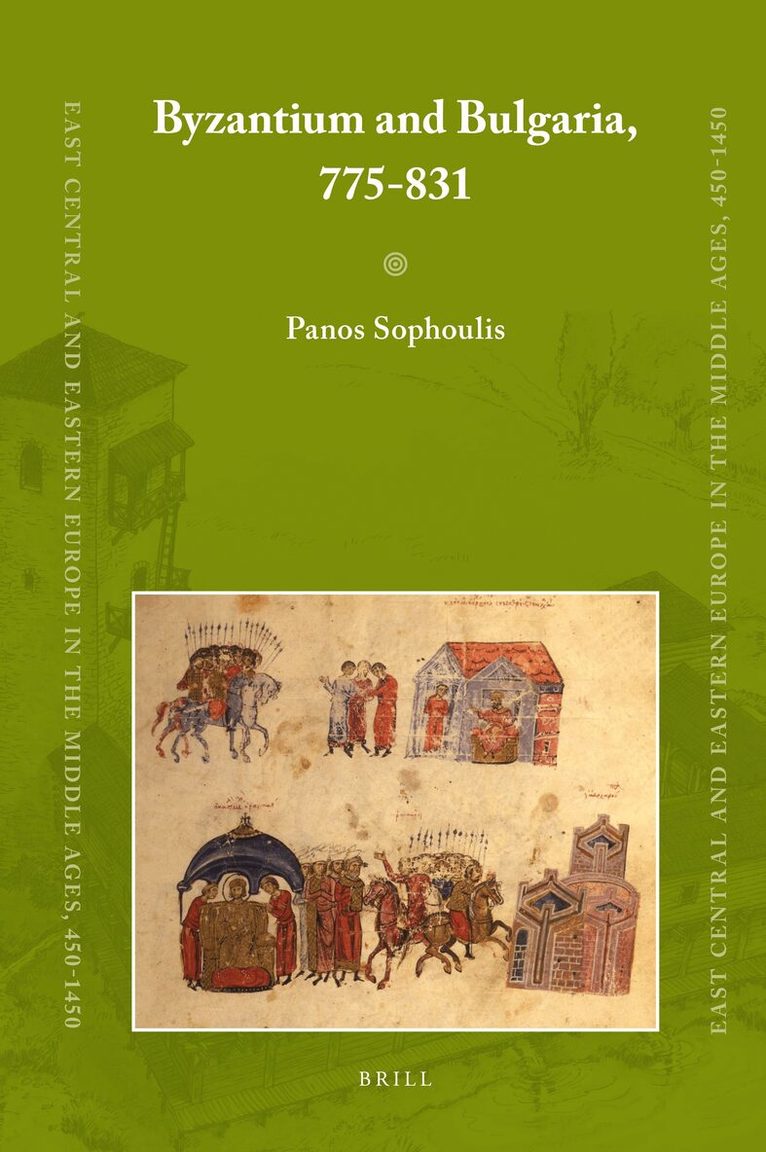
    Byzantium and Bulgaria, 775-831

    Winner of the 2013 John Bell Book Prize

    AvPanos Sophoulis

    Inbunden, Engelska, 2011

    Del 16 i serien East Central and Eastern Europe in the Middle Ages, 450-1450

    3 577 kr

    Tillfälligt slut

    Beskrivning

    This innovative survey of Byzantium's relations with pre-Christian Bulgaria in the late eighth and early ninth century offers an entirely new framework for understanding the developments that shaped one of the most turbulent periods in the history of the early Medieval Balkans. Unlike previous studies, it integrates the surviving literary sources with the ever-growing archaeological record to construct a comprehensive narrative account of the Byzantine-Bulgar conflict for political mastery in the region. Moreover, the analysis of the changing socio-political structures of Bulgaria provides a basis for understanding its transformation from a loose tribal confederation into a stable monarchy. While this is primarily a regional study, focusing on the territories and peoples controlled by the two competing powers, it is also of interest to students of the Frankish, Arab and steppe-nomad worlds, since the relations between Byzantium and Bulgaria are put into a wider international context.

    Produktinformation

    • Utgivningsdatum:2011-10-06
    • Mått:160 x 240 x 28 mm
    • Vikt:834 g
    • Format:Inbunden
    • Språk:Engelska
    • Serie:East Central and Eastern Europe in the Middle Ages, 450-1450
    • Antal sidor:382
    • Förlag:Brill
    • ISBN:9789004206953

    Utforska kategorier

    • Europas historia inom Historia och arkeologi

    Mer om författaren

    Panos Sophoulis, D.Phil. (2005) in History, University of Oxford, is Lecturer in History at the University of Athens. He has published several articles on Byzantine, Bulgarian and medieval Balkan history.

    Recensioner i media

    In their appraisal of the publication, the John Bell Book Prize Committee states: “Through impressive documentation from Byzantine and Western sources, and integration of recent archaeological discoveries, Sophoulis provides a thorough explanation and convincing analysis of this critical period: the iconoclasm controversy, numerous changes of ruler in the Byzantine Empire, the disastrous defeat of the Emperor Nikephoros in 811, and the resulting expansion of the Bulgarian state under khans Krum and Omurtag. In particular, his detailed discussions of the conventional historiography, why it must be re-evaluated in the light of material evidence, and what new information this approach elicits, provide a thorough explanation and convincing analysis of this important period.”Excerpt taken from the congratulation letter from the Bulgarian Studies Association (BSA), November 15th, 2013

    Innehållsförteckning

    • Preface ... ixA Note on Transliteration ... xiList of Maps and Illustrations ... xiiiAbbreviations ... xvIntroduction ... 11. The Sources ... 51.1 The Chronographia ... 51.1.1 Authorship and Date of Composition ... 51.1.2 Theophanes and the Bulgars ... 141.1.3 The Bulgar Narrative ... 15a) The Years 775–802 ... 15b) The Years 802–810 ... 17c) The Campaign of 811 ... 18d) The Years 811–813 ... 201.2 The Chronicle of 811 and the Scriptor Incertus de Leone Armenio ... 23a) The Campaign of 811 ... 32b) The Years 813–814 ... 321.3 George the Monk, the Logothete’s Chronicle and the Scriptores Post Theophanem ... 34a) The Battle of Mesembria ... 361.4 Hagiography ... 37a) The Story of the Martyrs of Adrianople ... 381.5 Other Byzantine Literary Sources ... 391.6 Syriac, Arabic, Armenian and Frankish Sources ... 411.7 The Proto-Bulgarian Inscriptions ... 441.8 Archaeology ... 472. The Geographical and Historical Setting ... 512.1 The Physical Context, Routes and Cities ... 512.2 The Internal Organization of the Khanate ... 652.2.1 Social, Political and Military Organization ... 652.2.2 The Religion of the Proto-Bulgarians ... 792.3 The Historical Background of the Conflict ... 892.4 The Byzantine and Bulgar Defence ... 953. Bulgaria’s Northern Neighbours and the Black Sea Zone in the Seventh to Ninth Centuries ... 1053.1 From “Old Great Bulgaria” to the Danube Khanate. The Historical Background to Asparuch’s Migration to the Balkans ... 1053.2 Bulgaria’s Northern Neighbours, Late Seventh to Early Ninth Century: A Brief Overview ... 1123.2.1 The Geographical Setting ... 1133.2.2 Wallachia and the Bulgars ... 1173.2.3 The Southern Regions of the Carpathian Basin ... 1193.2.4 Transylvania ... 1243.2.5 The Steppes North of the Black Sea ... 1293.2.6 The Crimea ... 1354. Conflict and Contact, 775–802 ... 1434.1 The Byzantine Empire under Leo IV (775–780) ... 1434.2 Byzantine-Bulgar Relations under Leo IV ... 1464.3 The Empire under Irene and Constantine VI (780–802) ... 1494.4 Byzantium and Bulgaria, 780–802 ... 1595. Emperor versus Khan: Byzantium and Bulgaria, 802–811 ...1735.1 The Byzantine Empire under Nikephoros I ... 1735.2 Byzantine-Bulgar Relations from 802 to 810 ... 1805.2.1 The Collapse of the Avar Qaghanate and the Bulgars 1805.2.2 Nikephoros’ Balkan Expansion and the War with Bulgaria ... 1845.3 The Campaign of 811 ... 1926. The Bulgar Offensive, 811–814 ... 2176.1 The Empire under Michael I (811–813) ... 2176.2 The Byzantine-Bulgar War During the Reign of Michael I ... 2216.2.1 From Nikephoros’ Defeat to the Fall of Mesembria ... 2216.2.2 The Byzantine Campaign of 813 and the Battle of Versinikia ... 2346.3 The War in Leo V’s Reign ... 2456.3.1 Byzantium under Leo V (813–820) ... 2456.3.2 The Bulgar Siege of Constantinople ... 2496.3.3 The War until the Death of Krum (April 814) ... 2587. The Last Phase of the War and the Conclusion of the Thirty Years’ Peace ... 2657.1 The Internal Crisis in Bulgaria and the Battle of Mesembria ... 2657.2 The Thirty Years’ Peace ... 2758. The Reign of Omurtag and the Transformation of Early Medieval Bulgaria ... 2878.1 Reconstructing Omurtag’s Power ... 2878.2 Bulgaria and Byzantium During the Reign of Omurtag ... 306Conclusion ... 311Bibliography ... 321Index ... 361. 515