Du är på sajten för privatpersoner.
2 524 kr
Beställningsvara. Skickas inom 5-8 vardagar. Fri frakt över 249 kr.
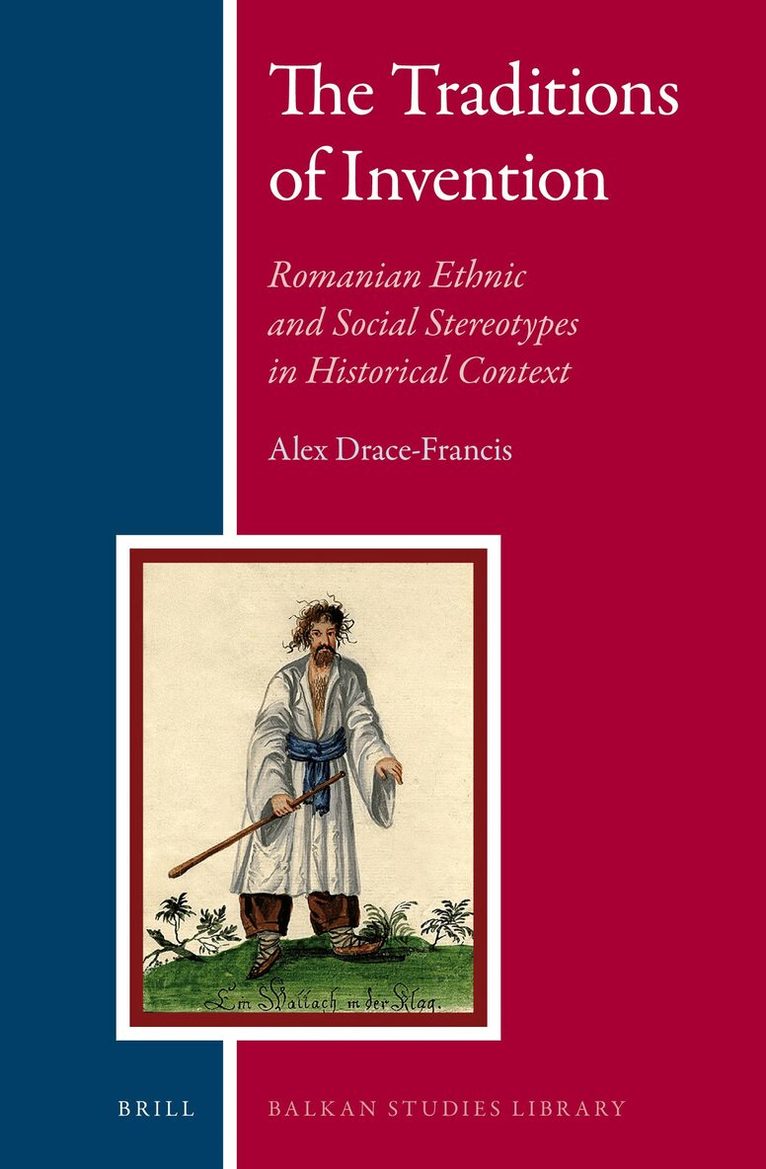
Alex Drace-Francis is Associate Professor in the Literary and Cultural History of Modern Europe, University of Amsterdam. He is author of The Making of Modern Romanian Culture (2006) and co-editor of three books on East European travel writing. Most recently, he edited the collection of documents European Identity: A Historical Reader (2013).
"Inspirational for historians, literary scholars, and social scientists interested in travel, myths, representations and identity, irrespective of the regional focus of their expertise. Recommended readings for specialists and non-specialists alike."Mónika Baár in English Historical Review, February 2017"Overall, Drace-Francis’s study stands out first and foremost through his ability to ask the most pressing questions on a subject, to single out the key dilemmas, and to open up relevant paths for future investigation."Monica Spiridon (University of Bucharest) on H-Nationalism (February, 2016)(full review text: http://www.h-net.org/reviews/showrev.php?id=45985) "These well-researched essays, taken together, make useful additions to aspects of Romanian cultural historiography and invite further inquiry. The author’s analyses of literary texts suggest productive avenues for more deeply understanding the intellectual climate of the times, and he has made a strong case for the value of travel literature as a historical source.Keith Hitchins, University of Illinois, Urbana-Champaign, in Slavic Review Vol. 73, No. 2 (Summer 2014), pp. 411-412(full review text: http://www.jstor.org/stable/10.5612/slavicreview.73.2.411)"With his stimulating analyses, Drace-Francis opens up new approaches to many aspects of Romanian identity, as perceived both from the inside and the outside."Klaus Steinke in IFB, Digitales Rezensionsorgan für Bibliothek und Wissenschaft(full review text: http://ifb.bsz-bw.de/bsz399138900rez-1.pdf?id=6272)"L’insieme di questi saggi, che nei contenuti presentano temi, personaggi e periodi molto differenti, offre un esempio ricco e articolato della complessità legata alla questione dell’identità romena. In particolare Drace-Francis dimostra come l’identità e la rappresentazione dell’altro non si possano concepire in maniera monolitica, bensì soltanto nella complessità e pluralità di rimandi fra culture e discorsi differenti, a loro volta espressione di motivazioni, contesti e narrazioni specifiche, che se da un lato impediscono di dare una risposta definitiva su una questione precisa, dall’altro hanno il merito di favorire una conoscenza lontana da quegli stereotipi messi sotto la lente d’ingrandimento dell’autore in questo volume.Antonio d’Alessandri in Nuova Rivista Storica, XCIX, III, 2015, pp 1087-8