• Fri frakt över 249 kr
  • •
  • Snabba leveranser
  • •
  • Billiga böcker
Kundservice

Du är på sajten för privatpersoner.

Företag, bibliotek eller offentlig verksamhet?

Du handlar på classic.bokus.com, där alla dina funktioner finns intakta.
Till classic.bokus.com
Bokus logotyp. Gå till startsidan.
  • Erbjudanden
  • Nyheter
  • Student
  • Topplistor
  • Barn & ungdom
  • Bokus Play
  • E-böcker
  • Pocketböcker
  • Spel & pussel

10% rabatt på allt med kod: NYSTART10 →

Sidfot

Mina sidor

    Hjälp

    • Kundservice
    • Vanliga frågor och svar
    • Frakt och leverans
    • Retur vid ångerrätt
    • Reklamera vara
    • Betalning
    • Köpvillkor
    • Allmänna villkor
    • Information om webbplatsens tillgänglighet

    Om Bokus

    • Om oss
    • Pressrum
    • För studenter
    • För företag
    • För bibliotek och offentlig verksamhet
    • För leverantörer
    • Hållbarhet

    Populärt

    • Aktuella erbjudanden
    • Presentkort
    • Studentlitteratur
    • Nya böcker
    • Topplistor
    • Signerade böcker
    • Engelska böcker

    Inspiration

    • Boktips
    • BookTok
    • Populära bokserier
    • Barnbokskaraktärer
    • Populära författare
    Logotyp för Bokus
    Följ oss på Facebook (extern länk)Följ oss på Instagram (extern länk)Följ oss på YouTube (extern länk)Följ oss på TikTok (extern länk)
    bokus @ CookiesAnpassa cookiesIntegritetspolicyKöpvillkor
    Till Citymail hemsida (extern länk)Till Budbee hemsida (extern länk)Till Postnord hemsida (extern länk)Till Schenker hemsida (extern länk)Till Early Bird hemsida (extern länk)Till Walleys hemsida (extern länk)
    1. Historia och arkeologi
    2. Historia
    3. Europas historia

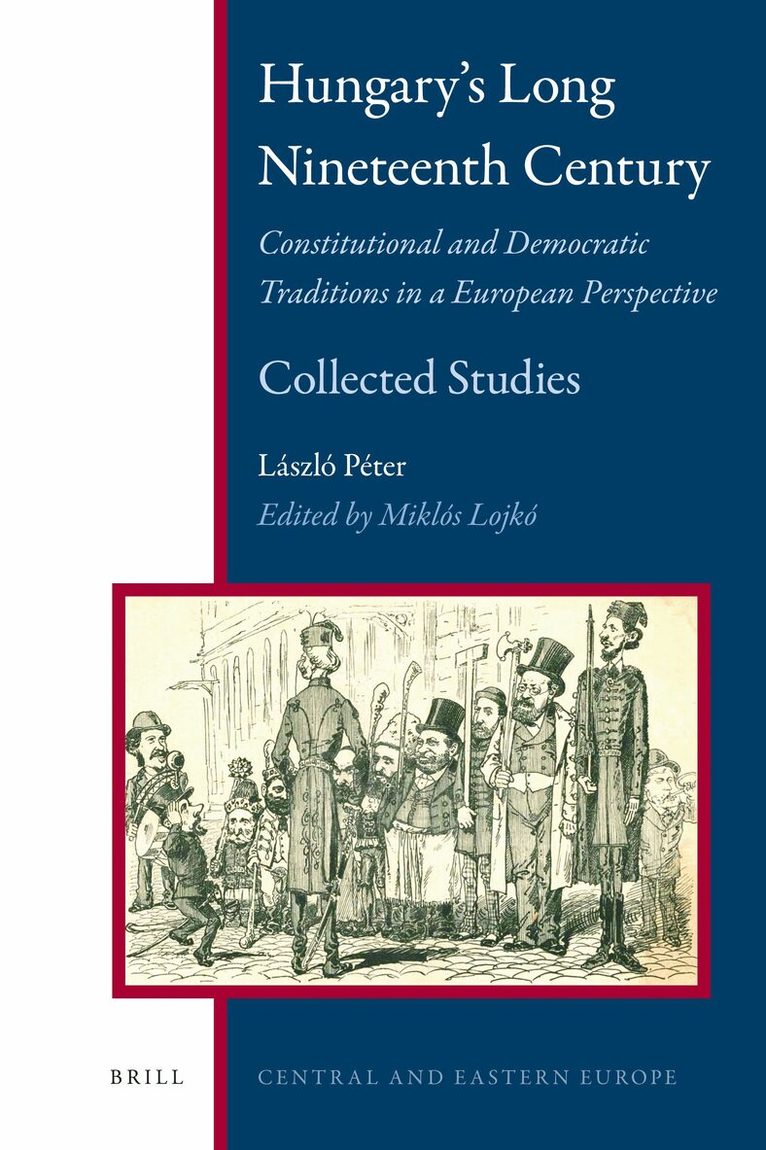
    Hungary's Long Nineteenth Century

    Constitutional and Democratic Traditions in a European Perspective

    AvLaszlo Péter,Miklós Lojkó

    Inbunden, Engelska, 2012

    Del 1 i serien Central and Eastern Europe

    3 447 kr

    Beställningsvara. Skickas inom 5-8 vardagar. Fri frakt över 249 kr.

    Beskrivning

    László Péter, whose fourteen carefully selected essays are edited in this posthumous collection, was an indefatigable seeker of the most appropriate terminological modelling and narrative reconstruction of Hungary’s late nineteenth and early twentieth century progress from an essentially feudal entity into a modern European state. The articles examine thorny subjects, such as the growing tensions between the nationalities living within the multi-ethnic kingdom; language rights; autocracy, democracy and civil rights in Hungary perceived in a wider European context; the concept of the ‘Holy Crown’; the army question; church-state relations; the role of the intellectuals; and the changing British perception of Hungary. The central focus of the author’s microscope is reserved for a substantive re-evaluation of the Settlement between Hungary and the Austrian Empire in 1867, which had a decisive impact on the eventual fate of the old kingdom of Hungary and of the rest of Central Europe.

    Produktinformation

    • Utgivningsdatum:2012-03-23
    • Mått:155 x 235 x 34 mm
    • Vikt:864 g
    • Format:Inbunden
    • Språk:Engelska
    • Serie:Central and Eastern Europe
    • Antal sidor:478
    • Förlag:Brill
    • ISBN:9789004222120

    Utforska kategorier

    • Europas historia inom Historia och arkeologi

    Mer om författaren

    László Péter (1929-2008), author, D.Phil. (1965) in History, University of Oxford. Lecturer in, later professor of, Hungarian History at the School of Slavonic and East European Studies, University of London (1963 to 1994, the year of his retirement). He published extensively on nineteenth-century Hungarian constitutional history, including "Die Verfassungsentwicklung in Ungarn" in Die Habsburgermonarchie 1848-1918 series (Der Österreichischen Akademie der Wissenschaften, 2000.)Miklós Lojkó, editor, Ph.D. (2001) in History, University of Cambridge. Associate Professor of Modern History at the Central European University and at Eötvös Loránd University, Budapest. He has published widely on British diplomacy and economic policy towards Central and South-eastern Europe during the interwar years, including Meddling in Middle Europe: Britain and the ‘Lands Between’, 1919–1925, (Central European University Press, 2006).

    Recensioner i media

    "Twenty years after the fall of the Iron Curtain the time has come for historians of Hungary and the surrounding countries to reflect on the conclusions of this thoughtful life’s work in their own research. An edition of the author’s collected essays could provide help in this project." - András Cieger, in: The Hungarian Historical Review 1, no. 1–2 (2012): 245-252"An emigré of the 1956 revolution, László Péter, master of Hungarian constitutional history did not live long enough to see this volume published. Its publication is the result of the devoted and meticulous work of his younger Hungarian colleague, Miklós Lojkó. Comprised of fourteen chapters, all published earlier but re-written, in cases extensively, this volume is somewhat surprisingly Péter’s first English-language book. Most of the essays address the constitutional development in nineteenth-century Hungary. One way or another, Péter’s writings were diametrically opposed to contemporary Hungarian historiography, having a social historical character, influenced or even dominated by Marxism. He questioned some established myths of Hungarian history, but Hungarian historians of the nineteenth century have been reluctant to accept his interpretations." - Istvan Szijarto, in: Austrian Studies, November 2013

    Innehållsförteckning

    • Editorial PrefacePrefaceIntroductionThe traditional vocabulary – The conversion of the constitution – Two historians1. The Holy Crown of Hungary, Visible and InvisibleThe cult of St Stephen’s Crown - The visible and the invisible crown compared-Rex and corona: the incumbent and the institution - Corona regni - Werbőczy on the Holy Crown - Reincorporation with the crown and the ország - The Holy Crown uses in statute laws and government instruments - The Lands of the Hungarian (Holy) Crown - The inveterate crown uses - The extension of the Holy Crown membership - The Holy Crown, the nation and the constitution - Limited versus mixed monarchy in the jurists’ works - The making of the doctrine of the Holy Crown - Hungarian exceptionalism - The impact of the doctrine - The utility of the doctrine - Against the current: Eckhart - Revival - Conclusions2. Ius resistendi in HungaryResistance as a right - Werbőczy and the ius resistendi - Contractualism - Conclusions3. The Irrepressible Authority of Werbőczy’s TripartitumDecreta regni - Legislation and Consuetudo - The ascendance and theeclipse of the Tripartitum - Jurists and the two–track view oflegal sources - Werbőczy reclaimed4. Montesquieu’s Paradox on Freedom and Hungary’s Constitutions 1790–1990The paradox - Montesquieu and the Hungarian constitution - The ‘kinship theory’- The Communists - After Communism5. Language, the Constitution, and the Past in Hungarian NationalismLanguage - The Constitution - Epilogue6. Lajos Kossuth and the Conversion of the ConstitutionThe ancient constitution – The national movement and the building of a unitary Hungarian state – Lajos Kossuth and proposals for a new Hungarian constitution: radical or moderate? – The April Laws, a new social order: ország into nation – The emancipation of the peasantry – Independent and responsible government – The imperial constitution of March 1849 – Gesamt-Monarchie as opposed to magyar álladalom 7. The Dualist Character of the 1867 Hungarian SettlementThe quasi-legal character of politics in the monarchy and the gloss on the 1867 Settlement - The statutory view of public law - The concept of the State - The concept of legal sovereignty: the doctrine of the Holy Crown - Political crises and the 1867 Settlement - The ősi (ancient) and the korszerű (modern) Constitution - The dualism of crown and ország - The Habsburg Empire and the conversion of the rights and duties of crown and ország into constitutional laws - Deák’s May programme of 1865 - The ‘outline’ of the subcommittee of fifteen - Law XII of 1867 - The nature of the Settlement - The Ausgleich with the Other Lands - The Monarch and the union of the Lands8. The Autocratic Principle of the Law and Civil Rights in Nineteenth-Century HungaryThe rights of the individual - The autocratic principle of the law - Property rights and legal equality - Personal rights - Civil rights - The right of association - Regulation of associations by the Ministry of the Interior - Ministerial regulation of public assembly - Conclusions 9. The Aristocracy, the Gentry and Their Parliamentary Tradition in Nineteenth-Century HungaryIntroduction - Social reform and the landowning élite - The character of political reform - Aristocracy versus gentry - The political traditions of the aristocracy and the gentry - The influence of the aristocracy on political issues - Conclusions10. Law XLIV of 1868 ‘On the Equality of Nationality Rights’ and the Language of Local Administration11. The Army Question in Hungarian Politics 1867-1918The constitutional question - The army question and the constitution - The 1867 constitutional Settlement and the Army - After the 1867 Settlement - The army question and Apponyi - The watershed: the 1889 Great Defence Debate - The Army crisis of 1903 - The swing of the pendulum - Conclusions12. Intellectuals and the Future in the Habsburg Monarchy 1890–1914 (with Robert Pynsent). The German culture – The culture of the Lands – The fin-de-siècle13. Church-State Relations and Civil Society in Hungary: A Historical PerspectiveThe need for a historical perspective - The autocratic principle of the law - The legal position of the Churches - Equality of religion in legislation - The three classes of religion - Received religions - Tolerated religions - Recognised religions - The balance-sheet of church-state relations - Church-state relations under the communist system - Church-state relations in crisis - The reconstruction of church-state relations14. R. W. Seton-Watson’s Changing Views on the National Question of the Habsburg Monarchy and the European Balance of PowerGermanophile - Hungarian independentist - Defender of the nationalities - Epilogue and conclusions