• Fri frakt över 249 kr
  • •
  • Snabba leveranser
  • •
  • Billiga böcker
Kundservice

Du är på sajten för privatpersoner.

Företag, bibliotek eller offentlig verksamhet?

Du handlar på classic.bokus.com, där alla dina funktioner finns intakta.
Till classic.bokus.com
Bokus logotyp. Gå till startsidan.
  • Erbjudanden
  • Nyheter
  • Student
  • Topplistor
  • Barn & ungdom
  • Bokus Play
  • E-böcker
  • Pocketböcker
  • Spel & pussel

10% studentrabatt med kod TERM26

Sidfot

Mina sidor

    Hjälp

    • Kundservice
    • Vanliga frågor och svar
    • Frakt och leverans
    • Retur vid ångerrätt
    • Reklamera vara
    • Betalning
    • Köpvillkor
    • Allmänna villkor
    • Information om webbplatsens tillgänglighet

    Om Bokus

    • Om oss
    • Pressrum
    • För studenter
    • För företag
    • För bibliotek och offentlig verksamhet
    • För leverantörer
    • Hållbarhet

    Populärt

    • Aktuella erbjudanden
    • Presentkort
    • Studentlitteratur
    • Nya böcker
    • Topplistor
    • Signerade böcker
    • Engelska böcker

    Inspiration

    • Boktips
    • BookTok
    • Populära bokserier
    • Barnbokskaraktärer
    • Populära författare
    Logotyp för Bokus
    Följ oss på Facebook (extern länk)Följ oss på Instagram (extern länk)Följ oss på YouTube (extern länk)Följ oss på TikTok (extern länk)
    bokus @ CookiesAnpassa cookiesIntegritetspolicyKöpvillkor
    Till Citymail hemsida (extern länk)Till Budbee hemsida (extern länk)Till Postnord hemsida (extern länk)Till Schenker hemsida (extern länk)Till Early Bird hemsida (extern länk)Till Walleys hemsida (extern länk)
    1. Historia och arkeologi
    2. Historia
    3. Mellanösterns historia

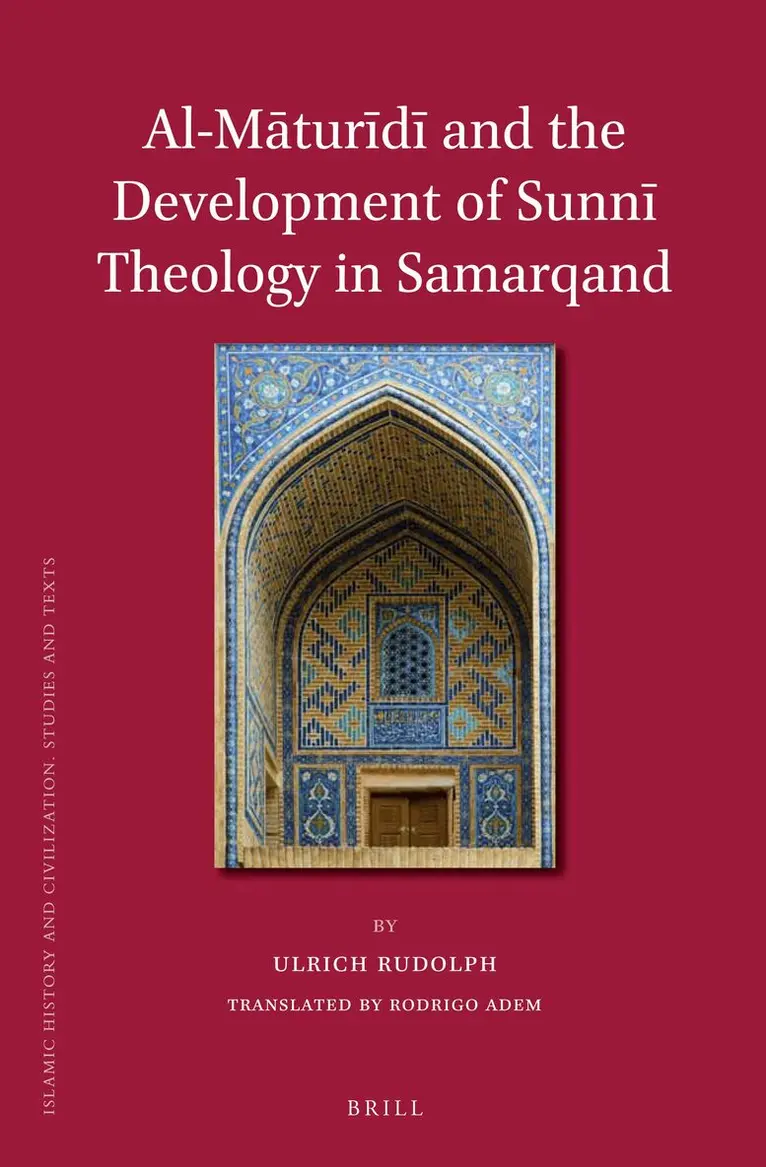
    Al-Māturīdī and the Development of Sunnī Theology in Samarqand

    AvUlrich Rudolph

    Inbunden, Engelska, 2014

    Del 100 i serien Islamic History and Civilization

    3 107 kr

    Beställningsvara. Skickas inom 5-8 vardagar. Fri frakt över 249 kr.

    Beskrivning

    Al-Māturīdī (d. 944 CE), the prominent Hanafi scholar from Samarqand, succeeded in formulating a theological doctrine which is widely accepted in Sunni Islam to this day. The present volume which is a revised English translation of the German original published in 1997 examines his teachings by describing their principal characteristics and situating them in the history of kalām.Part one investigates the development of Hanafi thought in Transoxania before Māturīdī's time. Part two deals with the other religious groups (in particular the Mu'tazilites) which emerged in this area during his lifetime. Part three shows how he explained and defended the position of his predecessors; in doing so, he reformed their traditional views, thereby developing his own theology which then became the basis of a new tradition, viz. the Māturīdite school.

    Produktinformation

    • Utgivningsdatum:2014-11-28
    • Mått:155 x 235 x 26 mm
    • Vikt:699 g
    • Format:Inbunden
    • Språk:Engelska
    • Serie:Islamic History and Civilization
    • Antal sidor:362
    • Förlag:Brill
    • ISBN:9789004234154
    • Översättare:Rodrigo Adem

    Utforska kategorier

    • Mellanösterns historia inom Historia och arkeologi
    • Socialhistoria och kulturhistoria inom Historia och arkeologi
    • Islam inom Filosofi och religion

    Mer om författaren

    Ulrich Rudolph, Dr. phil. (1987) University of Tübingen, is Professor of Islamic Studies at the University of Zurich. He has published widely on the history of Islamic theology and philosophy.Rodrigo Adem is a PhD student in the department of Near Eastern Languages and Civilizations at the University of Chicago with a specialization in Islamic Thought.

    Recensioner i media

    "Rudolph's most important contribution in this monograph - besides a compelling portrait of Māturīdī - is to draw attention to the highly localised nature of early Islamic theology and the extent to which participants in a theological tradition can re-imagine its past to serve particular ends. As such, it is of use to anyone working in the history of ideas, where questions of influence and legacy are of prime importqance - not to mention Islamicists working on the formative period."Omar Anchassi in Journal of Shi‘a Islamic Studies, Autumn 2015, Vol. VIII, No. 4."Rudolph’s work successfully presents the development of the Ḥanafite theological tradition and al-Māturīdī’s unique position within it."Muammer İskenderoğlu in Islam and Christian–Muslim Relations, 4 December 2015.

    Innehållsförteckning

    • ForewordIntroductionPART ONE - PRELIMINARY HISTORY AND CONDITIONS: THE ḤANAFITE TRADITION IN NORTHEASTERN IRAN1. The foundation and establishment of Ḥanafite Theology in the 2nd/8th and early 3rd/9th centuries2. Development in the 3rd/9th Century3. The State of Theology During al-Māturīdī’s LifetimePART TWO - THE EMERGENCE OF AL-MĀTURĪDĪ1. Life and Activity2. Theological Opponents3. WorksPART THREE - AL-MĀTURĪDĪ’S THEOLOGYA. Structures and their Forerunning Models1. The Structure of the Kitāb al-Tawḥīd2. The Bipartite Nature of the Work3. Possible SourcesB. An Outline of Māturīdī’s TeachingsProlegomena: Epistemology1. The World2. God3. HumansConcluding Observations1. Māturīdī’s Position in Islamic Theology2. The Relationship to Abū Ḥanīfa3. The Relationship to Ashʿarī4. The Formation of the MāturīdīyaAppendix: Inauthentic and doubtful textsBibliographyIndex