• Fri frakt över 249 kr
  • •
  • Snabba leveranser
  • •
  • Billiga böcker
Kundservice

Du är på sajten för privatpersoner.

Företag, bibliotek eller offentlig verksamhet?

Du handlar på classic.bokus.com, där alla dina funktioner finns intakta.
Till classic.bokus.com
Bokus logotyp. Gå till startsidan.
  • Erbjudanden
  • Nyheter
  • Student
  • Topplistor
  • Barn & ungdom
  • Bokus Play
  • E-böcker
  • Pocketböcker
  • Spel & pussel

10% rabatt på allt med kod NYSTART10 →

Sidfot

Mina sidor

    Hjälp

    • Kundservice
    • Vanliga frågor och svar
    • Frakt och leverans
    • Retur vid ångerrätt
    • Reklamera vara
    • Betalning
    • Köpvillkor
    • Allmänna villkor
    • Information om webbplatsens tillgänglighet

    Om Bokus

    • Om oss
    • Pressrum
    • För studenter
    • För företag
    • För bibliotek och offentlig verksamhet
    • För leverantörer
    • Hållbarhet

    Populärt

    • Aktuella erbjudanden
    • Presentkort
    • Studentlitteratur
    • Nya böcker
    • Topplistor
    • Signerade böcker
    • Engelska böcker

    Inspiration

    • Boktips
    • BookTok
    • Populära bokserier
    • Barnbokskaraktärer
    • Populära författare
    Logotyp för Bokus
    Följ oss på Facebook (extern länk)Följ oss på Instagram (extern länk)Följ oss på YouTube (extern länk)Följ oss på TikTok (extern länk)
    bokus @ CookiesAnpassa cookiesIntegritetspolicyKöpvillkor
    Till Citymail hemsida (extern länk)Till Budbee hemsida (extern länk)Till Postnord hemsida (extern länk)Till Schenker hemsida (extern länk)Till Early Bird hemsida (extern länk)Till Walleys hemsida (extern länk)
    1. Historia och arkeologi
    2. Historia
    3. Europas historia

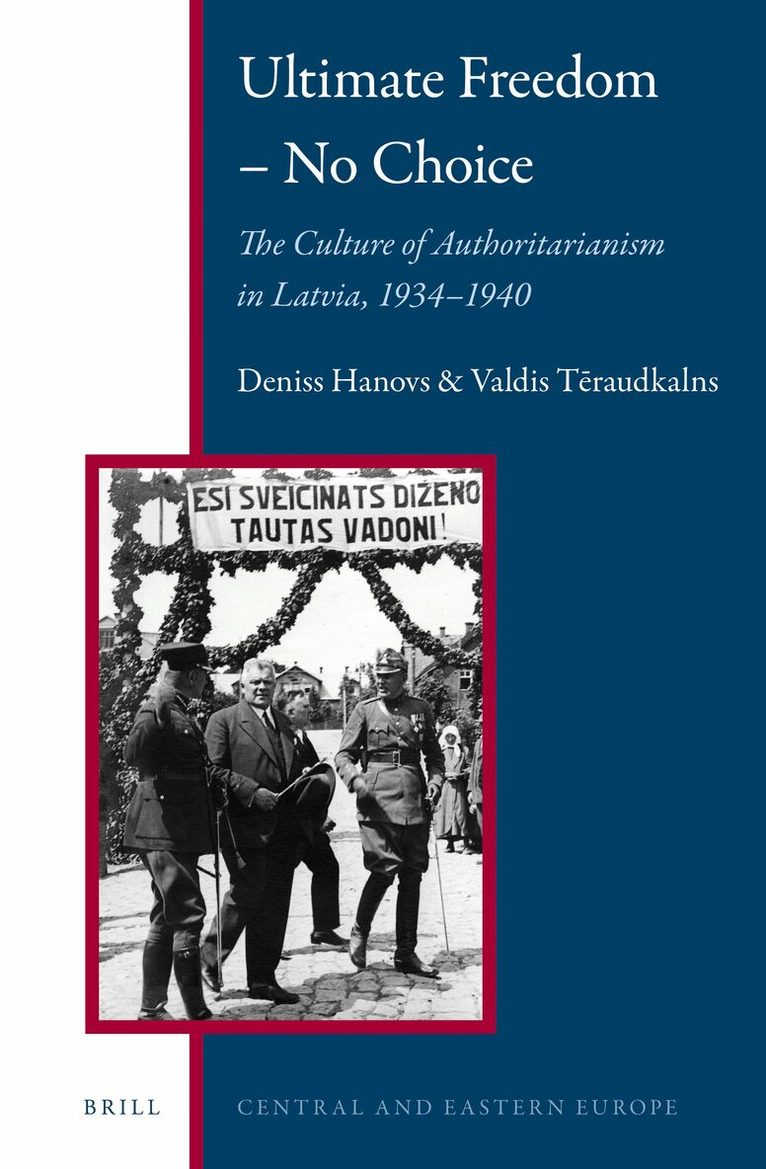
    Ultimate Freedom – No Choice

    The Culture of Authoritarianism in Latvia, 1934–1940

    AvDeniss Hanovs,Valdis Tēraudkalns

    Inbunden, Engelska, 2013

    Del 2 i serien Central and Eastern Europe

    2 316 kr

    Beställningsvara. Skickas inom 5-8 vardagar. Fri frakt över 249 kr.

    Beskrivning

    The Republic of Latvia is a fascinating mirror of the development of European democratic culture and reflects both the rise of democracy in Eastern Europe after the end of World War I and its deterioration into authoritarianism in the early 1930s. The regime, which lasted for only six years (1934-1940), was shaped by the controversial figure of Prime Minister and Leader of the People (Vadonis) Karlis Ulmanis. This new, archive-based study illustrates the development of authoritarianism in the region, shows controversies and similarities and places the regime's leader in the international context of European authoritarian culture. The book shows how mass culture and technologies, ancient drama and European modernism were combined to reinforce the idea of legitimacy of a new non-democratic regime.

    Produktinformation

    • Utgivningsdatum:2013-01-22
    • Mått:155 x 235 x 21 mm
    • Vikt:1 260 g
    • Format:Inbunden
    • Språk:Engelska
    • Serie:Central and Eastern Europe
    • Antal sidor:272
    • Förlag:Brill
    • ISBN:9789004243552

    Utforska kategorier

    • Europas historia inom Historia och arkeologi

    Mer om författaren

    Valdis Tēraudkalns, Ph.D. (2000), is Professor in Church History and History of Religions at Faculty of Theology, University of Latvia.Deniss Hanovs, Ph.D. (2003) on media as a tool for national movement in 19th century Latvia, is Associate Professor in Communication at Rīga Stradiņš University (Latvia)

    Innehållsförteckning

    • IntroductionChapter 1: The Beginning: How Was The Coup Presented Back Then?Inter-war Latvia – pre-history of the Coup, its contextWhy the Coup is Not a Coup, but Salvation?Ulmanis in Foreign Media: The Times Chapter 2: Genesis of a Political Myth – an Official Turns into VadonisChapter 3: Staging Atdzimšanas Dziesma – Technologies of Authoritarianism Cultural PolicyHow to Stage the Principle of Authoritarianism? Staging of a Mass Performance as a Political Program“Atdzimšanas Dziesma will invite every Latvian to serve his nation and country by obeying Vadonis.” What is the Staging Going to Say?“Atdzimšanas Dziesma depicts the fate of the Latvian people” Staging as a Liturgy of Authoritarianism. Vadonis as a Priest and Actor Chapter 4: “Another Land”: Latgale Region in the Discourse of Ulmanis’ Authoritarian Regime on the Unity of the NationPolitical Performance as a Staging of Unanimity Latgale: The Symbolic Stepchild and BrideLatgalians and Ethnic UnityLatgalians and Ethnic Diversity – The Other in the New Political CultureAnswers of Latgale’s MediaEducation Law and Technology of the Melting PotDaugavpils Vienības Nams – An Edifice as a Political MessageChapter 5: The Leader, the Enemy, War and Celebration – Authoritarianism Practices Compared: Stalin and Ulmanis in Latvia’s Authoritarian CultureUSSR – The Land of Workers and Violence. Dual PerceptionCultural Practices of European Dictatorships in the 30iesStalin and Ulmanis: A Functional Comparison of LeadersThe Enemy: Communism and A War of CivilizationsMoscow Trials – the Globalized Political Show of the 30iesChapter 6: Date and Place: Celebration of Authoritarianism in Rēzekne and Riga“The Harvest Booster” – K. Ulmanis as A Hero of Cyclical Times in “Svēta Zeme” Spectacle18 November as a Continuation of 15 May. The Course of Celebration on 18 November 1938Chapter 7: “New Riga”: The City as an Instrument of Authoritarian IdeologyAesthetization of Ulmanis’ Ideology: Key Tendencies and International ContextUlman RigaThe Uzvaras laukums – a Spatial Self-ReferenceChapter 8: Authoritarianism and the Church: Attempts to Develop Latvian Christianity in 1920ies and 1930iesThe Relationship Policy between the Church and the State under Ulmanis’ RegimeThe Church – in Supranational Content and National FormIdeas Expressed by the Radical Wing of Latvianizers of the ChurchConclusionList of LiteratureIndex