• Fri frakt över 249 kr
  • •
  • Snabba leveranser
  • •
  • Billiga böcker
Kundservice

Du är på sajten för privatpersoner.

Företag, bibliotek eller offentlig verksamhet?

Du handlar på classic.bokus.com, där alla dina funktioner finns intakta.
Till classic.bokus.com
Bokus logotyp. Gå till startsidan.
  • Erbjudanden
  • Nyheter
  • Student
  • Topplistor
  • Barn & ungdom
  • Bokus Play
  • E-böcker
  • Pocketböcker
  • Spel & pussel

10% rabatt på allt med kod: NYSTART10 →

Sidfot

Mina sidor

    Hjälp

    • Kundservice
    • Vanliga frågor och svar
    • Frakt och leverans
    • Retur vid ångerrätt
    • Reklamera vara
    • Betalning
    • Köpvillkor
    • Allmänna villkor
    • Information om webbplatsens tillgänglighet

    Om Bokus

    • Om oss
    • Pressrum
    • För studenter
    • För företag
    • För bibliotek och offentlig verksamhet
    • För leverantörer
    • Hållbarhet

    Populärt

    • Aktuella erbjudanden
    • Presentkort
    • Studentlitteratur
    • Nya böcker
    • Topplistor
    • Signerade böcker
    • Engelska böcker

    Inspiration

    • Boktips
    • BookTok
    • Populära bokserier
    • Barnbokskaraktärer
    • Populära författare
    Logotyp för Bokus
    Följ oss på Facebook (extern länk)Följ oss på Instagram (extern länk)Följ oss på YouTube (extern länk)Följ oss på TikTok (extern länk)
    bokus @ CookiesAnpassa cookiesIntegritetspolicyKöpvillkor
    Till Citymail hemsida (extern länk)Till Budbee hemsida (extern länk)Till Postnord hemsida (extern länk)Till Schenker hemsida (extern länk)Till Early Bird hemsida (extern länk)Till Walleys hemsida (extern länk)
    1. Juridik
    2. Internationell rätt
    3. Folkrätt

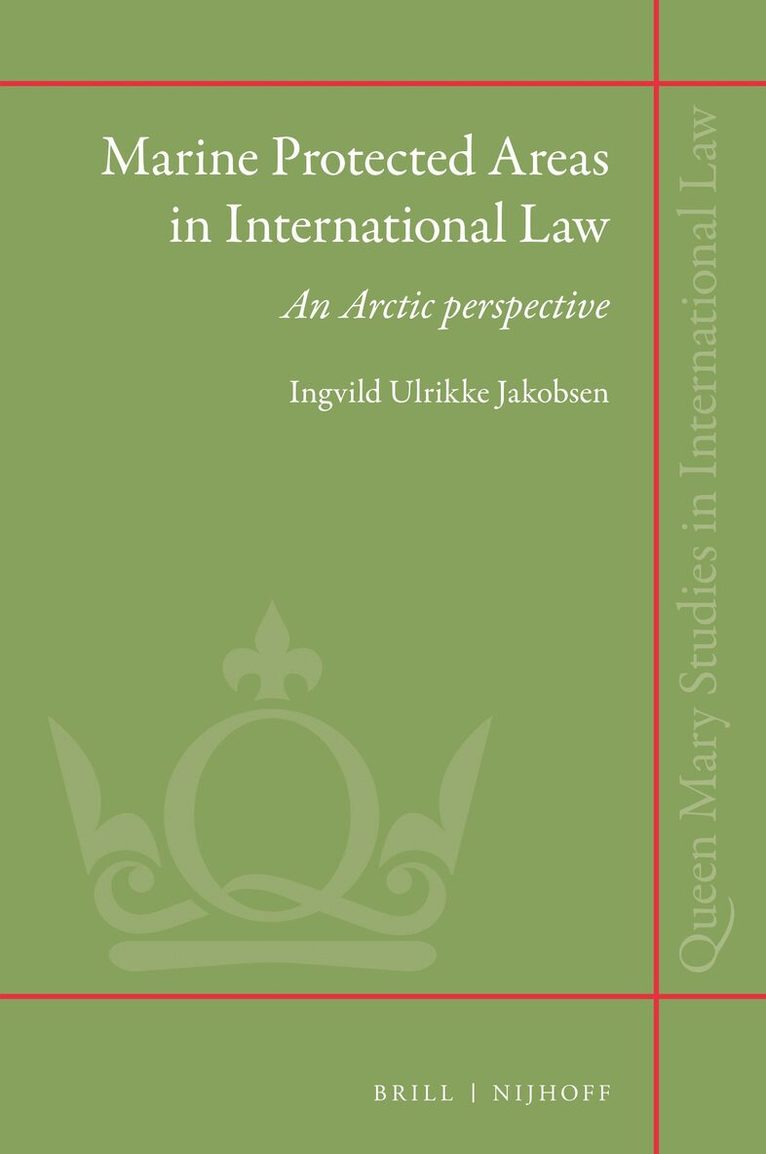
    Marine Protected Areas in International Law

    An Arctic perspective

    AvIngvild Ulrikke Jakobsen

    Inbunden, Engelska, 2016

    Del 25 i serien Queen Mary Studies in International Law

    2 894 kr

    Beställningsvara. Skickas inom 5-8 vardagar. Fri frakt över 249 kr.

    Beskrivning

    Marine Protected Areas in International law – an Arctic perspective, introduces and analyzes the legal rights and obligations of states under international law, using Marine Protected Areas (MPAs) as a tool to protect marine biodiversity. The fragile Arctic marine environment is under growing pressure from climate change and the prospect of increasing human activity affecting previously untouched areas. The conservation of Arctic marine biodiversity is a pressing and global concern, not least because the melting of sea ice will have widespread effects. By analyzing regional cooperation through the OSPAR Convention and under the Arctic Council, Jakobsen examines the implementation of the global legal framework for biodiversity protection and conservation in the Arctic. The book has a particular focus on the possibilities of the states to regulate shipping within the MPAs, as the increasing shipping activities represent a major threat to the sensitive marine Arctic.

    Produktinformation

    • Utgivningsdatum:2016-08-19
    • Mått:155 x 235 x 30 mm
    • Vikt:808 g
    • Format:Inbunden
    • Språk:Engelska
    • Serie:Queen Mary Studies in International Law
    • Antal sidor:436
    • Förlag:Brill
    • ISBN:9789004254725

    Utforska kategorier

    • Folkrätt inom Juridik

    Mer om författaren

    Ingvild Ulrikke Jakobsen, Ph.D (2010), K.G. Jebsen Centre for the Law of the Sea, University of Tromsø, the Arctic University of Norway, is an associated professor at that university. She has published articles on law of the sea and in international as well as national environmental law.

    Innehållsförteckning

    • Acknowledgements List of AcronymsPart 1Marine Protected Areas as a Tool for Conservation and Sustainable Use of Marine Biological Diversity1 Introduction 1.1 The Subject 1.2 The Concept of MPAS1.3 International Legal Framework for MPAS1.4 Global Political Developments with Regard to MPAS1.5 Scope of the Book2 Legal Competence to Establish MPASwithin National Jurisdiction and on the High Seas2.1 Introduction 2.2 The Competence to Establish MPASwithin National Jurisdiction2.3 MPASin the Territorial Sea 2.4 MPAS in the EEZ2.5 MPAS on the Continental Shelf2.6 MPAS on the High Seas2.7 The Enforcement Jurisdiction of Regulations and Prohibitions within MPASPart 2Development from a Functional to a Holistic Approach3 From a Functional to a Holistic Approach4 Pre-LOS Convention: Principles in Customary Law5 The Traditional Approach of the LOS Convention to Protect and Preserve the Marine Environment and to Conserve Living Resources5.1 Introduction5.2 The Obligations to Protect and Preserve the Marine Environment5.3 Obligations on Conservation and Management of Marine Living Resources6 Developments since 1982: The Obligations to Protect and Conserve Marine Biodiversity6.1 General6.2 United Nations Conference on Environment and Development7 Global Obligations on Conservation of Marine Biological Diversity7.1 General7.2 The CBD Convention8 Regional Obligations and Implementation of Obligations on Conservation of Marine Biodiversity8.1 General 8.2 The OSPAR Convention: Obligations and Principles 8.3 The Arctic Council9 Conclusions Part 3Legal Obligations to Establish MPAS10 Legal Obligations to Establish MPAS – Introductory Remarks 11 The LOS Convention and Establishment and Management of MPAS11.1 General 11.2 Does the Obligation to Protect and Preserve the Marine Environment Include a Legal Duty to Adopt MPAS?11.3 The Obligation to Protect the Marine Environment in Areas beyond National Jurisdiction12 Is There a Legal Duty to Establish mpas under the CBD? 12.1 Introduction – The Implications of “as far as possible and as appropriate” for the Legal Duty to Establish MPAS12.2 Criticisms in Legal Theory of the Vague Obligations and the Use of a Qualifier12.3 Which Evaluations Do the Terms “as far as possible and as appropriate” Require?12.4 Conclusions 13 When is there a Legal Obligation under the cbd to Establish MPAS? 13.1 Introduction 13.2 The Duty to Adopt Protected Areas or Areas Where Special Measures Need to be Taken13.3 The Duty to Establish a System of MPAS13.4 Which Considerations Must be Made under the Term “as far as possible”?13.5 Which Considerations Must be Made under “as appropriate”?13.6 Interactions between “as far as possible” and “as appropriate” 13.7 Conclusions 14 The Management of MPAS under the CBD Convention 14.1 Introduction 14.2 Development of Criteria for Selection and Management of MPAS14.3 The Significance of the Term “as far as possible and as appropriate” for the Management of MPAS14.4 The Significance of the Legal Obligation on in situ Conservation for the Management of MPAS14.5 Procedural Requirements to the Establishment of MPAS14.6 Substantive Requirements to the Content of MPAS15 The OSPAR Convention and MPAS15.1 Introduction 15.2 The Development of a Framework of MPAS within OSPAR15.3 The Legal Status and Significance of the Recommendation on a Network of MPAS15.4 A Legal Duty to Establish mpas in the North-East Atlantic?15.5 Selection and Management of MPAS under the OSPAR Convention15.6 MPAS in Areas beyond National Jurisdiction under the OSPAR onvention15.7 Conclusions16 MPAS under the Arctic Council 16.1 Introduction 16.2 Work on MPAS under the Arctic Council – Background16.3 Toward a Pan-Arctic network of MPAS?16.4 ConclusionsPart 4The Duties and Rights to Establish and Manage MPAS versus the Rights of Other States17 The Relationship between the CBD and the LOS Convention – Conflicting Norms and Mechanisms for Solving Them17.1 Introduction – Overview of the Legal Questions 17.2 Legal Conflicts between the LOS Convention and the CBD?17.3 Conflict Solving Procedures 17.4 Solving Conflicts through Treaty Law 17.5 Conclusions 18 Regulation of Navigation in MPAS18.1 Introduction – Legal Questions and Aims of the Discussions18.2 The Relevance of the Discussion in Light of the Legal Development18.3 The International Legal Regime of Shipping in the Arctic18.4 Coastal State Prescriptive Jurisdiction of Shipping for the Purpose of Protecting the Marine Environment18.5 Coastal State Prescriptive Jurisdiction in the Territorial Sea18.6 Potential Measures Adopted Within mpas in the Territorial Sea to Protect the Areas against the Impacts of Shipping18.7 Coastal State Prescriptive Jurisdiction in the EEZ18.8 Potential Measures to Protect the mpas in the EEZ against Impacts of Shipping18.9 May the Coastal States Adopt Regulations to Protect the MPAS from Impacts of Shipping Based on the Sovereign Rights Over Living Resources?18.10 Conclusions Part 5 International Mechanisms for Providing Appropriate Protection of MPAS against the Impacts of Shipping19 Specially Designated Areas to Protect the Marine Environment against Impact of International Shipping Activities 19.1 Challenges to the Establishment and Management of Integrated MPAS19.2 Introduction to Specially Designated Areas for Protecting Certain Areas against the Environmental Impacts of Shipping 19.3 The LOSConvention 19.4 Article 234 – Ice-Covered Areas19.5 MARPOL Special Areas19.6 PSSA19.7 Conclusions 20 Final Remarks Bibliography Table of CasesTable of TreatiesIndex