• Fri frakt över 249 kr
  • •
  • Snabba leveranser
  • •
  • Billiga böcker
Kundservice

Du är på sajten för privatpersoner.

Företag, bibliotek eller offentlig verksamhet?

Du handlar på classic.bokus.com, där alla dina funktioner finns intakta.
Till classic.bokus.com
Bokus logotyp. Gå till startsidan.
  • Erbjudanden
  • Nyheter
  • Student
  • Topplistor
  • Barn & ungdom
  • Bokus Play
  • E-böcker
  • Pocketböcker
  • Spel & pussel

10% rabatt på allt med kod: NYSTART10 →

Sidfot

Mina sidor

    Hjälp

    • Kundservice
    • Vanliga frågor och svar
    • Frakt och leverans
    • Retur vid ångerrätt
    • Reklamera vara
    • Betalning
    • Köpvillkor
    • Allmänna villkor
    • Information om webbplatsens tillgänglighet

    Om Bokus

    • Om oss
    • Pressrum
    • För studenter
    • För företag
    • För bibliotek och offentlig verksamhet
    • För leverantörer
    • Hållbarhet

    Populärt

    • Aktuella erbjudanden
    • Presentkort
    • Studentlitteratur
    • Nya böcker
    • Topplistor
    • Signerade böcker
    • Engelska böcker

    Inspiration

    • Boktips
    • BookTok
    • Populära bokserier
    • Barnbokskaraktärer
    • Populära författare
    Logotyp för Bokus
    Följ oss på Facebook (extern länk)Följ oss på Instagram (extern länk)Följ oss på YouTube (extern länk)Följ oss på TikTok (extern länk)
    bokus @ CookiesAnpassa cookiesIntegritetspolicyKöpvillkor
    Till Citymail hemsida (extern länk)Till Budbee hemsida (extern länk)Till Postnord hemsida (extern länk)Till Schenker hemsida (extern länk)Till Early Bird hemsida (extern länk)Till Walleys hemsida (extern länk)
    1. Juridik
    2. Internationell rätt
    3. Folkrätt

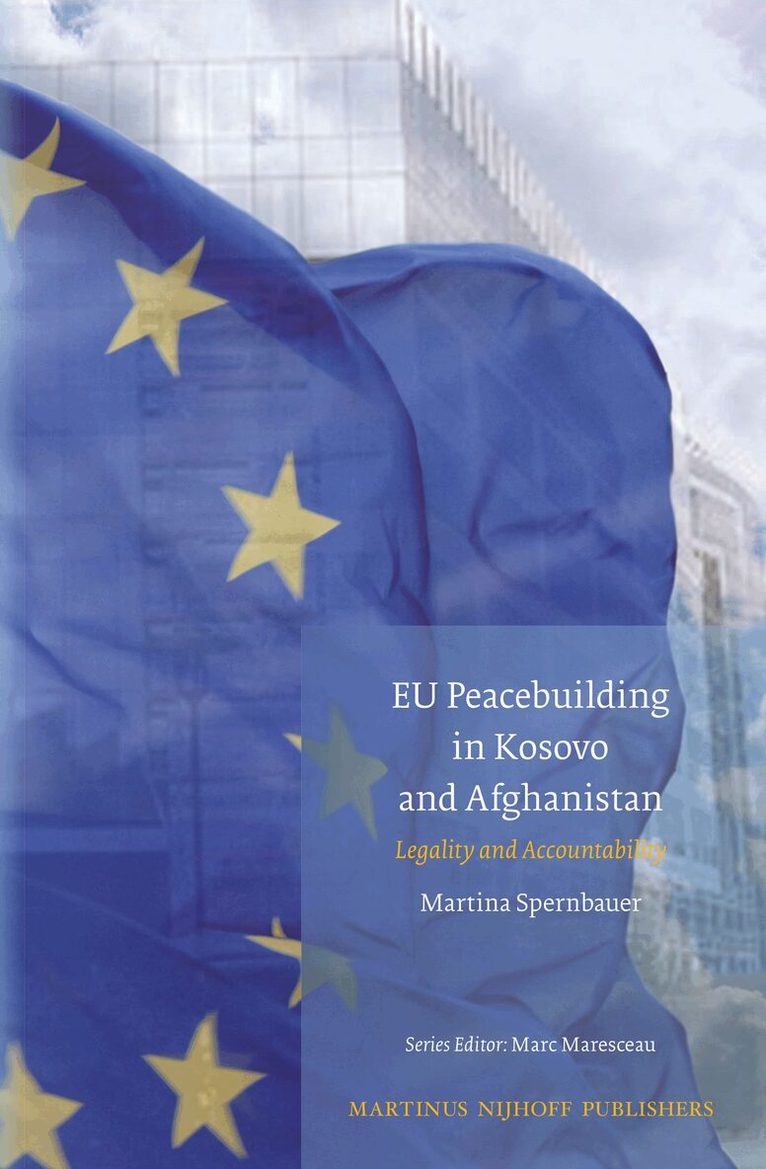
    EU Peacebuilding in Kosovo and Afghanistan

    Legality and Accountability

    AvMartina Spernbauer

    Inbunden, Engelska, 2014

    Del 7 i serien Studies in EU External Relations

    2 785 kr

    Beställningsvara. Skickas inom 5-8 vardagar. Fri frakt över 249 kr.

    Beskrivning

    In EU Peacebuilding in Kosovo and Afghanistan: Legality and Accountability Martina Spernbauer offers a comprehensive account of the EU's peacebuilding toolbox in light of the Union's constitutional architecture under the Treaty of Lisbon. A detailed analysis of EU peacebuilding in Kosovo and Afghanistan, with a focus on the security and justice sectors, demonstrates that the Union's continuous dichotomy between the Common Foreign and Security Policy (CFSP) and other Union policies is difficult to maintain for this multi-faceted, comprehensive policy framework, which lies at the interface of security, justice and development. Within this analysis, the central questions of compliance of EU external action with international law and international human rights law in particular under CFSP, as well as accountability towards third countries and their nationals are addressed.

    Produktinformation

    • Utgivningsdatum:2014-02-20
    • Mått:155 x 235 x 31 mm
    • Vikt:835 g
    • Format:Inbunden
    • Språk:Engelska
    • Serie:Studies in EU External Relations
    • Antal sidor:434
    • Förlag:Brill
    • ISBN:9789004265707

    Utforska kategorier

    • Folkrätt inom Juridik

    Mer om författaren

    Martina Spernbauer, Ph.D. (2012), European University Institute, has worked for the European Union in Brussels, Kosovo and Afghanistan. She has published on various aspects of International Law and EU external relations, including EU membership conditionality.

    Innehållsförteckning

    • INTRODUCTIONPART I. LAW ENFORCEMENT IN A PEACEBUILDING ENVIRONMENTIntroductionChapter 1.Peacebuilding as a Policy Framework at the Interface of Security, Justice and Development1.1.Introduction1.2.Evolution of the Concept of Peacebuilding at the UN in Context1.3.Peacebuilding as Policy Framework for the International Community1.4.Peacebuilding at the Security-Justice-Development Nexus1.5.ConclusionChapter 2.The Legislative and Institutional Framework in Kosovo2.1.Introduction2.2.Kosovo’s International Constitutional Order: Resolution 12442.2.1.The Exercise of Public Power under Resolution 12442.2.2.Kosovo under the “Constitutional Framework”2.2.3.Failed Status Negotiations Entailing a Messy Transition2.3.Kosovo’s Internationalized Constitutional Order until 20122.4.The Law and Practice Discrepancy: the Institutions2.5.ConclusionChapter 3.The Legislative and Institutional Framework in Afghanistan3.1.Introduction3.2.The Bonn Agreement3.3.The 2004 Afghan Constitution3.4.State Failure in the Law Enforcement Sector3.5.Afghanistan’s Informal Administration of Justice3.6.ConclusionPART II. THE EU PEACEBUILDING TOOLBOX FOR SUPPORT TO THE LAW ENFORCEMENT INSTITUTIONSIntroductionChapter 4. Non-CFSP Assistance to the Law Enforcement Institutions4.1.Introduction4.2.The Development Cooperation Instrument – all Aims but One?4.3.The Pre-Accession Instrument – Transporting the acquis Abroad4.4.The Instrument for Stability – Crisis Response Action and Beyond4.5.The European Instrument for Democracy and Human Rights4.6.Programming and Allocation Principles - A Regulated Procedure4.7.Operationalisation in Kosovo4.8.Operationalisation in Afghanistan4.9.ConclusionChapter 5. CFSP Assistance to the Law Enforcement Institutions: CSDP Operations5.1.Introduction5.2.Civilian CSDP Missions and their Fields of Operations5.3.EULEX Kosovo5.4.EUPOL Afghanistan: Police Training and Rule of Law Engagement5.5.ConclusionChapter 6. Constitutional Requirements for EU Peacebuilding6.1.Introduction6.2.Non-affection Clauses and their Jurisdictional Progeny6.3.Neutrality of Institution-building in EU Peacebuilding6.4.ConclusionPART III. THE EU PEACEBUILDING TOOLBOX UNDER SCRUTINYIntroductionChapter 7. EU Peacebuilding under a “Legality” Test7.1.Introduction7.2.Authorisation through Consent of the Host or Beneficiary State7.3.Authorisation through Delegation of Chapter VII Powers7.4.ConclusionChapter 8. EU Peacebuilding under an “Accountability” Test8.1.Introduction8.2.Attribution of Unlawful Conduct in the Context of CSDP Missions8.3.Accountability in the Context of non-CFSP Peacebuilding8.4.Issues of Enforceability8.5.Rights without Remedies in CSDP?8.6.ConclusionFINAL CONCLUSION