• Fri frakt över 249 kr
  • •
  • Snabba leveranser
  • •
  • Billiga böcker
Kundservice

Du är på sajten för privatpersoner.

Företag, bibliotek eller offentlig verksamhet?

Du handlar på classic.bokus.com, där alla dina funktioner finns intakta.
Till classic.bokus.com
Bokus logotyp. Gå till startsidan.
  • Erbjudanden
  • Nyheter
  • Student
  • Topplistor
  • Barn & ungdom
  • Bokus Play
  • E-böcker
  • Pocketböcker
  • Spel & pussel

10% rabatt på allt med kod: NYSTART10 →

Sidfot

Mina sidor

    Hjälp

    • Kundservice
    • Vanliga frågor och svar
    • Frakt och leverans
    • Retur vid ångerrätt
    • Reklamera vara
    • Betalning
    • Köpvillkor
    • Allmänna villkor
    • Information om webbplatsens tillgänglighet

    Om Bokus

    • Om oss
    • Pressrum
    • För studenter
    • För företag
    • För bibliotek och offentlig verksamhet
    • För leverantörer
    • Hållbarhet

    Populärt

    • Aktuella erbjudanden
    • Presentkort
    • Studentlitteratur
    • Nya böcker
    • Topplistor
    • Signerade böcker
    • Engelska böcker

    Inspiration

    • Boktips
    • BookTok
    • Populära bokserier
    • Barnbokskaraktärer
    • Populära författare
    Logotyp för Bokus
    Följ oss på Facebook (extern länk)Följ oss på Instagram (extern länk)Följ oss på YouTube (extern länk)Följ oss på TikTok (extern länk)
    bokus @ CookiesAnpassa cookiesIntegritetspolicyKöpvillkor
    Till Citymail hemsida (extern länk)Till Budbee hemsida (extern länk)Till Postnord hemsida (extern länk)Till Schenker hemsida (extern länk)Till Early Bird hemsida (extern länk)Till Walleys hemsida (extern länk)
    1. Ekonomi och Ledarskap
    2. Nationalekonomi
    3. Ekonomisk historia

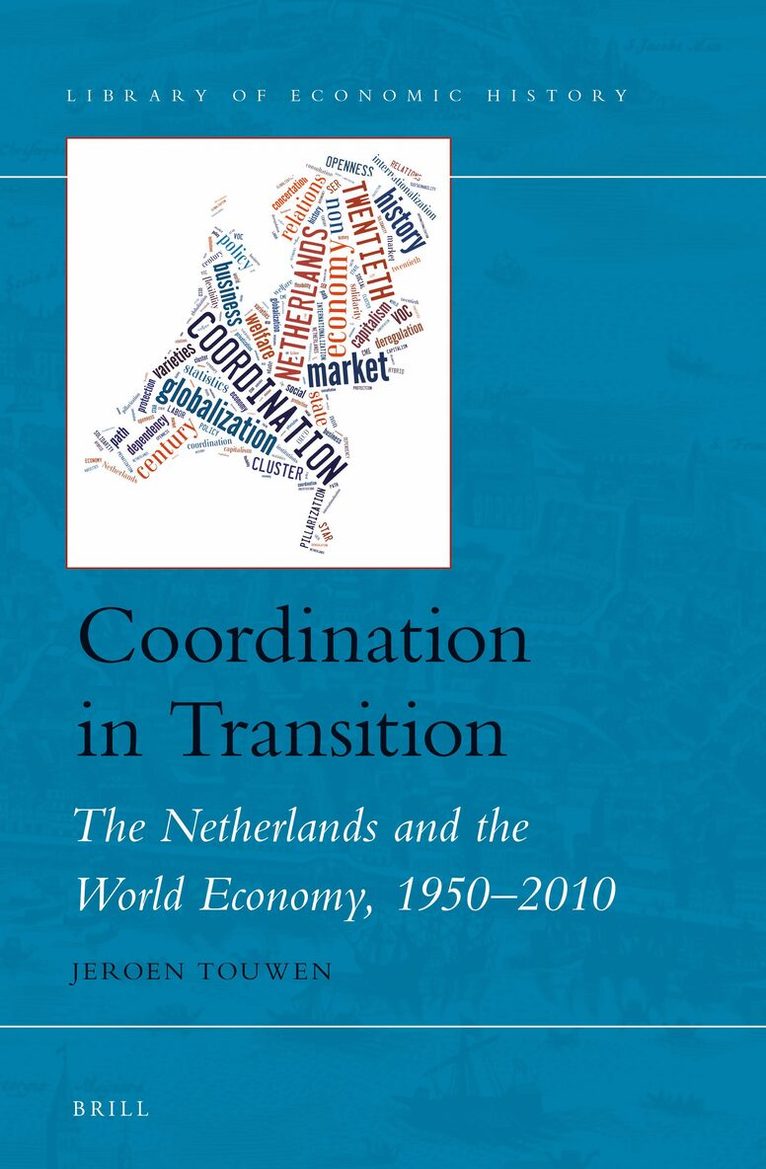
    Coordination in Transition

    The Netherlands and the World Economy, 1950–2010

    AvJeroen (L.J.) Touwen

    Inbunden, Engelska, 2014

    Del 5 i serien Library of Economic History

    2 506 kr

    Beställningsvara. Skickas inom 5-8 vardagar. Fri frakt över 249 kr.

    Beskrivning

    This book analyzes the evolution of the institutional structure of the Dutch political economy since 1950. It sketches in broad strokes the origin and economic role of coordination in the Netherlands. The Dutch economy is compared with other OECD countries by using the ‘varieties of capitalism’ theory and distinguishing between coordinated and liberal market economies. The author focuses on the constant adaptation of deliberative institutions in the business system, in labor relations, and in welfare policy.The complex institutional setting did not prevent the economy from participating in the globalization of markets and capital that took place since ca. 1980. The book is located at the intersection of two quite different literatures: modern economic history and the political science literature on ‘varieties of capitalism’.

    Produktinformation

    • Utgivningsdatum:2014-06-06
    • Mått:155 x 235 x 28 mm
    • Vikt:736 g
    • Format:Inbunden
    • Språk:Engelska
    • Serie:Library of Economic History
    • Antal sidor:386
    • Förlag:Brill
    • ISBN:9789004272552

    Utforska kategorier

    • Ekonomisk historia inom Ekonomi och Ledarskap

    Mer om författaren

    Jeroen Touwen teaches economic and social history at Leiden University. He obtained his Ph.D. in 1997, with the book Extremes in the archipelago: Trade and economic development in the Outer Islands of Indonesia, 1900-1942 (Leiden: KITLV Press, 2001) and since then has published a range of articles on Dutch economic history.

    Recensioner i media

    [...] [A]n impressive and voluminous book of which the principal title, Coordination in Transition, neatly captures the key theme [...]. One of the new contributions of this book is that it also analyzes recent economic history of the Netherlands, in contrast with most other Dutch studies that only treat the twentieth century.Also readers with no particular interest in the Dutch case (or those who think they already know the country, for that matter) will find this book worthwhile to read, as each chapter sets out with a broader treatment of theoretical considerations before analyzing the Netherlands, each time accompanied by a comparison with several other western OECD countries; and as the author makes relevant statements about (developments of) LMEs and CMEs in general. [...] The large number of interesting footnotes and references underline the thoroughness and dedication with which the book was written.Annette van den Berg (Utrecht University School of Economics), EH.Net, Book Review (August 2015).

    Innehållsförteckning

    • Acknowledgments ... viiList of Tables and Figures .. viiiList of Abbreviations ... xii1 Introduction: A Tension between Coordination and Competition? ... 1Coordination in the Netherlands ... 1Traditions of Approaching Institutions ... 10Capitalisms Compared ... 172 Growth and Structural Change in the Netherlands and Other OECD Economies ... 33Have 50 Years of Structural Change Lessened the Degree of Coordination? ... 33Economic Growth in the Netherlands after World War II ... 35The ‘Convergence Club’ of Dissimilar OECD Economies ... 44Alternative Indicators of Economic Development ... 52Structural Economic Change and Technological Change ... 62Effects of Technological Change on the Typology of ‘Varieties of Capitalism’ ... 78Conclusion: More Market, not Less Coordination ... 863 At Ease with the Market: Coordination in the Dutch Business System ... 88Characteristics of the Dutch Business System ... 88Business Systems, Culture, Family Firms ... 89The Composition of the Private Sector ... 100Cooperation among Firms ... 104Interlocking Directorates and Other Aspects of Corporate Governance ... 116Eager Globalizer: The Openness of the Dutch Economy ... 123Conclusion: Worldwide Developments and Local Adjustments ... 1354 Corporatism and Pragmatism: Coordination in Labor Relations ... 142Where Did Dutch Coordination Come from and Where Will It Go? ... 142Specific Aspects of Coordination in Labor Relations ... 143The Evolution of the Dutch Consultative System ... 148From Postwar Consensus to Polarization ... 166Institutional Change after the Wassenaar Agreement of 1982 ... 172The Central Position of the SER and the Failure of the Green Polder Model ... 184Labor in a Changing World: The Netherlands in a European Context ... 190Conclusion: A Pragmatist Tradition of Consultation ... 2015 Coordination and Trust: The Dutch Welfare State ... 205Coordination and the Welfare State ... 205The Peculiar Path of the Dutch Welfare State ... 209Monitoring the Levels of Social Spending ... 227Effects of Coordination on the Development of the Dutch Welfare State ... 240Conclusion: Coordinated Interest in Social Protection ... 2486 Economic Policy: In Search of Shared Economic Responsibility ... 250Reconciling Different Agendas ... 250Economic and Social Goals of Dutch Postwar Policy ... 255Changing Policy Priorities During the 1980s and 1990s ... 262Towards a New Type of Capitalism: Privatization, Liberalization, and Reregulation ... 276Effects of Coordination on Government Policy ... 291Conclusion: Coordinated Neoliberal Capitalism ... 3127 Changing Context, Changing Framework ... 316General Conclusions on Coordination ... 316Non-market Coordination in the Netherlands ... 323Towards the Future ... 337Bibliography ... 343Index ... 369