• Fri frakt över 249 kr
  • •
  • Snabba leveranser
  • •
  • Billiga böcker
Kundservice

Du är på sajten för privatpersoner.

Företag, bibliotek eller offentlig verksamhet?

Du handlar på classic.bokus.com, där alla dina funktioner finns intakta.
Till classic.bokus.com
Bokus logotyp. Gå till startsidan.
  • Erbjudanden
  • Nyheter
  • Student
  • Topplistor
  • Barn & ungdom
  • Bokus Play
  • E-böcker
  • Pocketböcker
  • Spel & pussel

10% studentrabatt med kod TERM26

Sidfot

Mina sidor

    Hjälp

    • Kundservice
    • Vanliga frågor och svar
    • Frakt och leverans
    • Retur vid ångerrätt
    • Reklamera vara
    • Betalning
    • Köpvillkor
    • Allmänna villkor
    • Information om webbplatsens tillgänglighet

    Om Bokus

    • Om oss
    • Pressrum
    • För studenter
    • För företag
    • För bibliotek och offentlig verksamhet
    • För leverantörer
    • Hållbarhet

    Populärt

    • Aktuella erbjudanden
    • Presentkort
    • Studentlitteratur
    • Nya böcker
    • Topplistor
    • Signerade böcker
    • Engelska böcker

    Inspiration

    • Boktips
    • BookTok
    • Populära bokserier
    • Barnbokskaraktärer
    • Populära författare
    Logotyp för Bokus
    Följ oss på Facebook (extern länk)Följ oss på Instagram (extern länk)Följ oss på YouTube (extern länk)Följ oss på TikTok (extern länk)
    bokus @ CookiesAnpassa cookiesIntegritetspolicyKöpvillkor
    Till Citymail hemsida (extern länk)Till Budbee hemsida (extern länk)Till Postnord hemsida (extern länk)Till Schenker hemsida (extern länk)Till Early Bird hemsida (extern länk)Till Walleys hemsida (extern länk)
    1. Kultur
    2. Arkitektur

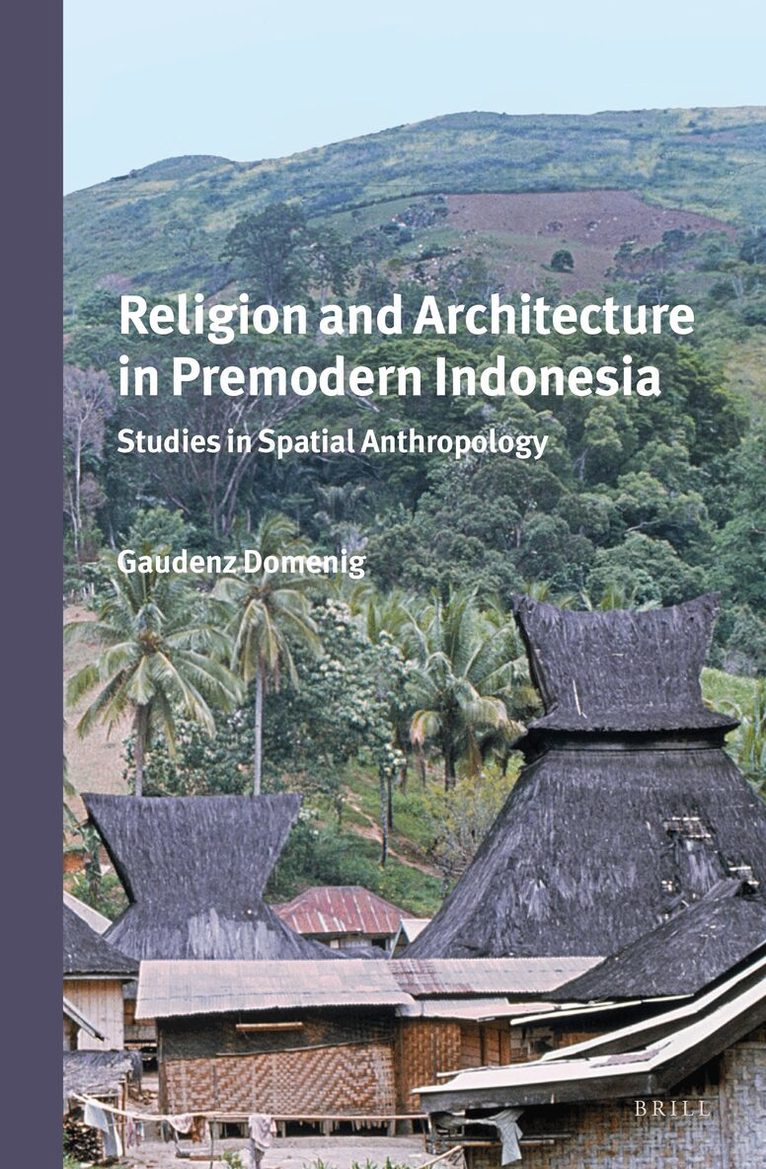
    Religion and Architecture in Premodern Indonesia

    Studies in Spatial Anthropology

    AvG. Domenig

    Inbunden, Engelska, 2014

    Del 294 i serien Verhandelingen van het Koninklijk Instituut voor Taal-, Land- en Volkenkunde

    2 615 kr

    Beställningsvara. Skickas inom 5-8 vardagar. Fri frakt över 249 kr.

    Beskrivning

    In his richly illustrated Religion and Architecture in Premodern Indonesia Gaudenz Domenig investigates the nature of Indonesian ethnic religions by focusing on land opening rituals, sacred groves, and architectural responses to the custom of presenting offerings. Since deities and spirits were supposed to taste offerings on the spot, it was a task of architecture to attract them and to guide them into houses where offerings were presented. Domenig quotes numerous sources to show that certain material elements of the house were viewed as spirit attractors, spirit ladders or spirit pathways. Various ‘exotic’ features of Indonesian vernacular architecture thus become understandable as relics from times when architecture was still responding to indigenous religions practised in the archipelago.

    Produktinformation

    • Utgivningsdatum:2014-04-03
    • Mått:155 x 235 x 38 mm
    • Vikt:1 032 g
    • Format:Inbunden
    • Språk:Engelska
    • Serie:Verhandelingen van het Koninklijk Instituut voor Taal-, Land- en Volkenkunde
    • Antal sidor:576
    • Förlag:Brill
    • ISBN:9789004274006

    Utforska kategorier

    • Arkitektur inom Kultur
    • Andra religioner och trosföreställningar inom Filosofi och religion

    Mer om författaren

    Gaudenz Domenig, architect, Swiss Federal Institute of Technology (ETH Zurich, 1960), is a pioneer of Indonesian vernacular architecture studies. Domenig has published numerous articles and a monograph; he also co-edited and co-authored Indonesian Houses (two volumes, KITLV Press, 2003, 2008).

    Recensioner i media

    "[...] this monograph is remarkable both for its thoroughness and the distinctive perspective its author brings to the topic."– Webb Keane, in Asian Ethnology 75.2 (2016), p. 489-493."[...] this study is an invaluable contribution to the history of architecture, especially concerning the communities of Western and Eastern Indonesia, and by extension, other parts of Southeast Asia with related cultural linkages."– Hélène Njoto, in Bijdragen tot de Taal-, Land- en Volkenkunde 172 (2016), p. 384-386. "The idea that vernacular architectures lend concrete form to the worldviews of their creators is certainly not a new one, but it has never been explored in such depth or with such a degree of sophistication as we find in these pages. The originality of Domenig’s discussion marks a real breakthrough in the understanding of indigenous architectures of the archipelago, and his book will go on providing food for thought for both architects and ethnographers for a long time to come."– Roxana Waterson "This is a splendid book in spatial anthropology."– Wolfgang Marschall, in Anthropos 110 (2015).