• Fri frakt över 249 kr
  • •
  • Snabba leveranser
  • •
  • Billiga böcker
Kundservice

Du är på sajten för privatpersoner.

Företag, bibliotek eller offentlig verksamhet?

Du handlar på classic.bokus.com, där alla dina funktioner finns intakta.
Till classic.bokus.com
Bokus logotyp. Gå till startsidan.
  • Erbjudanden
  • Nyheter
  • Student
  • Topplistor
  • Barn & ungdom
  • Bokus Play
  • E-böcker
  • Pocketböcker
  • Spel & pussel

10% rabatt på allt med kod: NYSTART10 →

Sidfot

Mina sidor

    Hjälp

    • Kundservice
    • Vanliga frågor och svar
    • Frakt och leverans
    • Retur vid ångerrätt
    • Reklamera vara
    • Betalning
    • Köpvillkor
    • Allmänna villkor
    • Information om webbplatsens tillgänglighet

    Om Bokus

    • Om oss
    • Pressrum
    • För studenter
    • För företag
    • För bibliotek och offentlig verksamhet
    • För leverantörer
    • Hållbarhet

    Populärt

    • Aktuella erbjudanden
    • Presentkort
    • Studentlitteratur
    • Nya böcker
    • Topplistor
    • Signerade böcker
    • Engelska böcker

    Inspiration

    • Boktips
    • BookTok
    • Populära bokserier
    • Barnbokskaraktärer
    • Populära författare
    Logotyp för Bokus
    Följ oss på Facebook (extern länk)Följ oss på Instagram (extern länk)Följ oss på YouTube (extern länk)Följ oss på TikTok (extern länk)
    bokus @ CookiesAnpassa cookiesIntegritetspolicyKöpvillkor
    Till Citymail hemsida (extern länk)Till Budbee hemsida (extern länk)Till Postnord hemsida (extern länk)Till Schenker hemsida (extern länk)Till Early Bird hemsida (extern länk)Till Walleys hemsida (extern länk)
    1. Juridik
    2. Internationell rätt
    3. Folkrätt

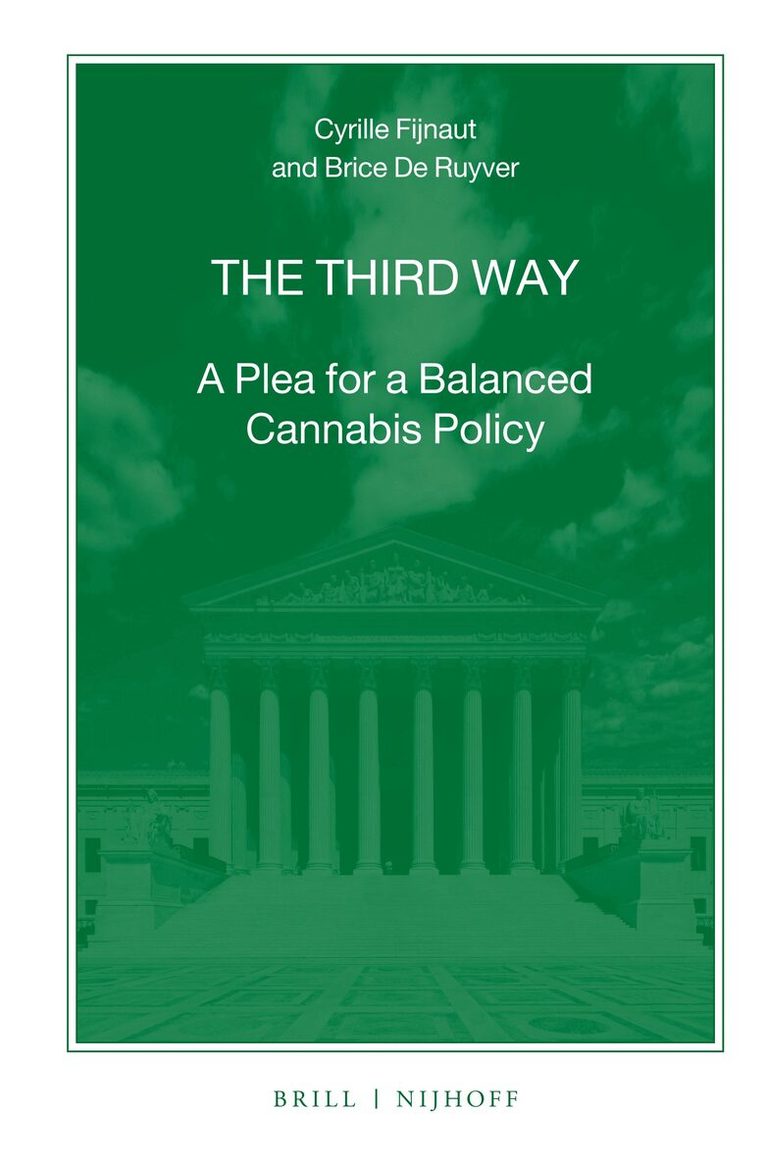
    Third Way

    A Plea for a Balanced Cannabis Policy

    AvCyrille J.C.F. Fijnaut,Brice de Ruyver

    Häftad, Engelska, 2015

    Del 87 i serien Nijhoff Law Specials

    2 182 kr

    Beställningsvara. Skickas inom 5-8 vardagar. Fri frakt över 249 kr.

    Beskrivning

    What is sensible when it comes to developing and implementing a policy with regard to products which in the case of regular use are harmful, but which at the same time exert a strong attraction, even so strong that people (may) become dependent on or addicted to them? This question relates to many illicit drugs, but these days it is, both nationally and internationally, mainly related to the policy regarding the production, distribution and consumption of cannabis. Generally speaking, the legalization of cannabis in Uruguay and in some states of the United States of America, in particular Colorado and Washington State, has given a powerful impetus to the discussion about the cannabis policy. In the Netherlands, that discussion has become increasingly relevant over the past years because of the struggle of coffeeshop owners and political parties. This volume offers the first English-language analysis of the situation in the Netherlands in order to make a contribution to the international debate on this heated topic. Since the 1960s, the Dutch cannabis policy has been an important point of reference in the international discussion about the policy that should be pursued regarding the use of cannabis. However, in international and foreign literature about cannabis policy the developments in the Netherlands are often depicted in an incomplete or one-sided manner, which has a negative impact on the quality of the international debate about what has happened and what should happen now. This volume seeks to redress that imbalance.

    Produktinformation

    • Utgivningsdatum:2015-07-24
    • Mått:155 x 235 x 12 mm
    • Vikt:373 g
    • Format:Häftad
    • Språk:Engelska
    • Serie:Nijhoff Law Specials
    • Antal sidor:230
    • Förlag:Brill
    • ISBN:9789004293182

    Utforska kategorier

    • Folkrätt inom Juridik

    Mer om författaren

    Cyrille Fijnaut was Professor of Criminal Law and Criminology at Erasmus University Rotterdam, the KU Leuven and is Emeritus Professor at Tilburg University. Particularly in the framework of his research on organized crime and special proactive police powers he frequently devoted attention to the drugs problems and the drugs policy in the Netherlands and the European Union. He has published widely about both issues in national and international journals and edited books. At the request of the governing body of the Euroregion Meuse-Rhine he carried out – together with Brice De Ruyver – in 2008 a comprehensive and in-depth inquiry into the drugs-related crime problems in this “country without borders”. The results of this research project were published in the report With a view to a common containment of the drugs related crime problems in the Euroregion Meuse-Rhine. Brice De Ruyver, Full Professor at Ghent University, is national Drug Coordinator (since 2010), member of the Scientific Committee of the European Monitoring Centre for Drugs and Drug Addiction (since 2002) and Member of the Reference Group on Drug Supply of the EMCDDA (since 2013). Furthermore, he was involved as an expert in the Parliamentary Working Group on Drugs (1996-1997). Brice De Ruyver lectures a.o. Drug Policy and Drug Phenomena at Ghent University. He was and is coordinator of several drug related research projects and has published numerous articles and book chapters on a.o. the UN Drug Treaties, the cooperation between the criminal justice system and (drug) treatment services, drug related nuisance, drug related public expenditures, drug related crime and drug supply.

    Innehållsförteckning

    • Excerpt of table of contents:1. General introduction: a way out of the deadlock1.1. The subject of this discourse1.2. A framework of basic concepts1.3. The structure of this book2. The United Nations and cannabis policy2.1. Introduction2.2. The Conventions of 1912, 1925, 1931 and 19362.3. The Conventions of 1961 and 19682.4. The current debate within the United Nations2.5.Conclusion3. Cannabis policy in the Americas3.1. Introduction3.2. The Prohibition Era in the United States, 1919-19333.3. The American legalization debate in the 1980s3.4. The legalization of cannabis in the Americas3.5. Conclusion4. Cannabis policy in the European Union4.1. Introduction4.2. The origin of the pursued policy4.3. The Schengen Agreement and drug policy4.4. The present drug policy of the European Union4.5. Policy developments in the member states4.6. Conclusion5. The Dutch cannabis policy5.1. Introduction5.2. The naive starting point in the 1970s and 1980s5.3. The approbation of the Treaty against the smuggling of drugs5.4. The reconsideration of the policy in 1996 and 20045.5. The development, organization and functioning of the illicit cannabis cultivation5.6. The cannabis problem and the problem of the coffeeshops5.7. The tolerated sale and use of cannabis around 20105.8. The proposals of the Van de Donk Commission5.9. Conclusion6. General conclusion: towards a Third Way6.1. The reformulation of the question6.2. A preliminary matter: the reconsideration of the drug treaties6.3. The regulation of alcohol and tobacco: a good example?6.4. The legalization of cannabis in the European Union: the American way?6.5. The regulation of cannabis in the European Union: a proposal for discussionBibliography; Index.