• Fri frakt över 249 kr
  • •
  • Snabba leveranser
  • •
  • Billiga böcker
Kundservice

Du är på sajten för privatpersoner.

Företag, bibliotek eller offentlig verksamhet?

Du handlar på classic.bokus.com, där alla dina funktioner finns intakta.
Till classic.bokus.com
Bokus logotyp. Gå till startsidan.
  • Erbjudanden
  • Nyheter
  • Student
  • Topplistor
  • Barn & ungdom
  • Bokus Play
  • E-böcker
  • Pocketböcker
  • Spel & pussel

10% rabatt på allt med kod: NYSTART10 →

Sidfot

Mina sidor

    Hjälp

    • Kundservice
    • Vanliga frågor och svar
    • Frakt och leverans
    • Retur vid ångerrätt
    • Reklamera vara
    • Betalning
    • Köpvillkor
    • Allmänna villkor
    • Information om webbplatsens tillgänglighet

    Om Bokus

    • Om oss
    • Pressrum
    • För studenter
    • För företag
    • För bibliotek och offentlig verksamhet
    • För leverantörer
    • Hållbarhet

    Populärt

    • Aktuella erbjudanden
    • Presentkort
    • Studentlitteratur
    • Nya böcker
    • Topplistor
    • Signerade böcker
    • Engelska böcker

    Inspiration

    • Boktips
    • BookTok
    • Populära bokserier
    • Barnbokskaraktärer
    • Populära författare
    Logotyp för Bokus
    Följ oss på Facebook (extern länk)Följ oss på Instagram (extern länk)Följ oss på YouTube (extern länk)Följ oss på TikTok (extern länk)
    bokus @ CookiesAnpassa cookiesIntegritetspolicyKöpvillkor
    Till Citymail hemsida (extern länk)Till Budbee hemsida (extern länk)Till Postnord hemsida (extern länk)Till Schenker hemsida (extern länk)Till Early Bird hemsida (extern länk)Till Walleys hemsida (extern länk)
    1. Filosofi och religion
    2. Religion och tro
    3. Religion: allmänt

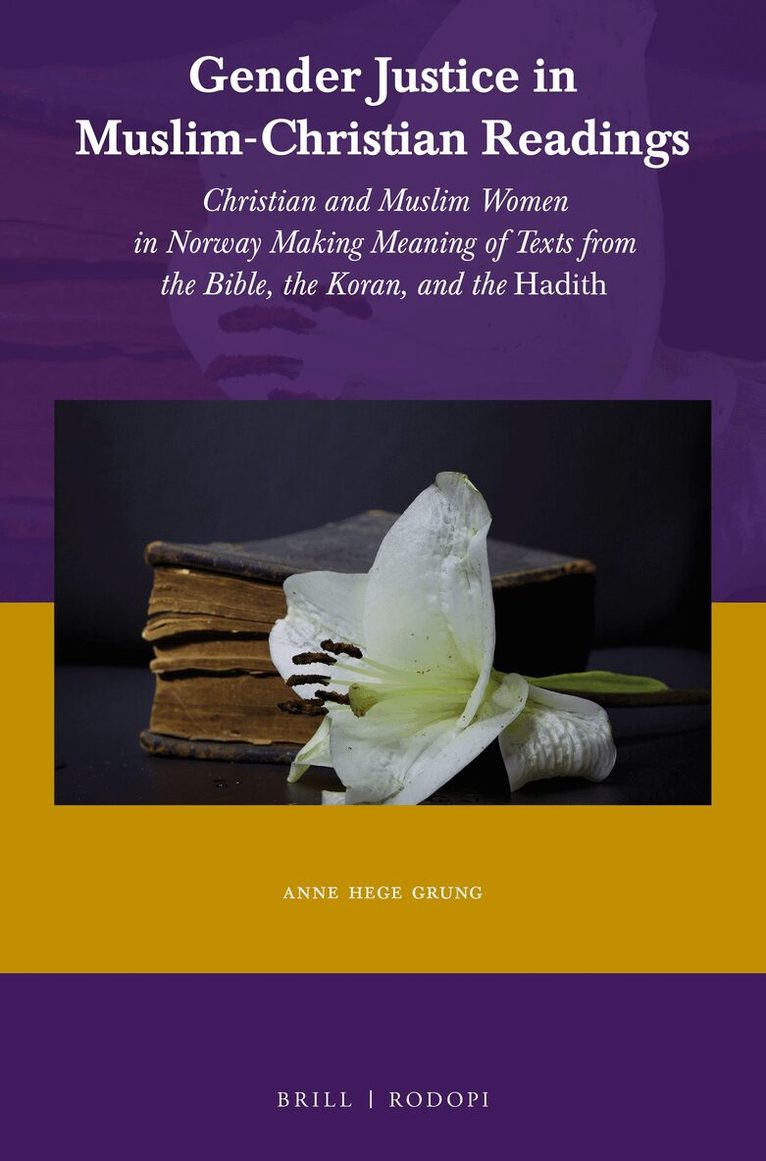
    Gender Justice in Muslim-Christian Readings

    Christian and Muslim Women in Norway: Making Meaning of Texts from the Bible, the Koran, and the Hadith

    AvAnne Hege Grung

    Häftad, Engelska, 2015

    Del 53 i serien Currents of Encounter

    1 353 kr

    Beställningsvara. Skickas inom 5-8 vardagar. Fri frakt över 249 kr.

    Beskrivning

    In recent decades, women in the Christian and Islamic traditions have been negotiating what it means to participate in religious practice as a woman within the two traditions, and how to interpret canonical scripture. This book creates a shared space for Muslim and Christian women with diverse cultural and denominational backgrounds, by making meaning of texts from the Bible, the Koran, and the Hadith. It builds on the reading and discussion of the Hagar narratives, as well as 1 Timothy 2:8-15 and Sura 4:34 from the New Testament and the Koran respectively, by a group of both Christian and Muslim women. Interpretative strategies and contextual analyses emerge from the hermeneutical analysis of the women’s discussions on the ambiguous contributions of the texts mentioned above to the traditional views on women. This book shows how intertextual dialogue between the Christian and Islamic traditions establishes an interpretative community through the encounter of Christian and Muslim readers. The negotiation between a search for gender justice and the Christian and Islamic traditions as lived religions is extended into a quest for gender justice through the co-reading of texts. In times when gender and the status of women are played into the field of religious identity politics, this book shows that bringing female readers together to explore the canonical texts in the two traditions provides new insights about the texts, the contexts, and the ways in which Muslim-Christian dialogue can provide complex and promising hermeneutical space where important questions can be posed and shared strategies found.

    Produktinformation

    • Utgivningsdatum:2015-09-25
    • Mått:155 x 235 x 26 mm
    • Vikt:756 g
    • Format:Häftad
    • Språk:Engelska
    • Serie:Currents of Encounter
    • Antal sidor:486
    • Förlag:Brill
    • ISBN:9789004306691

    Utforska kategorier

    • Religion: allmänt inom Filosofi och religion
    • Kristendom inom Filosofi och religion

    Mer om författaren

    Anne Hege Grung (1965) is Associate Professor in Practical Theology at the Practical-Theological Seminary, Oslo. She has been engaging with Muslim-Christian encounters and dialogue through participation and research since the early 1990s in Norway and beyond.

    Innehållsförteckning

    • Table of ContentsAcknowledgements PART I - INTRODUCTION CHAPTER 1 BACKGROUND, AIM, AND FOCUS Gender JusticeDelimitations of this Study PART II - THEORETICAL, CONTEXTUAL, AND METHODOLOGICAL PERSPECTIVES CHAPTER 2 THEORETICAL AND CONTEXTUAL PERSPECTIVESHermeneutics, Dialogue, and Feminisms Hermeneutics Dialogue and Hermeneutics Two Models of Interreligious/Transreligious Dialogue Feminisms, Muslim‐Christian Dialogue, and Hermeneutics CHAPTER 3METHODOLOGICAL CONSIDERATIONS, CHOICES, AND TOOLS Situating the Project Methodologically Establishing the Empirical Material: Selecting Texts,Participants, and Working Methods Methodological Discussions Ethical Perspectives The Empirical Material in the Study and the Analysis PART III - SITUATING THE BIBLE, THE KORAN, AND THE HADITH: READINGS OF THE HAGAR/HAJAR NARRATIVESCHAPTER 4SHARING IMAGES AND EXPERIENCES OF THE KORAN AND THE BIBLE Is it OK to Leave the Bible on the Floor?Different Understandings of Materiality and Respect for the Bible and the Koran The First Discussion in the Group: Complex Communication What is at Stake for the Participants in this DiscussionCHAPTER 5MAKING MEANING OF THE HAGAR/HAJAR NARRATIVES The Hagar/Hajar Narratives in the Old Testament and the Hadith The First Comments on the Hagar/Hajar Narratives Discussion 1 on the Hagar/Hajar Narratives: The Practice of Naming Women Practices of Naming as an Example of Discrimination Against Women in Text and Context Discussion 2 on the Hagar/Hajar Narratives:Eva: “How could Hagar/Hajar abandon Ishmael in the desert?” Discussion 3 on the Hagar/Hajar Narratives:The Complexity of the Hagar/Hajar Narratives in the Process of InterpretationTestimonies about Narratives of Equality and Hope: Temporal and Spatial Aspects Discussion 4 on the Hagar/Hajar Narratives: Obedience versus Forgiveness in the Christian and Islamic Traditions PART IV - SITUATING THE CONTEXTS: READINGS OF SURA 4:34 AND 1 TIMOTHY 2:8‐15 CHAPTER 6MAKING MEANING OF SURA 4:34 AND 1 TIMOTHY 2:8‐15 The Texts: 1 Timothy 2:8‐15 (the New Testament) and Sura 4:34 (the Koran) Discussion 1 on Sura 4:34 and 1 Timothy 2:8‐15: Inger: “Why do I have to read this in 2006? These texts belong to the past” Discussion 2 on Sura 4:34 and 1 Timothy 2:8‐15: Aira: “The old understanding of old things that perhaps used to be sufficient but is not today” Discussion 3 on Sura 4:34 and 1 Timothy 2:8‐15: Inger: “Women as wise as us ... need … to get something said!” Discussion 4 on Sura 4:34 and 1 Timothy 2:8‐15: Shirin: “But think about it. This is much better than what happens in real life” Concluding Discussion on Sura 4:34 and 1 Timothy 2:8‐15: Strategies of Making Meaning and Ethical Implications for the Readers PART V - CONCLUSIONS CHAPTER 7MAKING MEANING OF CANONICAL SCRIPTURES:A STEP TOWARD GENDER JUSTICE? The Crucial Focus Point in Gender Justice: The Texts or the Readers? The Canonical Texts: Roles and Functions The Hermeneutical Strategies and Tools: Shared and Particular Different Hermeneutical Strategies Used in the Narrative and the Prescriptive Texts? Religious Differences and How They Are Interpreted: Constitutive or Challenging? A Dialogically Situated Feminist Hermeneutics Gender Justice, Religious Traditions, and Dialogue:In Search for Places of Human Equality BibliographyIndex of subjectsIndex of authors