• Fri frakt över 249 kr
  • •
  • Snabba leveranser
  • •
  • Billiga böcker
Kundservice

Du är på sajten för privatpersoner.

Företag, bibliotek eller offentlig verksamhet?

Du handlar på classic.bokus.com, där alla dina funktioner finns intakta.
Till classic.bokus.com
Bokus logotyp. Gå till startsidan.
  • Erbjudanden
  • Nyheter
  • Student
  • Topplistor
  • Barn & ungdom
  • Bokus Play
  • E-böcker
  • Pocketböcker
  • Spel & pussel

10% rabatt på allt med kod NYSTART10 →

Sidfot

Mina sidor

    Hjälp

    • Kundservice
    • Vanliga frågor och svar
    • Frakt och leverans
    • Retur vid ångerrätt
    • Reklamera vara
    • Betalning
    • Köpvillkor
    • Allmänna villkor
    • Information om webbplatsens tillgänglighet

    Om Bokus

    • Om oss
    • Pressrum
    • För studenter
    • För företag
    • För bibliotek och offentlig verksamhet
    • För leverantörer
    • Hållbarhet

    Populärt

    • Aktuella erbjudanden
    • Presentkort
    • Studentlitteratur
    • Nya böcker
    • Topplistor
    • Signerade böcker
    • Engelska böcker

    Inspiration

    • Boktips
    • BookTok
    • Populära bokserier
    • Barnbokskaraktärer
    • Populära författare
    Logotyp för Bokus
    Följ oss på Facebook (extern länk)Följ oss på Instagram (extern länk)Följ oss på YouTube (extern länk)Följ oss på TikTok (extern länk)
    bokus @ CookiesAnpassa cookiesIntegritetspolicyKöpvillkor
    Till Citymail hemsida (extern länk)Till Budbee hemsida (extern länk)Till Postnord hemsida (extern länk)Till Schenker hemsida (extern länk)Till Early Bird hemsida (extern länk)Till Walleys hemsida (extern länk)
    1. Historia och arkeologi
    2. Historia
    3. Mellanösterns historia

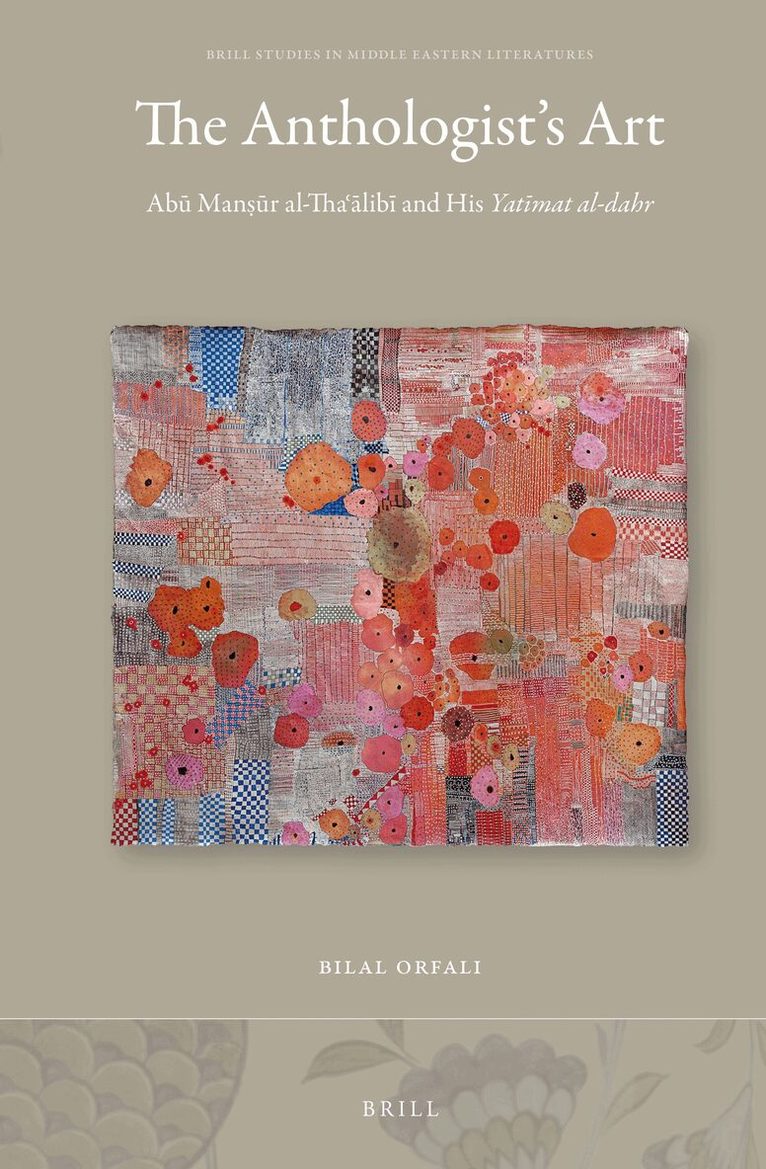
    Anthologist’s Art

    Abū Manṣūr al-Thaʿālibī and His Yatīmat al-dahr

    AvBilal Orfali

    Inbunden, Engelska, 2016

    Del 37 i serien Brill Studies in Middle Eastern Literatures

    2 380 kr

    Beställningsvara. Skickas inom 5-8 vardagar. Fri frakt över 249 kr.

    Beskrivning

    Why did premodern authors in the Arabic-Islamic culture compile literary anthologies, and why were these works remarkably popular? How can an anthology that consists of reproduced material be original and creative, and serve various literary and political ends? How did anthologists select their material, then record and arrange it?This book examines the life and works of Abū Manṣūr al-Thaʿālibī (350–429/961–1039), an eminent anthologist from Nīshāpūr, paying special attention to his magnum opus, Yatīmat al-dahr (The Unique Pearl), and its sequel, Tatimmat al-Yatīma (The Completion of the Yatīma). This book is a direct window on to an anthologist’s workshop in the second half of the fourth/tenth century. It examines the methodological consciousness expressed in Thaʿālibī’s selection and arrangement, and his sophisticated system of internal references and cross-references to other works; how he selected from his contemporaries’ oeuvres; how he sought, recorded, memorized, misplaced, and sometimes lost or forgot his selections; how he scrutinized the authenticity of material, accepting, questioning, or rejecting its attribution; and the errors and inconsistencies that resulted from this process.

    Produktinformation

    • Utgivningsdatum:2016-06-23
    • Mått:155 x 235 x 21 mm
    • Vikt:571 g
    • Format:Inbunden
    • Språk:Engelska
    • Serie:Brill Studies in Middle Eastern Literatures
    • Antal sidor:272
    • Förlag:Brill
    • ISBN:9789004316294

    Utforska kategorier

    • Mellanösterns historia inom Historia och arkeologi
    • Litteraturvetenskap inom Skönlitteratur

    Mer om författaren

    Bilal Orfali, Ph.D. (2009), Yale University, is associate professor of Arabic studies at the American University of Beirut. He is editor of In the Shadow of Arabic (Brill, 2011); Sufism, Black and White, with Nada Saab (Brill, 2012); The Comfort of the Mystics, with Gerhard Böwering (Brill, 2013); and The Book of Noble Character, with Ramzi Baalbaki (Brill, 2015).

    Recensioner i media

    يضع الدكتور الأرفه لي في كتابه هذا مؤلفي "اليتيمة والتتمة" في سياقهما الأدبي، عارضا لهما من باب المقارنة والتحقيق والتصنيف، مقدما وسيلة بحثية غنية للباحثين ومهتمين بفن المختارات الأدبية. فيفكك حبكة الكتاب وخطة المؤلف إلى عناصر وسمات تميز "اليتيمة والتتمة" من غيرهما من كتب المختارات الأدبية. كما ويجمع الكتاب بعضا من آراء الباحثين ما يجعله بابا للتعرف على فن المختارات الأدبية مجالات البحث والدراسة فيها.علاء كيالي، المشرق 91/2، تموز-كانون الأول 2017Alaa Kayali, al-Mashriq 91/2, July-December 2017"الكتباب الذي بين أيدينا دراسة جادة ومتأنية وعميقة، ستترك ولا شك أثرًا كبيرا في الدراسات العربية، فهي تطرح وتعالج عددًا كبيرًا من الأسئلة الأدبية والثقافية، وتفتح الباب أمام عدد جديد من الأسئلة المتعلّقة بالأنواع الأدبية العربية القديمة، وطرق التأليف العربية، وعلاقة الأدباء بالقصور، ورحلاتهم الأدبية والمهنية، وتذوق الأمراء والوزراء والنقّاد والأدباء للأدب في القرنين الرابع والخامس الهجريين."مريم مشتاوي، الشرق الأوسط، 16 رمضان 1437\21 يونيو 2016، العدد 13720Maryam Mishtawi, Al-Sharq al-Awsat, 21 June 2016, issue 13720"The Anthologist's Art is a welcome contribution to our knowledge of literary anthologies and of adab in the fourth to the fifth/tenth to the eleventh centuries. It points the way to further inquiries into the networks through which adab circulated and the tastes that informed its evaluation."Matthew L. Keegan, in: Al-Abhath 64 (2016)"Bilal Orfail's study is an important work of literary scholarship. It is important both for its detailed account of al-Thaʿālibī's career (his works, his methods, and his legacy) as well as for the attention it pays to an exemplar of a genre that has played a critical role in the development and perservation of classical Arabic poetic and literary traditions."Adam Talib, Durham University, in: Journal of the American Oriental Society 139/1 (2019) "The Anthologist's Art offers a truly comprehensive picture of the Yatīmat al-dahr and Tatimmat al-Yatīma. The amount of questions Orfali discusses makes it an important survey that has few equals in the history of Arabic literature. Its undoubted merit consists in contextualizing the enormous quantity of materials collected by Thaʿālibī' within the broader socio-literary framework of the century in which he lived and within the type of works through which he chose to express himself. Ultimately, it offers a further, indispensable, piece of knowledge of a central activity for cultivating adab (not yet sufficiently appreciated) that was anthologizing." Francesca Bellino, Università degli Studi di Napoli "L'Orientale", in: Annali, sezione Orientale 79 (2019)

    Innehållsförteckning

    • PrefaceAcknowledgmentsAbbreviationsList of IllustrationsNote on Editions and Manuscripts of the Yatīma and Tatimma1. The Art of Anthology in Premodern Arabic LiteratureAnthology and AdabApproaches to the Study of Arabic Literary Anthology in Modern ScholarshipMotives for AnthologizingA Map of Arabic Poetry Anthologies2. Life and Legacy of ThaʿālibīAbū Manṣūr al-ThaʿālibīLegacy of ThaʿālibīBibliography of ThaʿālibīPrinted Authentic WorksPrinted, Authenticity DoubtfulPrinted, Authenticity RejectedIn Manuscript, Authentic worksIn Manuscript, Authenticity UncertainIn Manuscript, Authenticity RejectedWorks Surviving in QuotationsLost Works3. An Anthologist at Work: The Organization and Structure of the Yatīma and TatimmaOrganizationProminent LitterateursCourts, Dynasties and Other PatronsCities and Sub-RegionsCritical Awareness in the Organization of the Yatīma and TatimmaSelection of MaterialThe Arrangement of Entries in a Chapter: Proximity and ResemblanceReferences and Cross-ReferencesCross-ReferencesReferences in the Tatimma to the YatīmaReferences to the Earlier Version of the YatīmaReferences to Other Works by ThaʿālibīLater Additions to the YatīmaAuthenticity and MisattributionForgotten, Lost, and Inconsistent Material4. The Sources of Thaʿālibī in Yatīmat al-Dahr and Tatimmat al-YatīmaWritten SourcesDīwānsBooksOther Written MediaOral/Aural SourcesMain Guarantors in the YatīmaMain Guarantors in the TatimmaConclusion5. Material within the EntryCategorization and Arrangement of Material within EntriesThe Biographical SummaryDatesDeaths of PoetsReligious ViewsTraining and EducationProfessionsFamilies of LitterateursCharacterization of Litterateurs and Their Literary OeuvresGeographical ContextSocial ContextHistorical ContextComparing LitterateursKnowledge of PersianRelations between ContemporariesPhysical and Character FeaturesPatronagePatron-Littérateur RelationsAdmission to a CourtMeeting a PatronLeaving a CourtPrison Incidents and StoriesDescription of Courtly MajālisEvaluating Literary ProductionConclusionAppendix 1: Outline of the Yatīma and TatimmaAppendix 2: Sources of Yatīmat al-DahrAppendix 3: Sources of Tatimmat al-YatīmaAppendix 4: Comparisons between PoetsBibliographyIndex