• Fri frakt över 249 kr
  • •
  • Snabba leveranser
  • •
  • Billiga böcker
Kundservice

Du är på sajten för privatpersoner.

Företag, bibliotek eller offentlig verksamhet?

Du handlar på classic.bokus.com, där alla dina funktioner finns intakta.
Till classic.bokus.com
Bokus logotyp. Gå till startsidan.
  • Erbjudanden
  • Nyheter
  • Student
  • Topplistor
  • Barn & ungdom
  • Bokus Play
  • E-böcker
  • Pocketböcker
  • Spel & pussel

Må bättre, för mindre! Upp till 50% rabatt på hälsoböcker

Sidfot

Mina sidor

    Hjälp

    • Kundservice
    • Vanliga frågor och svar
    • Frakt och leverans
    • Retur vid ångerrätt
    • Reklamera vara
    • Betalning
    • Köpvillkor
    • Allmänna villkor
    • Information om webbplatsens tillgänglighet

    Om Bokus

    • Om oss
    • Pressrum
    • För studenter
    • För företag
    • För bibliotek och offentlig verksamhet
    • För leverantörer
    • Hållbarhet

    Populärt

    • Aktuella erbjudanden
    • Presentkort
    • Studentlitteratur
    • Nya böcker
    • Topplistor
    • Signerade böcker
    • Engelska böcker

    Inspiration

    • Boktips
    • BookTok
    • Populära bokserier
    • Barnbokskaraktärer
    • Populära författare
    Logotyp för Bokus
    Följ oss på Facebook (extern länk)Följ oss på Instagram (extern länk)Följ oss på YouTube (extern länk)Följ oss på TikTok (extern länk)
    bokus @ CookiesAnpassa cookiesIntegritetspolicyKöpvillkor
    Till Citymail hemsida (extern länk)Till Budbee hemsida (extern länk)Till Postnord hemsida (extern länk)Till Schenker hemsida (extern länk)Till Early Bird hemsida (extern länk)Till Walleys hemsida (extern länk)
    1. Ekonomi och Ledarskap
    2. Företagsekonomi
    3. Redovisning och finansiering
    4. Finansiering

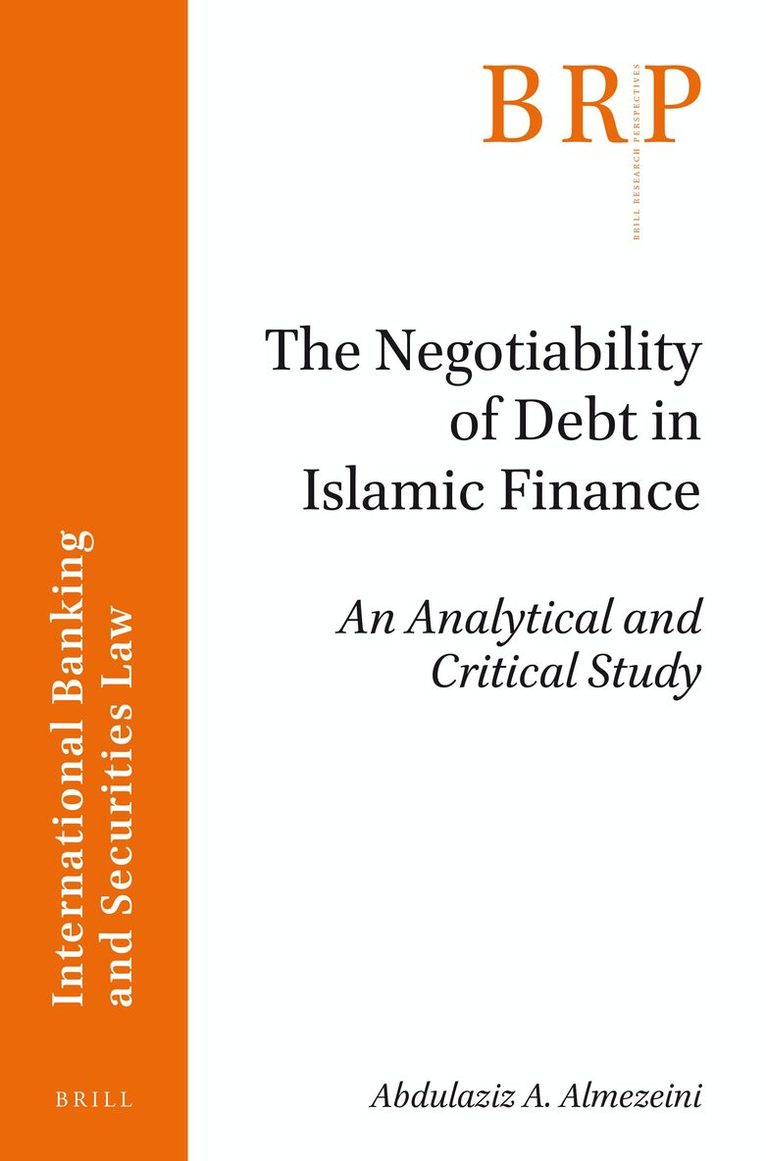
    Negotiability of Debt in Islamic Finance

    An Analytical and Critical Study

    AvAbdulaziz Ahmed Almezeini

    Häftad, Engelska, 2017

    Del i serien Brill Research Perspectives in International Banking and Securities Law

    1 105 kr

    Beställningsvara. Skickas inom 5-8 vardagar. Fri frakt över 249 kr.

    Beskrivning

    The challenges posed by the non-liquidity and non-diversity of the Islamic debts market make the market an inefficient tool on contributing to Muslim economic growth. Islamic scholars and experts created sukuk as an Islamic debt instrument to avoid riba (usury), but the sukuk market (especially in the Gulf) still struggles with the prohibition of the trade of debt due to the prohibition of the two Fiqh Academies.Trading and securitizing debts should be permitted in Islamic law, with one condition, that the debt should be considered low risk. This new rule, the permissibility of trading debts, is supported by three Islamic legal bases, istishab, qiyas, and maslaha, which are recognized by all four Islamic schools of legal thought. Furthermore, permitting the trading of debts is more consistent with the principles and theories of Islamic law than is forbidding it. It is consistent with the obligations theory that debt is a personal right. It is consistent with the mal (property) theory that debt may be sold according to the three Islamic schools of legal thought, all of which consider debt as property. It is consistent with other modern Islamic financial transactions that are permitted by the two Fiqh Academies, such as tawarruq and murabaha.

    Produktinformation

    • Utgivningsdatum:2017-01-19
    • Mått:155 x 235 x 5 mm
    • Vikt:165 g
    • Format:Häftad
    • Språk:Engelska
    • Serie:Brill Research Perspectives in International Banking and Securities Law
    • Antal sidor:88
    • Förlag:Brill
    • ISBN:9789004340275

    Utforska kategorier

    • Finansiering inom Ekonomi och Ledarskap
    • Redovisning inom Ekonomi och Ledarskap
    • Folkrätt inom Juridik

    Mer om författaren

    Abdulaziz A. Almezeini, SJD (PHD in Law) 2015, Georgetown University Law center, is an Assistant professor at the Higher Judicial Institute, Al-Imam Muhammad Ibn Saud University, Riyadh. He has published several articles in Saudi Arabia, such as "The Legal Mind in American Universities" and "Democracy in Corporate Law".