• Fri frakt över 249 kr
  • •
  • Snabba leveranser
  • •
  • Billiga böcker
Kundservice

Du är på sajten för privatpersoner.

Företag, bibliotek eller offentlig verksamhet?

Du handlar på classic.bokus.com, där alla dina funktioner finns intakta.
Till classic.bokus.com
Bokus logotyp. Gå till startsidan.
  • Erbjudanden
  • Nyheter
  • Student
  • Topplistor
  • Barn & ungdom
  • Bokus Play
  • E-böcker
  • Pocketböcker
  • Spel & pussel

Må bättre, för mindre! Upp till 50% rabatt på hälsoböcker

Sidfot

Mina sidor

    Hjälp

    • Kundservice
    • Vanliga frågor och svar
    • Frakt och leverans
    • Retur vid ångerrätt
    • Reklamera vara
    • Betalning
    • Köpvillkor
    • Allmänna villkor
    • Information om webbplatsens tillgänglighet

    Om Bokus

    • Om oss
    • Pressrum
    • För studenter
    • För företag
    • För bibliotek och offentlig verksamhet
    • För leverantörer
    • Hållbarhet

    Populärt

    • Aktuella erbjudanden
    • Presentkort
    • Studentlitteratur
    • Nya böcker
    • Topplistor
    • Signerade böcker
    • Engelska böcker

    Inspiration

    • Boktips
    • BookTok
    • Populära bokserier
    • Barnbokskaraktärer
    • Populära författare
    Logotyp för Bokus
    Följ oss på Facebook (extern länk)Följ oss på Instagram (extern länk)Följ oss på YouTube (extern länk)Följ oss på TikTok (extern länk)
    bokus @ CookiesAnpassa cookiesIntegritetspolicyKöpvillkor
    Till Citymail hemsida (extern länk)Till Budbee hemsida (extern länk)Till Postnord hemsida (extern länk)Till Schenker hemsida (extern länk)Till Early Bird hemsida (extern länk)Till Walleys hemsida (extern länk)
    1. Ekonomi och Ledarskap
    2. Nationalekonomi
    3. Internationell ekonomi

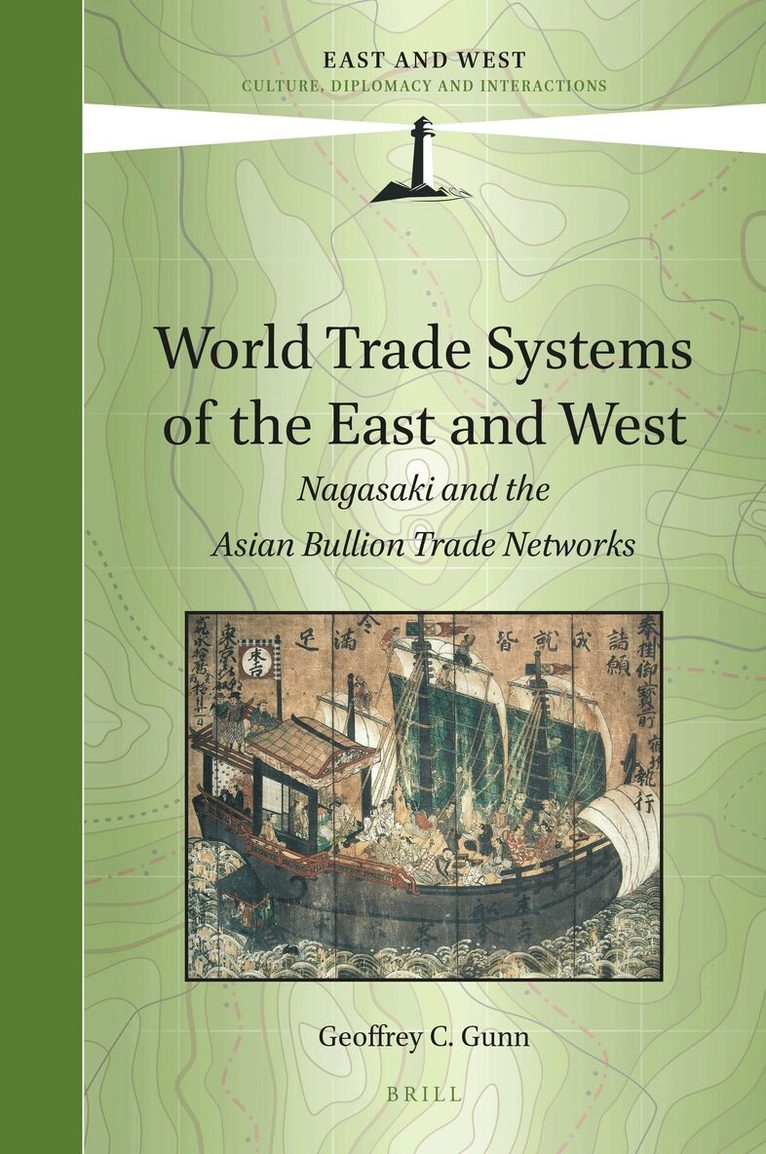
    World Trade Systems of the East and West

    Nagasaki and the Asian Bullion Trade Networks

    AvGeoffrey C. Gunn

    Inbunden, Engelska, 2017

    Del 2 i serien East and West

    2 511 kr

    Beställningsvara. Skickas inom 5-8 vardagar. Fri frakt över 249 kr.

    Beskrivning

    In World Trade Systems of the East and West, Geoffrey C. Gunn profiles Nagasaki's historic role in mediating the Japanese bullion trade, especially silver exchanged against Chinese and Vietnamese silk. Founded in 1571 as the terminal port of the Portuguese Macau ships, Nagasaki served as Japan's window to the world over long time and with the East-West trade carried on by the Dutch and, with even more vigor, by the Chinese junk trade. While the final expulsion of the Portuguese in 1646 characteristically defines the “closed” period of early modern Japanese history, the real trade seclusion policy, this work argues, only came into place one century later when the Shogunate firmly grasped the true impact of the bullion trade upon the national economy.

    Produktinformation

    • Utgivningsdatum:2017-12-01
    • Mått:155 x 235 x 25 mm
    • Vikt:666 g
    • Format:Inbunden
    • Språk:Engelska
    • Serie:East and West
    • Antal sidor:322
    • Förlag:Brill
    • ISBN:9789004358553

    Utforska kategorier

    • Internationell ekonomi inom Ekonomi och Ledarskap
    • Internationella relationer inom Samhälle och politik
    • Asiens historia inom Historia och arkeologi

    Mer om författaren

    Geoffrey C. Gunn, Ph.D. is a graduate of Melbourne and Monash universities in Asian history. Emeritus professor of Nagasaki University, he has also published such works as First Globalization: The Eurasian Exchange, 1500-1800 (Rowman & Littlefield, 2003), as well as dedicated studies on Vietnam and Macau.

    Recensioner i media

    "Gunn has contributed a detailed study of Nagasaki trade during Japan’s unification andunder the Tokugawa. It is an excellent contribution to global history and a requiredreference to understand the place of Japan in the world economy of the Modern Era."-Arturo Giráldez, School of International Studies, University of the Pacific, in Journal of Contemporary Asia, 03 Feb 2019.

    Innehållsförteckning

    • PrefaceList of Tables and IllustrationsGlossary/AbbreviationsNote on Weights and CurrenciesIntroductionJapanese HistoriographyThe East-Southeast Asian Bullion Trade ZoneThe Book1 Kyushu in the East Asian Trade NetworksSpanish Manila and the Galleon TradeThe Portuguese “Discovery” of the Kyushu Trade NetworksThe Ryukyu Tribute TradeGold, Silver, and Copper Mines in JapanJapanese Maritime Trade with China and KoreaThe Portuguese Missionary Arrival in KyushuConclusion2 Merchants and Missionaries in the Foundation of NagasakiNagasaki’s Obscure OriginsThe Portuguese Merchant-Missionary Arrival in NagasakiNagasaki under Jesuit RuleThe Manila-Japan Trade ConnectionReturn to Imperial Rule (1588) and PersecutionsConclusion3 Nagasaki and the Silk TradeSetting the Scene on Silk Production and ProcurementFunctional Aspects of the Macau-Nagasaki Silk TradeThe Portuguese Merchant PresenceThe VOC Silk Trade with TonkinConclusion4 The Dutch and English at HiradoThe Dutch Establishment at Hirado (1609–41)The Dutch and the Contest for Taiwan (1604–61)The Zheng Family DynastyThe Dutch Trade at HiradoThe English at Hirado (1613–23)Conclusion5 The Shimabara Rebellion (1637–38) RevisitedBackground to the RebellionThe Duarte Correa Manuscript and the First Stirrings of RebellionThe Battle for ShimabaraMillennial Rebels or Economic Victims?The Anti-Christian BacklashConclusion6 Nagasaki and the Southeast Asia TradeDrawing the Contours of the “Red Seal” TradeThe Chinese Junk Trade at Nagasaki in the kai-hentai RecordsStatus of the Junk Traffic in 1664Scale and Scope of the Nagasaki-Vietnam TradeConclusion7 The Chinese of Nagasaki and their Social and Commercial ActivitiesOrigins of the Nagasaki Chinese Community under the MingChinese Temple Communities in Nagasaki and their Functional RoleThe Zheng Trade with Nagasaki during the Ming-Qing TransitionThe Restoration of the China Trade under the QingThe Seventeenth Century Chinese Legacy in NagasakiConclusion8 Nagasaki in the Age of KaempferKaempfer’s NagasakiDutch Trade at DeshimaA Dutch West India Company Account of 1721–23Carl Peter Thunberg’s Account of 1795Closed Door under Foreign PressureConclusion9 Parameters of the Bullion Trade Economy NetworkPortuguese Profits on the Silk-for-Silver TradePutting a Value on the Dutch and Chinese Bullion TradePortuguese and Dutch in the Global Copper TradeReassessing the Silver Drain from Japan, the Role of Arai HakusekiNagasaki and the Asian Bullion Trade ReprisedConclusionGlobal Economy and World SystemStagnant Japan, Rising Japan, or Mid-Tokugawa Crisis?A Precocious Early Modernization?Nagasaki’s Pioneer Role in Japan’s IndustrializationBibliography