• Fri frakt över 249 kr
  • •
  • Snabba leveranser
  • •
  • Billiga böcker
Kundservice

Du är på sajten för privatpersoner.

Företag, bibliotek eller offentlig verksamhet?

Du handlar på classic.bokus.com, där alla dina funktioner finns intakta.
Till classic.bokus.com
Bokus logotyp. Gå till startsidan.
  • Erbjudanden
  • Nyheter
  • Student
  • Topplistor
  • Barn & ungdom
  • Bokus Play
  • E-böcker
  • Pocketböcker
  • Spel & pussel

10% rabatt på allt med kod: NYSTART10 →

Sidfot

Mina sidor

    Hjälp

    • Kundservice
    • Vanliga frågor och svar
    • Frakt och leverans
    • Retur vid ångerrätt
    • Reklamera vara
    • Betalning
    • Köpvillkor
    • Allmänna villkor
    • Information om webbplatsens tillgänglighet

    Om Bokus

    • Om oss
    • Pressrum
    • För studenter
    • För företag
    • För bibliotek och offentlig verksamhet
    • För leverantörer
    • Hållbarhet

    Populärt

    • Aktuella erbjudanden
    • Presentkort
    • Studentlitteratur
    • Nya böcker
    • Topplistor
    • Signerade böcker
    • Engelska böcker

    Inspiration

    • Boktips
    • BookTok
    • Populära bokserier
    • Barnbokskaraktärer
    • Populära författare
    Logotyp för Bokus
    Följ oss på Facebook (extern länk)Följ oss på Instagram (extern länk)Följ oss på YouTube (extern länk)Följ oss på TikTok (extern länk)
    bokus @ CookiesAnpassa cookiesIntegritetspolicyKöpvillkor
    Till Citymail hemsida (extern länk)Till Budbee hemsida (extern länk)Till Postnord hemsida (extern länk)Till Schenker hemsida (extern länk)Till Early Bird hemsida (extern länk)Till Walleys hemsida (extern länk)
    1. Samhälle och politik
    2. Samhälle och kultur

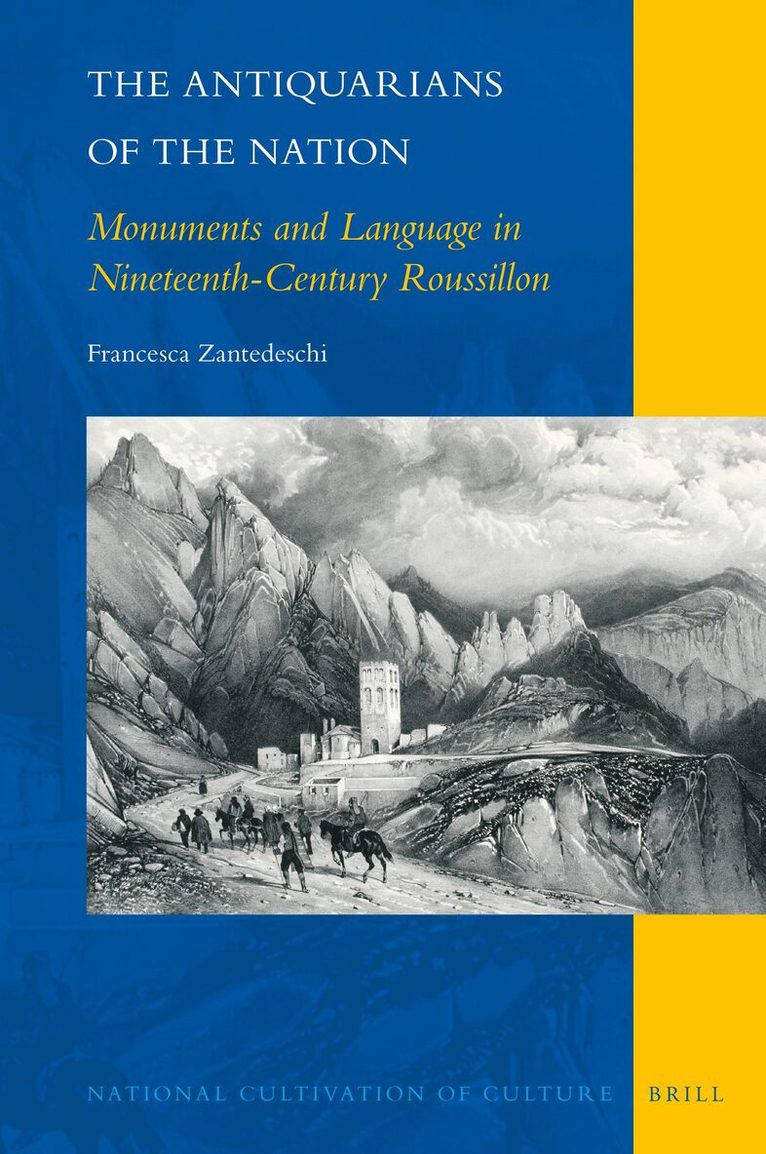
    Antiquarians of the Nation

    Monuments and Language in Nineteenth-Century Roussillon

    AvFrancesca Zantedeschi

    Inbunden, Engelska, 2019

    Del 16 i serien National Cultivation of Culture

    2 264 kr

    Beställningsvara. Skickas inom 5-8 vardagar. Fri frakt över 249 kr.

    Beskrivning

    In the nineteenth century, the search for the artistic, architectural and written monuments promoted by the French State with the aim to build a unified nation transcending regional specificities, also fostered the development of local or regional identitary consciousness. In Roussillon, this distinctive consciousness relied on a basically cultural concept of nation epitomised mainly by the Catalan language – Roussillon being composed of Catalan counties annexed to France in 1659. In The Antiquarians of the Nation, Francesca Zantedeschi explores how the works of Roussillon's archaeologists and philologists, who retrieved and enhanced the Catalan specificities of the region, contributed to the early stages of a ‘national’ (Catalan) cultural revival, and galvanised the implicit debate between (French) national history and incipient regional studies.

    Produktinformation

    • Utgivningsdatum:2019-01-10
    • Mått:155 x 235 x 24 mm
    • Vikt:630 g
    • Format:Inbunden
    • Språk:Engelska
    • Serie:National Cultivation of Culture
    • Antal sidor:312
    • Förlag:Brill
    • ISBN:9789004368965

    Utforska kategorier

    • Samhälle och kultur inom Samhälle och politik
    • Europas historia inom Historia och arkeologi
    • Arkeologi inom Historia och arkeologi

    Mer om författaren

    Francesca Zantedeschi, PhD (2009 and 2016), currently holds a research scholarship from the Gerda Henkel Stiftung. Her publications include articles on cultural nationalism and nation-building, Occitan linguistic issues, and the monograph Une langue en quête d’une nation (2013).

    Innehållsförteckning

    • AcknowledgementsList of Maps and FiguresIntroductionPart 1: Monuments1 Tailoring the Repertoire of the French Nation 1 The Revolutionary Vandalism and the Preservation of National Heritage1.1 The Raising Awareness of the ‘national heritage’ and Its Enhancement1.2 The Preservation of National Heritage: The Creation of Museums2 Searching for Ancestors: the Enthusiasm for the Middle Ages2.1 The Romanists-Germanists Debate3 Early Nineteenth-Century Celticism and the Celtic Origins of France3.1 The Académie Celtique and the Beginnings of French Ethnology3.2 The Celtophile Trend in Literature4 Rewriting the History of the French People(s)5 Governing the Historical and Documental Heritage5.1 The Commission des Monuments Historiques2Antiquarians and Archaeologists: The Retreival of Monuments in Roussillon 1 From Antiquarianism to Archaeology2 Initial Attempts to Preserve National Monuments in Roussillon2.1 The Enquête pour la recherche des antiquités2.2 The Results of the Survey in the Pyrénées-Orientales Department3 Travelling in and Discovering Medieval France3.1 The Promotion of Romanesque Monuments3.2 Mérimée’s Journey to Roussillon4 Institutionalising Archaeology in Roussillon4.1 Searching for Celtic Monuments5 The Early rearrangements of the CTHS5.1 The Revue des Société savantes Replaced the Bulletin6 The Sociétés Savantes and the Recovery of Roussillon Cultural Particularities6.1 Cultural Life in Roussillon under the July MonarchyPart 2: Language3Vernacular Languages to be Preserved as National Heritage: Catalan 1 Catalan Language in Roussillon Prior to the Nineteenth Century2 The Politics of Language at the Beginning of the Nineteenth Century2.1 The First Surveys on Languages3 The Blossoming of the Romance Studies in France3.1 The Bourgeoning Taxonomy: Grammars, Manuals, and Dictionaries4 Romance Studies: Recovering Catalan4.1 Early Studies on Catalan in Roussillon4.2 Jaubert de Passa’s Historical Research on Catalan4The Long-Standing Traditionalist Approach to Language Studies 1 A Step Further: Differentiating Catalan from Occitan1.1 François-Romain Cambouliu’s Research2 Romance Studies in France in the Second Half of the Century2.1 The Consecration of National Romance Studies3 The Resilient ‘Antiquarian’ Approach of Roussillon PhilologistsPart 3: Catalan Cultural Revival in Roussillon5A Transnational Cultural Context: Occitans and Catalans 1 The Awakening of the French ‘Provinces’2 The Occitan Cultural Revival2.1 The Forerunners of the Provençal Literary Revival: the ‘Dialectal’ Poets3 The Félibrige3.1 Mistral’s Myth4 Resurrecting the Albigensians5 The Occitan-Catalan Friendship6 The Recovery of the Catalan National Culture6.1 Literary Historicism6.2 Language6.3 The Renaixença7 From Cultural Revival to the First Political Ventures8 Re-reading the Occitan-Catalan ‘Friendship’6Catalan Language and Literature in Roussillon, 1880–1906 1 The Troubled Dawning of the Third Republic1.1 The Anticlerical Policies of the Third Republic2 Vernacular Language as a Religious Rampart2.1 Abbé Joseph Santol3 Catalan and Roussillon ‘Germanor’3.1 Catalan National Epics: L’Atlàntida and Canigó3.2 The Genesis of Canigó and Its Reception in Roussillon3.3 Celebrating Catalan Brotherhood4 The ‘Dark Side’ of the Roussillon Linguistic and Literary Revival5 On the Way to fin-de-siècle Regionalism5.1 Debates on Catalan by the End of the Nineteenth Century6 The Linguistic Standardisation of Catalan6.1 The Primer Congrés Internacional de la Llengua Catalana (1906)6.2 Impact of the Congress in RoussillonConclusionBibliographyIndex