• Fri frakt över 249 kr
  • •
  • Snabba leveranser
  • •
  • Billiga böcker
Kundservice

Du är på sajten för privatpersoner.

Företag, bibliotek eller offentlig verksamhet?

Du handlar på classic.bokus.com, där alla dina funktioner finns intakta.
Till classic.bokus.com
Bokus logotyp. Gå till startsidan.
  • Erbjudanden
  • Nyheter
  • Student
  • Topplistor
  • Barn & ungdom
  • Bokus Play
  • E-böcker
  • Pocketböcker
  • Spel & pussel

10% rabatt på allt med kod: NYSTART10 →

Sidfot

Mina sidor

    Hjälp

    • Kundservice
    • Vanliga frågor och svar
    • Frakt och leverans
    • Retur vid ångerrätt
    • Reklamera vara
    • Betalning
    • Köpvillkor
    • Allmänna villkor
    • Information om webbplatsens tillgänglighet

    Om Bokus

    • Om oss
    • Pressrum
    • För studenter
    • För företag
    • För bibliotek och offentlig verksamhet
    • För leverantörer
    • Hållbarhet

    Populärt

    • Aktuella erbjudanden
    • Presentkort
    • Studentlitteratur
    • Nya böcker
    • Topplistor
    • Signerade böcker
    • Engelska böcker

    Inspiration

    • Boktips
    • BookTok
    • Populära bokserier
    • Barnbokskaraktärer
    • Populära författare
    Logotyp för Bokus
    Följ oss på Facebook (extern länk)Följ oss på Instagram (extern länk)Följ oss på YouTube (extern länk)Följ oss på TikTok (extern länk)
    bokus @ CookiesAnpassa cookiesIntegritetspolicyKöpvillkor
    Till Citymail hemsida (extern länk)Till Budbee hemsida (extern länk)Till Postnord hemsida (extern länk)Till Schenker hemsida (extern länk)Till Early Bird hemsida (extern länk)Till Walleys hemsida (extern länk)
    1. Historia och arkeologi
    2. Historia
    3. Historia: särskilda händelser och ämnen
    4. Historisk geografi

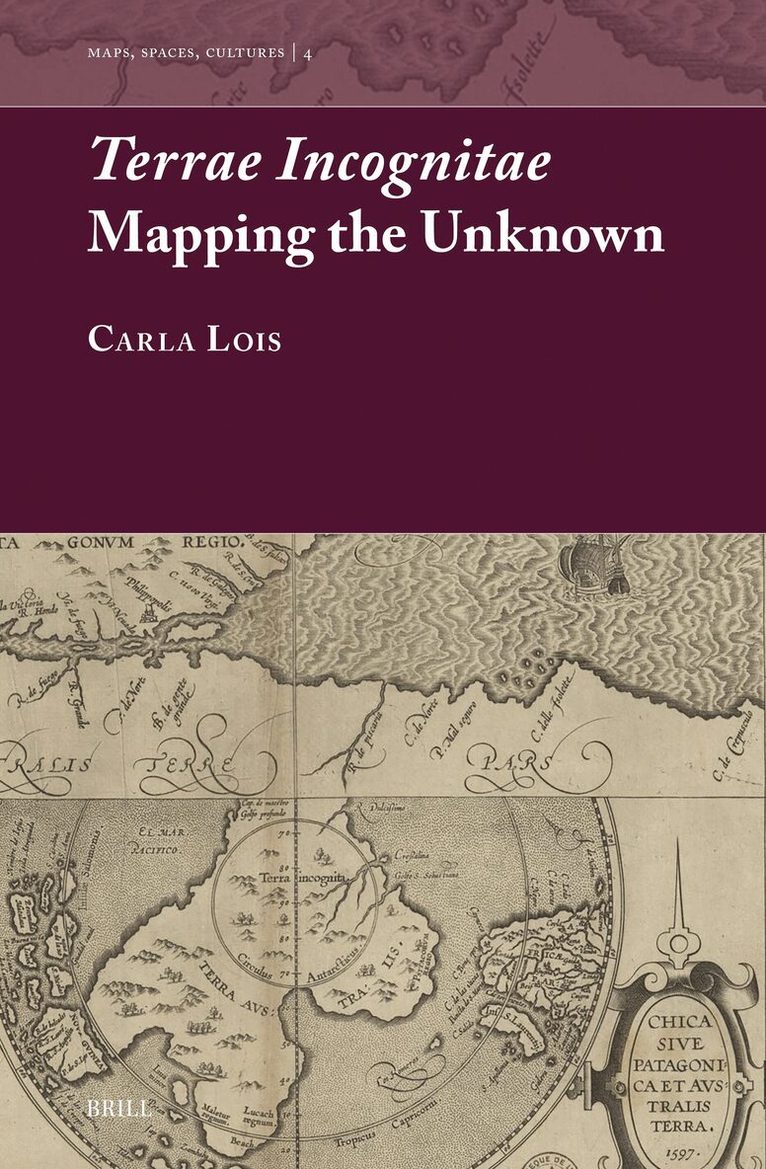
    Terrae Incognitae: Mapping the Unknown

    AvCarla Lois

    Inbunden, Engelska, 2024

    Del 4 i serien Maps, Spaces, Cultures

    2 369 kr

    Beställningsvara. Skickas inom 3-6 vardagar. Fri frakt över 249 kr.

    Beskrivning

    The blank spots on a map and the legends that speak of terrae incognitae are among the most seductive sirens of the cartographic imagination. They hint at the existence of unknown lands, yet tell us nothing about what they are or what they might be like.Do such lands even exist? How many types of terrae incognitae are there? What does it mean, and what has it meant, to mark a land as unknown? Why do so many maps of the last five centuries insist on reserving a place for unknown geographies?This book navigates the cartographic unknown, exploring its contribution to the history of knowledge and geographical culture.

    Produktinformation

    • Utgivningsdatum:2024-12-19
    • Mått:155 x 235 x 23 mm
    • Vikt:590 g
    • Format:Inbunden
    • Språk:Engelska
    • Serie:Maps, Spaces, Cultures
    • Antal sidor:264
    • Förlag:Brill
    • ISBN:9789004369764
    • Originaltitel:Terrae Incognitae: Modos de pensar y mapear geografias desconocidas

    Utforska kategorier

    • Historisk geografi inom Historia och arkeologi

    Mer om författaren

    Carla Lois, Ph.D. (2008), is Professor at the University of Buenos Aires and Researcher at the CONICET. She coordinates the working group GHECIT (Grupo de Historia y Epistemologìa de las Cartografías y as Imágenes Técnicas). She has published several articles and books, including Sketch Maps. Drawing the Geographical Imagination (Brill, 2023).

    Innehållsförteckning

    • AcknowledgementsList of IllustrationIntroduction: Geographies of the Unknown1 Evasive Geographies: No Man’s Land2 Exploring the Nuances of the Unknown: the Limits of Dichotomies and the Diversity of Inaccessible Worlds3 Is It Possible to Map the Unknown?4 In Light of the Unknown: the Aesthetics of Absence5 Structuring the Unknownpart 1The PlausibleIntroduction to Part 11 Plausible Geographies: the Expectation of New Worlds 1 White on White: Making Room on World Maps for Posing New Questions2 A World of Islands and Continents3 Discovering a World: the Quarta Pars or the Unexpected Continent4 Dreaming of a World: the Quinta Pars or the Expected Continent2 Topographies of Hypothesis, Ways of Writing Questions1 Ellipsis: Interrupted Geographies Awaiting More Information2 The Shapes of the Unknown: Geometry3 Aditamento : the Unknown as Epilogue3 Mirrors and Mirages1 The Mirror as Device: from Mimesis to Distortion2 The Southern Ocean as a mirror3 On the Other Side of the Mirror: Plus ultra equinoctialem and the Cosmographical Imagination in Symmetric Key4 Seas and Skies: a Play of Mirrors5 Mirror-Toponyms6 From Mirror to Mirage: From Plausible Illusion to Reinvented Fictionpart 2The Poorly Explored: Nineteenth Century PatagoniaIntroduction to Part 24 Emptying: Blank as an Omen of Exploration1 Terra incognita or nondum plenum cognita: From the Unknown to the Little-Known, the Genesis of a Transformation2 Preparing Space: from White to Blank3 Deletion: Blank as a Deliberate Act4 Blank as Moment Zero5 Conquering the Realms of the Foreign1 Patagonia’s Foreignness2 A Desert “That is Good for Nothing”3 Toward the Positivity of the Desert: the Unutterable Becomes the Unuttered6 Ultimatum to the Unknown: the Banishment of the Blank1 Tamed Deserts: the Cartographic Rhetoric that Turned Patagonia into Provinces2 Putting the Blank on the Other Side: Transforming the Blank into the Foreignpart 3The Non-Visible: the Landscape of the Abyss at the Bottom of the OceansIntroduction to Part 37 Shelters from the Fearful Unknown: Islands amid the Darkness1 The Insular Drive: a Hinge between the Inside and the Outside2 Leaving the Islands to Venture into the Endless Blue3 Blank Oceans, Full Oceans8 The Naked Ocean: the Spectacle of the Non-Visible1 The Image as a Device for Viewing the Unseen: the Power of Abstraction2 Seeing the World in Miniature3 Mapping the Non-Visible: Creating the Impossible Landscape4 The Nude Ocean or the Curtains of the World Theater9 Beyond the Shadows: Going Down to the Bottom (to Reach the Illusion of Seeing)1 The Darkness of the Colourless and the Deep: from Gloom to Truth2 Bringing the Bottom to the Surface: Bathymetric Marks3 Measuring to See: the Geometric GazeConclusion: the Unknown, Inaccessible Geographies1 Blank and White Geographies2 Terrae incognitae: the Positivity of a Negativity3 Beyond the Cases: the Languages and Categories of the Unknown, the Flexibility of the UnchangingBibliographyIndex