• Fri frakt över 249 kr
  • •
  • Snabba leveranser
  • •
  • Billiga böcker
Kundservice

Du är på sajten för privatpersoner.

Företag, bibliotek eller offentlig verksamhet?

Du handlar på classic.bokus.com, där alla dina funktioner finns intakta.
Till classic.bokus.com
Bokus logotyp. Gå till startsidan.
  • Erbjudanden
  • Nyheter
  • Student
  • Topplistor
  • Barn & ungdom
  • Bokus Play
  • E-böcker
  • Pocketböcker
  • Spel & pussel

10% rabatt på allt med kod NYSTART10 →

Sidfot

Mina sidor

    Hjälp

    • Kundservice
    • Vanliga frågor och svar
    • Frakt och leverans
    • Retur vid ångerrätt
    • Reklamera vara
    • Betalning
    • Köpvillkor
    • Allmänna villkor
    • Information om webbplatsens tillgänglighet

    Om Bokus

    • Om oss
    • Pressrum
    • För studenter
    • För företag
    • För bibliotek och offentlig verksamhet
    • För leverantörer
    • Hållbarhet

    Populärt

    • Aktuella erbjudanden
    • Presentkort
    • Studentlitteratur
    • Nya böcker
    • Topplistor
    • Signerade böcker
    • Engelska böcker

    Inspiration

    • Boktips
    • BookTok
    • Populära bokserier
    • Barnbokskaraktärer
    • Populära författare
    Logotyp för Bokus
    Följ oss på Facebook (extern länk)Följ oss på Instagram (extern länk)Följ oss på YouTube (extern länk)Följ oss på TikTok (extern länk)
    bokus @ CookiesAnpassa cookiesIntegritetspolicyKöpvillkor
    Till Citymail hemsida (extern länk)Till Budbee hemsida (extern länk)Till Postnord hemsida (extern länk)Till Schenker hemsida (extern länk)Till Early Bird hemsida (extern länk)Till Walleys hemsida (extern länk)
    1. Psykologi och pedagogik
    2. Pedagogik
    3. Pedagogisk teori och filosofi

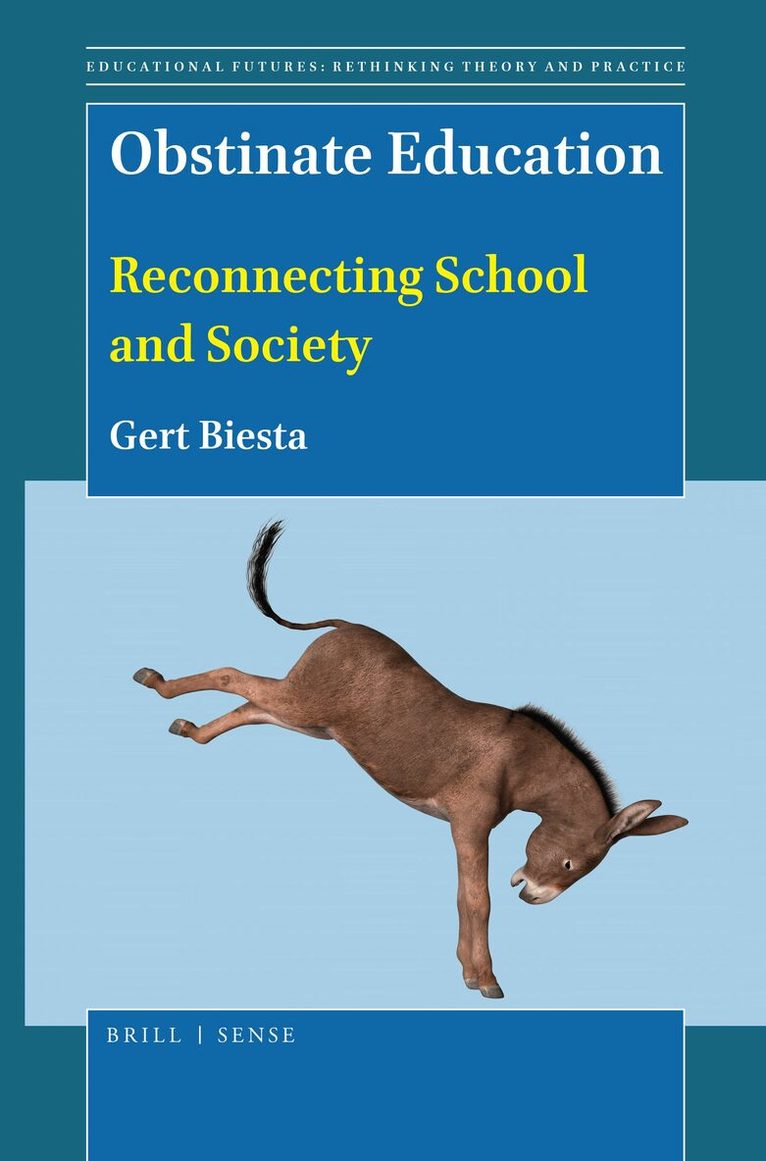
    Obstinate Education

    Reconnecting School and Society

    AvGert Biesta

    Häftad, Engelska, 2019

    Del 72 i serien Educational Futures

    898 kr

    Beställningsvara. Skickas inom 5-8 vardagar. Fri frakt över 249 kr.

    Beskrivning

    What should the relationship between school and society be? Obstinate Education: Reconnecting School and Society argues that education is not just there to give individuals, groups and societies what they want from it, but that education has a duty to resist. Education needs to be obstinate, not for the sake of being difficult, but in order to make sure that it can contribute to emancipation and democratisation. This requires that education always brings in the question whether what is desired from it is going to help with living life well, individually and collectively, on a planet that has a limited capacity for giving everything that is desired from it. This book argues that education should not just be responsive but should keep its own responsibility; should not just focus on empowerment but also on emancipation; and, through this, should help students to become ‘world-wise.’ It argues that critical thinking and classroom philosophy should retain a political orientation and not be reduced to useful thinking skills, and shows the importance of hesitation in educational relationships. This text makes a strong case for the connection between education and democracy, both in the context of schools, colleges and universities and in the work of public pedagogy.

    Produktinformation

    • Utgivningsdatum:2019-06-20
    • Mått:152 x 234 x 13 mm
    • Vikt:295 g
    • Format:Häftad
    • Språk:Engelska
    • Serie:Educational Futures
    • Antal sidor:182
    • Förlag:Brill
    • ISBN:9789004401082

    Utforska kategorier

    • Pedagogisk teori och filosofi inom Psykologi och pedagogik

    Mer om författaren

    Gert Biesta, PhD (1992), Leiden University, is Professor of Public Education at Maynooth University, Ireland and Professor for Education at the University of Humanistic Studies, the Netherlands. He writes about educational theory and policy and the philosophy of social research.

    Recensioner i media

    Check out the book being discussed on the New Books Network podcast here."With Obstinate Education, Biesta wrote an intellectually heeft Biesta een intellectueel, uitdagend boek geschreven. Het boek daagt uit ‘door’ te ‘denken’, niet alleen de pedagogische kwesties die Biesta in zijn boek aansnijdt en de pedago[1]giek die hij daarbij voor het voetlicht brengt, maar ook kwesties die niet besproken worden, maar er wel nauw mee samenhangen. Ik denk hier bijvoorbeeld aan de relatie tussen overheid en onderwijs [...] Ik raad het boek van harte aan."

    Innehållsförteckning

    • PrefaceAcknowledgementsNote on the AuthorIntroduction: The Duty to Resist1 Responsive or Responsible? Democratic Education for the Global Networked SocietyIntroductionThe Global Networked Society: Fact or Fiction?Education for the Global Networked Society: Responsive or Responsible?Democratic Education for the Global Networked Society?Conclusion2 How General Can Bildung Be? Reflections on the Future of a Modern Educational IdealIntroductionA Brief History of BildungBildung Lost, Bildung RegainedHow General Can Bildung Be?The Epistemological Interpretation: The General as the UniversalThe Interpretation from the Sociology of Knowledge: The General as a Social ConstructionA Critical Theory of Bildung and Critical PedagogyThe Network Approach: The General as the Asymmetrical Expansion of the LocalConcluding Remarks3 Becoming World-Wise: An Educational Perspective on the Rhetorical CurriculumIntroductionEducation, Paideia and BildungBecoming ‘Symbol-Wise’ or Becoming ‘World-Wise’?Empowerment or Emancipation?The Challenge4 Critical Thinking and the Question of Critique: Some Lessons from DeconstructionPhilosophy, Critique, and Modern EducationCritical Thinking and the Question of CritiqueCritical DogmatismTranscendental CritiqueDeconstructionFrom Critique to DeconstructionConclusion5 Philosophy, Exposure, and Children: How to Resist the Instrumentalisation of Philosophy in EducationWhat Might Philosophy Achieve?Philosophical Enquiry or Scientific Enquiry?A Performative ContradictionThe Trouble with Humanism, Particularly in EducationA Post-Humanist Theory of Education: Action, Uniqueness and ExposureConclusion: A Different Philosophy for Different Children6 No Education without Hesitation: Exploring the Limits of Educational RelationsIntroductionThe Multiple Meanings of ‘Education’‘Mind the Gap!’‘Being Addressed’‘You Must Change Your Life’Concluding Remarks7 Transclusion: Overcoming the Tension between Inclusion and Exclusion in the Discourse on Democracy and DemocratisationIntroductionInclusion and DemocracyMaking Democracy More Inclusive: The Deliberative TurnEntry Conditions and Democratic ExclusionsOvercoming Internal Exclusion: Making Democracy More WelcomingCan Democracy Reach as State of Total Inclusions? And Should It?From Democracy to DemocratisationDiscussion: Marking the Difference between Inclusion and Transclusion8 Education and Democracy Revisited: Dewey’s Democratic DeficitIntroductionConnecting Democracy and Education: The Moral ArgumentEducation as BildungFrom the Ethics of Democracy to Democracy and EducationA Democratic Deficit?From Absolutism to ExperimentalismOvercoming the ‘Crisis in Culture’Concluding Comments: The Missing Link Revisited9 Making Pedagogy Public: For the Public, of the Public, or in the Interest of Publicness?IntroductionThe Decline of the Public SphereArendt on Action, Plurality, and Freedom“The Space Where Freedom Can Appear”For the Public, of the Public, or in the Interest of Publicness?ConclusionConclusion: Looking Back and Looking ForwardAppendix: From Experimentalism to Existentialism: Writing in the Margins of Philosophy of EducationReferencesIndex