• Fri frakt över 249 kr
  • •
  • Snabba leveranser
  • •
  • Billiga böcker
Kundservice

Du är på sajten för privatpersoner.

Företag, bibliotek eller offentlig verksamhet?

Du handlar på classic.bokus.com, där alla dina funktioner finns intakta.
Till classic.bokus.com
Bokus logotyp. Gå till startsidan.
  • Erbjudanden
  • Nyheter
  • Student
  • Topplistor
  • Barn & ungdom
  • Bokus Play
  • E-böcker
  • Pocketböcker
  • Spel & pussel

10% studentrabatt med kod TERM26

Sidfot

Mina sidor

    Hjälp

    • Kundservice
    • Vanliga frågor och svar
    • Frakt och leverans
    • Retur vid ångerrätt
    • Reklamera vara
    • Betalning
    • Köpvillkor
    • Allmänna villkor
    • Information om webbplatsens tillgänglighet

    Om Bokus

    • Om oss
    • Pressrum
    • För studenter
    • För företag
    • För bibliotek och offentlig verksamhet
    • För leverantörer
    • Hållbarhet

    Populärt

    • Aktuella erbjudanden
    • Presentkort
    • Studentlitteratur
    • Nya böcker
    • Topplistor
    • Signerade böcker
    • Engelska böcker

    Inspiration

    • Boktips
    • BookTok
    • Populära bokserier
    • Barnbokskaraktärer
    • Populära författare
    Logotyp för Bokus
    Följ oss på Facebook (extern länk)Följ oss på Instagram (extern länk)Följ oss på YouTube (extern länk)Följ oss på TikTok (extern länk)
    bokus @ CookiesAnpassa cookiesIntegritetspolicyKöpvillkor
    Till Citymail hemsida (extern länk)Till Budbee hemsida (extern länk)Till Postnord hemsida (extern länk)Till Schenker hemsida (extern länk)Till Early Bird hemsida (extern länk)Till Walleys hemsida (extern länk)
    1. Skönlitteratur
    2. Poesi

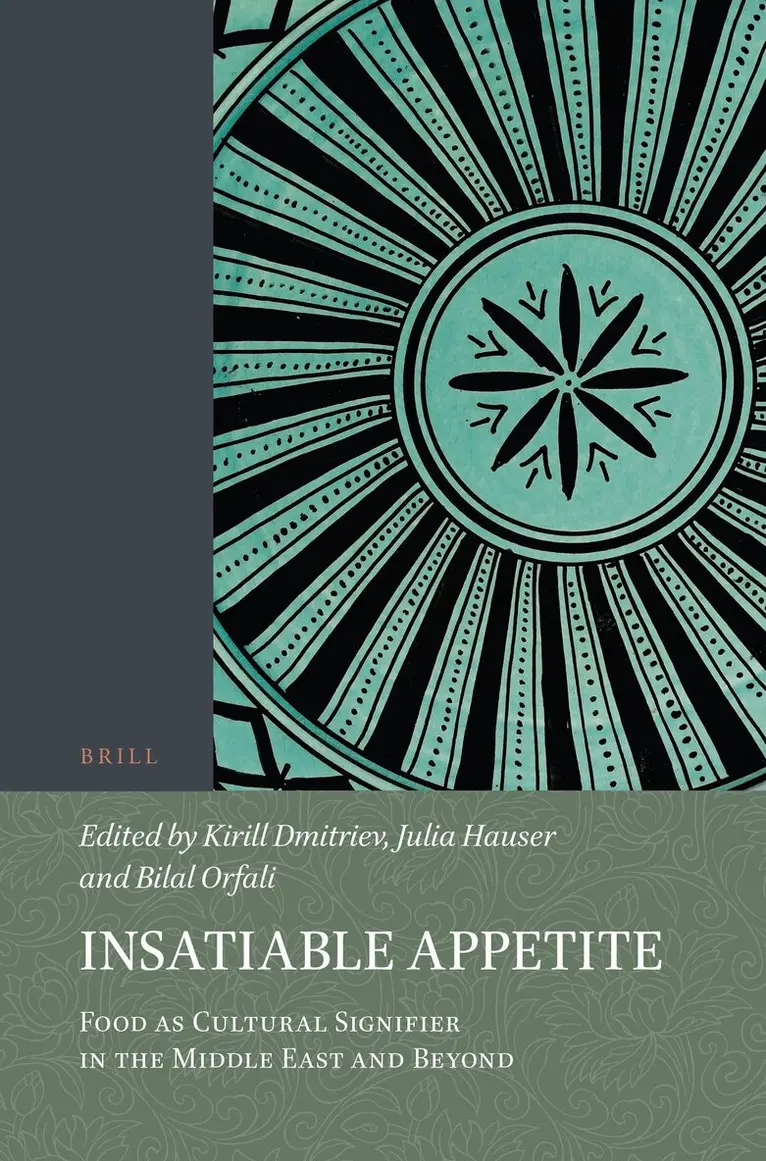
    Insatiable Appetite: Food as Cultural Signifier in the Middle East and Beyond

    AvKirill Dmitriev,Julia Hauser

    Inbunden, Engelska, 2019

    Del 163 i serien Islamic History and Civilization

    2 214 kr

    Beställningsvara. Skickas inom 5-8 vardagar. Fri frakt över 249 kr.

    Beskrivning

    Insatiable Appetite: Food as Cultural Signifier in the Middle East and Beyond explores the cultural ramifications of food and foodways in the Mediterranean, and Arab-Muslim countries in particular. The volume addresses the cultural meanings of food from a wider chronological scope, from antiquity to present, adopting approaches from various disciplines, including classical Greek philology, Arabic literature, Islamic studies, anthropology, and history. The contributions to the book are structured around six thematic parts, ranging in focus from social status to religious prohibitions, gender issues, intoxicants, vegetarianism, and management of scarcity. Contributors are: Tarek Abu Hussein, Yasmin Amin, Kevin Blankinship, Tylor Brand, Kirill Dmitriev, Eric Dursteler, Anny Gaul, Julia Hauser, Christian Junge, Danilo Marino, Pedro Martins, Karen Moukheiber, Christian Saßmannshausen, Shaheed Tayob, and Lola Wilhelm.

    Produktinformation

    • Utgivningsdatum:2019-09-26
    • Mått:155 x 235 x 27 mm
    • Vikt:715 g
    • Format:Inbunden
    • Språk:Engelska
    • Serie:Islamic History and Civilization
    • Antal sidor:362
    • Förlag:Brill
    • ISBN:9789004407626

    Utforska kategorier

    • Poesi inom Skönlitteratur
    • Samhälle och kultur inom Samhälle och politik
    • Mellanösterns historia inom Historia och arkeologi

    Mer om författaren

    Kirill Dmitriev is lecturer in Arabic at the University of St Andrews, UK. His primary research focuses on the study of classical Arabic language and literature, the religious history of the Arab world, and comparative literature. He is the author of Das poetische Werk des Abū Sahr al-Hudalī, Eine literatur-anthropologische Studie (Wiesbaden: Harrassowitz, 2008), co-editor of the volume Religious Culture in Late Antique Arabia, Selected Studies on the Late Antique Religious Mind (Piscataway, NJ: Gorgias Press, Islamic history and thought 6, 2017), and convener of the collaborative research initiative Khamriyya as a World Poetic Genre: Comparative Perspectives on Wine Poetry in Near and Middle Eastern Literatures.Julia Hauser is assistant professor of global history and the history of globalization processes at the University of Kassel. She is currently working on an entangled history of vegetarianism. Her work has been supported by grants from the German Research Association, the Gerda Henkel Foundation, the Fritz Thyssen Foundation, the Deutsche Morgenländische Gemeinschaft, and the Max Weber Foundation. She is the author of German Religious Women in Late Ottoman Beirut: Competing Missions, Leiden; Boston: Brill, 2015, and co-editor, with Christine Lindner and Esther Möller, of Entangled Education: Foreign and Local Schools in Ottoman Syria and Mandate Lebanon (19th-20th centuries), Würzburg: Ergon, 2016. Julia Hauser is a member of the Arab-German Young Academy of Sciences and Humanities (AGYA).Bilal Orfali is associate professor of Arabic Studies at the American University of Beirut. He specializes in Arabic literature, Sufism, and Qurʾanic Studies. He co-edits al-Abhath Journal, and Brill’s book series Texts and Studies on the Qurʾan. He is the author and editor of more than twenty books on a broad range of subjects relevant to Arabic and Islamic Studies.

    Recensioner i media

    “This text ultimately excels in approaching an often misunderstood region from a novel perspective, providing fresh insights into old questions, and is recommended for scholars and graduate students working on the history or anthropology of food, or interested in alternative histories of the Mediterranean, Ottoman, Arab, and Islamic worlds.” J. Alkorani, University of Toronto in: CHOICE connect, Volume 57, No.9 (2020).“Sollte das Genre der kulturwissenschaftlichen kulinarischen Erforschung in nächster Zeit noch weiter blühen – ich sehe keine gegenteiligen Tendenzen – werden sich zukünftig dafür Interessierte aus dem Band Insatiable Appetite viele fruchtbare Anregungen holen können.“ Bert G. Fragner, The Institute of Iranian studies of the Austrian Academy of Sciences in: Wiener Zeitschrift für die Kunde des Morgenlandes, Volume 111 (2021).

    Innehållsförteckning

    • Notes on ContributorsIntroductionPart 1Food and Social StatusSocial Dining, Banqueting, and the Cultivation of a Coherent Social IdentityThe Case of Damascene ʿUlamaʾ in the Late Mamluk and Early Ottoman PeriodTarek Abu HusseinEating UpFood Consumption and Social Status in Late Ottoman Greater SyriaChristian SaßmannshausePart 2Prohibitions and Prescriptions from Classical Islam to the PresentPeeling Onions, Layer by LayerA Journey with Two Bulbs through the Islamicate World and Its LiteratureYasmin AminBeyond ḤalālThe Dos and Don’ts of Syrian Medieval Cookery in a Twelfth-Century Market Inspector ManualKaren MoukheiberMolecular HalalProducing, Debating, and Evading Halal Certification in South AfricaShaheed TayobPart 3Food, Gender, and the Body in the Late Nineteenth and Early Twentieth CenturiesFood, Happiness, and the Egyptian Kitchen (1900–1952)Anny GaulFood, Body, Societyal-Shidyāq’s Somatic Experience of Nineteenth-Century CommunitiesChristian JungePart 4Intoxication: Wine and Hashish in Literary Sources and BeyondThe Symbolism of Wine in Early Arabic Love PoetryObservations on the Poetry of Abū Ṣakhr al-HudhalīKirill DmitrievHashish and FoodArabic and European Medieval Dreams of Edible ParadisesDanilo MarinoThe “Abominable Pig” and the “Mother of All Vices”Pork, Wine, and the Culinary Clash of Civilizations in the Early Modern MediterraneanEric DurstelerPart 5Abstention: Vegetarianism in the Mediterranean and Europe from Antiquity to the Nineteenth CenturyAn Ontological Dispute in the Writings of Porphyry of TyreThe Discussion of Meat Eating as a Battlefield for Competing Worldviews in AntiquityPedro Ribeiro MartinsThe Missionary and the HereticDebating Veganism in the Medieval Islamic WorldKevin BlankinshipA Frugal CrescentPerceptions of Foodways in the Ottoman Empire and Egypt in Nineteenth-Century Vegetarian DiscourseJulia HauserPart 6Managing Scarcity in the Nineteenth and Twentieth CenturiesSome Eat to Remember, Some to ForgetStarving, Eating, and Coping in the Syrian Famine of World War ITylor BrandLocal Histories of International Food-Aid Policies from the Interwar Period to the 1960sThe World Food Programme in the Middle EastLola WilhelmIndex