• Fri frakt över 249 kr
  • •
  • Snabba leveranser
  • •
  • Billiga böcker
Kundservice

Du är på sajten för privatpersoner.

Företag, bibliotek eller offentlig verksamhet?

Du handlar på classic.bokus.com, där alla dina funktioner finns intakta.
Till classic.bokus.com
Bokus logotyp. Gå till startsidan.
  • Erbjudanden
  • Nyheter
  • Student
  • Topplistor
  • Barn & ungdom
  • Bokus Play
  • E-böcker
  • Pocketböcker
  • Spel & pussel

10% studentrabatt med kod TERM26

Sidfot

Mina sidor

    Hjälp

    • Kundservice
    • Vanliga frågor och svar
    • Frakt och leverans
    • Retur vid ångerrätt
    • Reklamera vara
    • Betalning
    • Köpvillkor
    • Allmänna villkor
    • Information om webbplatsens tillgänglighet

    Om Bokus

    • Om oss
    • Pressrum
    • För studenter
    • För företag
    • För bibliotek och offentlig verksamhet
    • För leverantörer
    • Hållbarhet

    Populärt

    • Aktuella erbjudanden
    • Presentkort
    • Studentlitteratur
    • Nya böcker
    • Topplistor
    • Signerade böcker
    • Engelska böcker

    Inspiration

    • Boktips
    • BookTok
    • Populära bokserier
    • Barnbokskaraktärer
    • Populära författare
    Logotyp för Bokus
    Följ oss på Facebook (extern länk)Följ oss på Instagram (extern länk)Följ oss på YouTube (extern länk)Följ oss på TikTok (extern länk)
    bokus @ CookiesAnpassa cookiesIntegritetspolicyKöpvillkor
    Till Citymail hemsida (extern länk)Till Budbee hemsida (extern länk)Till Postnord hemsida (extern länk)Till Schenker hemsida (extern länk)Till Early Bird hemsida (extern länk)Till Walleys hemsida (extern länk)
    1. Kultur
    2. Konstböcker
    3. Konsthistoria

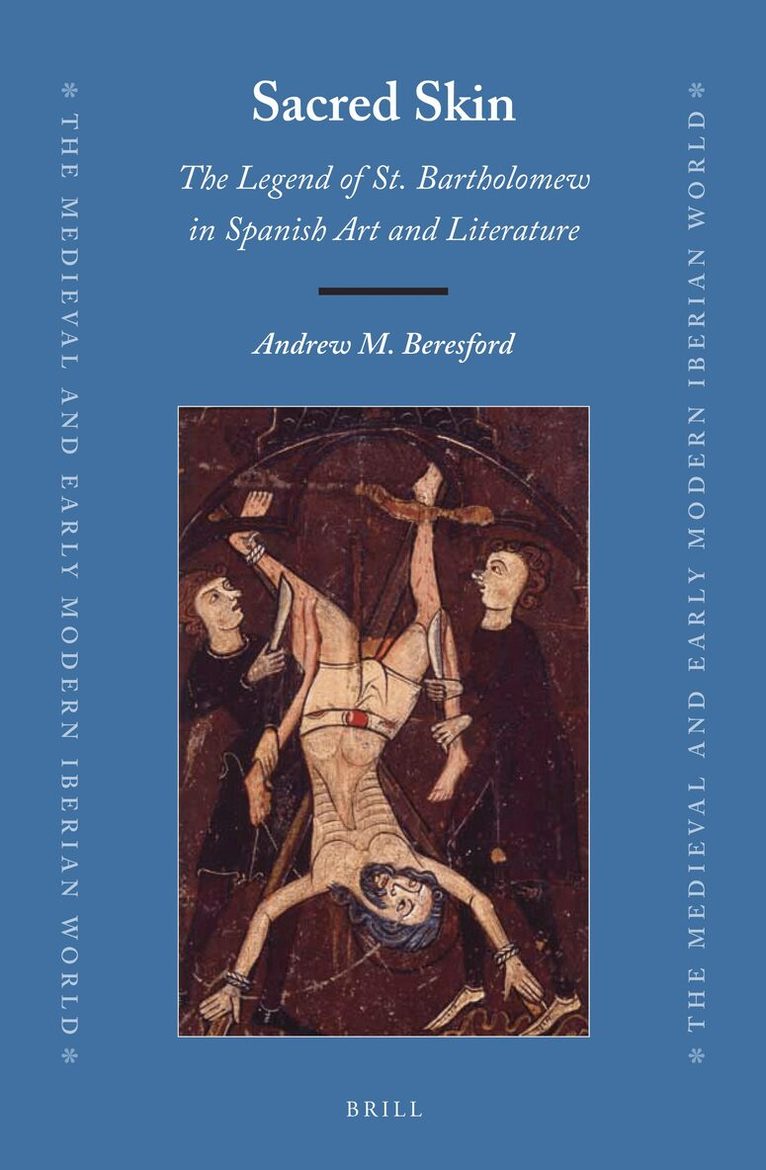
    Sacred Skin: The Legend of St. Bartholomew in Spanish Art and Literature

    AvAndrew M. Beresford

    Inbunden, Engelska, 2020

    Del 72 i serien Medieval and Early Modern Iberian World

    2 312 kr

    Beställningsvara. Skickas inom 5-8 vardagar. Fri frakt över 249 kr.

    Beskrivning

    Sacred Skin offers the first systematic evaluation of the dissemination and development of the cult of St. Bartholomew in Spain. Exploring the paradoxes of hagiographic representation and their ambivalent effect on the observer, the book focuses on literary and visual testimonies produced from the emergence of a distinctive vernacular voice through to the formalization of Bartholomew’s saintly identity and his transformation into a key expression of Iberian consciousness. Drawing on and extending advances in cultural criticism, particularly theories of selfhood and the complex ontology of the human body, its five chapters probe the evolution of hagiographic conventions, demonstrating how flaying poses a unique challenge to our understanding of the nature and meaning of identity.See inside the book.

    Produktinformation

    • Utgivningsdatum:2020-03-05
    • Mått:155 x 235 x 27 mm
    • Vikt:689 g
    • Format:Inbunden
    • Språk:Engelska
    • Serie:Medieval and Early Modern Iberian World
    • Antal sidor:352
    • Förlag:Brill
    • ISBN:9789004407800

    Utforska kategorier

    • Konsthistoria inom Kultur
    • Historia inom Historia och arkeologi
    • Religion: allmänt inom Filosofi och religion

    Mer om författaren

    Andrew M. Beresford is Professor of Medieval and Renaissance Studies at the University of Durham. He has published widely on Spanish hagiography and devotional topics, including books on Agnes (2007), Thaïs and Pelagia (2007), and Agatha and Lucy (2010).

    Recensioner i media

    "Beresford’s richly detailed study proves that Bartholomew is much more than his skin, and that carefully woven, historically grounded interdisciplinary studies can underpin theoretical contributions (and vice versa). At once an extraordinarily deep dive into a very particular case of martyr cult in a particular region and also a wide-ranging study that covers over a dozen centuries of narrative and art alongside insights from contemporary theories of embodiment, Beresford’s Sacred Skin will reward both the specialist in medieval Iberia and any historian of art, body, or religion who seeks a model for how technical reconstruction of the evolution of a saint (or any influential figure) can address crucially broad questions such as identity, inter-religious conflict, or global historiography. [...] the true achievement of this text is to model the extraordinary range of methodologies, theories, and historical contexts it requires to fully probe a cultic devotion and its expression over centuries in a particular region. Beresford’s work is breathtaking in its methodological scope and profoundly comprehensive in its historical precision. No careful reader can end up anything less than an expert in the skin of the saint."Jessica A. Boon, University of North Carolina – Chapel Hill in La Corónica, 49.3 (2021)

    Innehållsförteckning

    • PrefaceList of FiguresAbbreviations1Hagiographic Tradition and the Transformation of Identity: The Origin and Evolution of the Cult of St. Bartholomew1Bartholomew and the Classical Inheritance2Bartholomew in Iberian Literature and Culture3Bartholomew’s Hagiographic Legacy2The Infant on the Mountainside: The Abduction of St. Bartholomew in Early Iberian Art1The Legend of the Infant in Early Iberian Art2Bartholomew and the Diabolical Double3Prelapsarian Providence and the Infant on the Mountainside4The Cult of the Infant3St. Bartholomew’s Evangelical Ministry and the Cosmic Drama of Conversion1Bartholomew’s Threefold Ministry2Bartholomew’s Exorcistic Drama3Idolatry and Iconoclash: Bartholomew as Double-Edged Sword4Holy Water: Bartholomew as Baptizer4The Martyrdom of St. Bartholomew in Early Iberian Art1From Ministry to Martyrdom2Flaying in Early Iberian Art3Flayed Skin and the Fragmented Self: Bartholomew as Dermaphore4Flaying, Decapitation, and Bartholomew as Devotional Icon5St. Bartholomew and the Formalization of Hagiographic Identity: Spanish Art in the Seventeenth Century1Bartholomew and the Early Iberian Legacy2Bartholomew: Portraits and Apostolates3Flaying as Narrative Representation4Colophon: Beyond Ribera, Tradition and InnovationAppendixesTexts and SourcesAppendix 1: A Fourteenth-Century Castilian Reworking of Pseudo-Abdias’sActa fabulosaAppendix 2: The Gran flos sanctorum (Compilation A)Appendix 3: The Leyenda de los santos (Compilation B)Appendix 4: Flos sanctorum from Fundación Casa de Alba MS 30 (Alternative Reading Related to Compilation B)Appendix 5: Locations in Spain with Bartholomew as PatronWorks CitedIndex