• Fri frakt över 249 kr
  • •
  • Snabba leveranser
  • •
  • Billiga böcker
Kundservice

Du är på sajten för privatpersoner.

Företag, bibliotek eller offentlig verksamhet?

Du handlar på classic.bokus.com, där alla dina funktioner finns intakta.
Till classic.bokus.com
Bokus logotyp. Gå till startsidan.
  • Erbjudanden
  • Nyheter
  • Student
  • Topplistor
  • Barn & ungdom
  • Bokus Play
  • E-böcker
  • Pocketböcker
  • Spel & pussel

10% rabatt på allt med kod: NYSTART10 →

Sidfot

Mina sidor

    Hjälp

    • Kundservice
    • Vanliga frågor och svar
    • Frakt och leverans
    • Retur vid ångerrätt
    • Reklamera vara
    • Betalning
    • Köpvillkor
    • Allmänna villkor
    • Information om webbplatsens tillgänglighet

    Om Bokus

    • Om oss
    • Pressrum
    • För studenter
    • För företag
    • För bibliotek och offentlig verksamhet
    • För leverantörer
    • Hållbarhet

    Populärt

    • Aktuella erbjudanden
    • Presentkort
    • Studentlitteratur
    • Nya böcker
    • Topplistor
    • Signerade böcker
    • Engelska böcker

    Inspiration

    • Boktips
    • BookTok
    • Populära bokserier
    • Barnbokskaraktärer
    • Populära författare
    Logotyp för Bokus
    Följ oss på Facebook (extern länk)Följ oss på Instagram (extern länk)Följ oss på YouTube (extern länk)Följ oss på TikTok (extern länk)
    bokus @ CookiesAnpassa cookiesIntegritetspolicyKöpvillkor
    Till Citymail hemsida (extern länk)Till Budbee hemsida (extern länk)Till Postnord hemsida (extern länk)Till Schenker hemsida (extern länk)Till Early Bird hemsida (extern länk)Till Walleys hemsida (extern länk)
    1. Historia och arkeologi
    2. Historia
    3. Amerikas historia

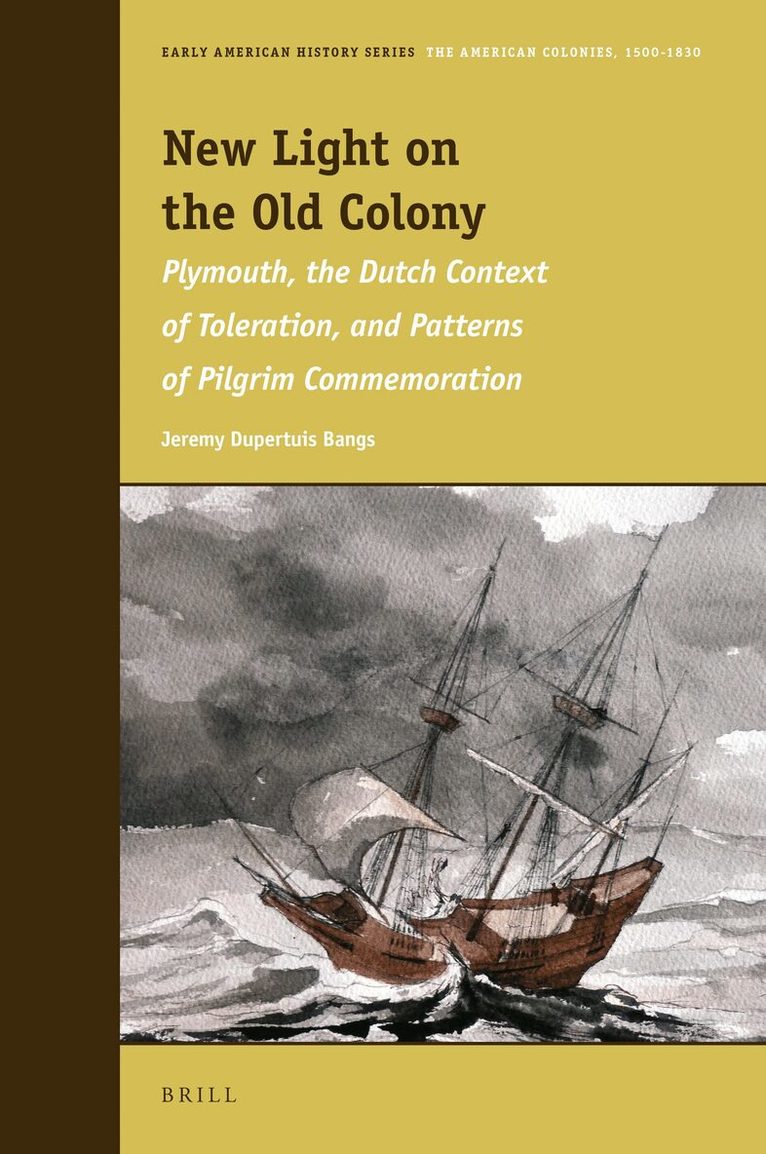
    New Light on the Old Colony

    Plymouth, the Dutch Context of Toleration, and Patterns of Pilgrim Commemoration

    AvJeremy Bangs

    Inbunden, Engelska, 2019

    Del 10 i serien Early American History Series

    3 196 kr

    Beställningsvara. Skickas inom 5-8 vardagar. Fri frakt över 249 kr.

    Beskrivning

    Colonial government, Pilgrims, the New England town, Native land, the background of religious toleration, and the changing memory recalling the Pilgrims – all are examined and stereotypical assumptions overturned in 15 essays by the foremost authority on the Pilgrims and Plymouth Colony.Thorough research revises the story of colonists and of the people they displaced. Bangs’ book is required reading for the history of New England, Plymouth Colony, Massachusetts Natives, the Mennonite contribution to religious toleration in Europe and New England, and the history of commemoration, from paintings and pageants to living history and internet memes. If Pilgrims were radical, so is this book.

    Produktinformation

    • Utgivningsdatum:2019-11-07
    • Mått:155 x 235 x 32 mm
    • Vikt:1 029 g
    • Format:Inbunden
    • Språk:Engelska
    • Serie:Early American History Series
    • Antal sidor:560
    • Förlag:Brill
    • ISBN:9789004413849

    Utforska kategorier

    • Amerikas historia inom Historia och arkeologi
    • Kolonialism och imperialism inom Historia och arkeologi
    • Religion: allmänt inom Filosofi och religion

    Mer om författaren

    Jeremy Bangs, Ph.D. (Leiden, 1976) is Director of the Leiden American Pilgrim Museum; former Visiting Curator of Manuscripts, Pilgrim Hall Museum; Chief Curator, Plimoth Plantation; Curator, Leiden Pilgrim Documents Center. Author of over 20 books including Strangers and Pilgrims, Travellers and Sojourners (2009).

    Recensioner i media

    "This lengthy book draws on Bangs’s four decades of research into the Pilgrims. The range of topics is wide, including discussions and analyses of intellectual and religious history, the divisions of land in the colony, relevant portraits, old town records, and reception history, among other things. This book is not for beginners, and there is no summarizing narrative of the Pilgrims before and after their voyage to the New World. The basics are assumed. But those who know the story and are interested in digging more deeply will want to consult this informative volume, which is a fitting example of Bangs’s prolific work on the Pilgrims and does in fact shed new light."Keith D. Stanglin, Austin Graduate School of Theology, in Church History and Religious Culture CHRC 101.1, pp 119-120"One problem with Pilgrim history is that everyone thinks they already know it. This book makes clear that in forty years of studying the Pilgrims, Bangs has discovered plenty that is new. Historians of early America owe it to themselves to listen."Michael J. Douma, Georgetown University, McDonough School of Business, in the Journal of Early American History, volume 10, pp. 112-115.

    Innehållsförteckning

    • List of IllustrationsIntroductionSection 1: The Old ColonyPart 1: The Colony1Plymouth’s Creation: A Congregational Commonwealth1The Mayflower Compact gave Structure to Plymouth Colony’s Society2The Mayflower Compact: Lastingly Significant and Influential, or Temporarily Expedient and Forgotten?3Creating a Consensual Commonwealth4The Mayflower Compact as the Cornerstone and Framework of Plymouth Colony Constitutionalism5Dividing the Land, the First New Towns, and Other Democratic Choices6Plymouth’s Expanded Constitution of 1636, More Towns and Churches, and the Shift to Representative Government7Churches, Government, Toleration, and Quakers8Representation by Selectmen, Taxation supporting Churches9Conclusion2Tribes and Land Reserves in Plymouth Colony1Empty New England 2Not Really Empty3Pokanoket4Nauset5Nemasket6The Massachusetts7Narragansetts8Intrigue and Death9Tribal Land, Tribal Losses10Nauset, Manomet, and the Mashpee Reserve11The Pokanoket Indians and the Mount Hope (Montaup) Reserve12The Massachusetts and the Titicut Reserve 13The Wampanoag3William Bradford’s Sources for Dutch Law: Edward Grimeston and Emanuel van Meteren1Civil Marriage in Holland – Edward Grimeston2King James i and Church Reform – Emanuel van Meteren3The Union of Utrecht and the Act of Abjuration4Constructing History4Intellectual Baggage: The Useful Pilgrims and the Culture of Plymouth Colony1Death Preceded Them2Bibles3Psalm Books4Theology5Exegesis6Piety7Religious Polemics8History9Other5Towards a Revision of the Pilgrims: Three New Pictures 1Background2A New Departure3A New Plymouth?4Another Portrait of Edward WinslowPart 2: The Towns6Scituate: Excerpts from the Introductions to the Seventeenth-Century Town Records of Scituate, Massachusetts1Studying Families in Context: The New Antiquarianism2Scituate’s Reality and Historiographical Myths3What kind of town was Scituate? Historians provide answers4Topics of Conversation5Business and craft production in Scituate: Ships and Shipping6Mills, Fishing, Furniture, and Other Work7Misbehavior8Prices, Wages, and Livestock9Some Conclusions7Eastham Town Records Introduction1Eastham’s Native Leaders and the First Colonists8Sandwich Town Records Introduction9Marshfield Town Records Introduction1The Sufferings of Arthur HowlandSection 2: The Dutch Context of Toleration10Dutch Aid to Persecuted Swiss and Palatine Mennonites, 1615–16991Persecution, Reports, Response, and Remembrance2Doctrinal Bickering Amidst Persecution – 16143Dutch Aid Begins (1640’s)4Isaac Hattavier’s Attempts to Help (1637–1658)5Hans Vlamingh’s Contacts and Dutch Government Intercession (1650’s and 1660’s)61663 Extract of List of the Names of Mennonite Prisoners7Philipp von Zesen’s Book, Against the Coercion of Conscience(1665)8Hans Vlamingh, Galenus Abrahamsz. de Haan, Jacob Everling, and Valentin Huetwohl: Disaster Relief in 1671–16729The Disaster Year, 167210Galenus Abrahamsz. de Haan, William Penn, and David Holtzhalb11Philippus van Limborch and John Locke’s ‘Letter on Toleration’ (1685–1689)12Mennonite Relief during the War of the Grand Alliance11Dutch Contributions to Religious Toleration1Adriaen van der Donck and the Absence of Toleration in New Netherland2Why did English People in 1657 Think there was Religious Freedom in Holland?3Dutch Sources for Ideas on Toleration in Plymouth Colony and Rhode Island4Dutch International Pleas for Toleration among Protestants5Patterns of Pilgrim CommemorationSection 3: Patterns of Pilgrim Commemoration12The Triumph of the Pilgrims1First-Person Fun13The Hypothetical Nature of Plimoth Plantation’s Architecture1Fashionable Modes of Memory2The background31947–1966: Plimoth Plantation’s Pilgrims as Prototypical Suburbanites41967–1985: Pilgrims as Folk51986–2000: Pilgrims as Identifiably Ethnic62000–now: Pilgrims as Representative of their Class7Hypothetical Nature8Hypothetical Future9Postscript 201914Always More Pilgrim Books1The Primary Sources for the Pilgrim Story2Nineteenth-century Histories3Twentieth-century Repetition and Revision4Into the Future – Pilgrims 2000 and Beyond5Where Do We Go Next?15Thanksgiving on the Net: Roast Bull with Cranberry Sauce1Talking Turkey2The Text3Thanking Whom?4Colored Clothes, No Buckled Hats! My Goodness!5And, Yes, They did Call Themselves “Pilgrims.”6The Fake Thanksgiving Proclamation of 16237The Libertarian’s First Thanksgiving8A Cornucopia of Grievances9The National Day of Mourning10Genocide11Lies My Teacher’s Telling Me NowJeremy Dupertuis Bangs: A List of Publications Concerning the Pilgrims and Plymouth ColonyBooks – Author or editor ofBook ChaptersLemmasArticlesBibliographyIndex