• Fri frakt över 249 kr
  • •
  • Snabba leveranser
  • •
  • Billiga böcker
Kundservice

Du är på sajten för privatpersoner.

Företag, bibliotek eller offentlig verksamhet?

Du handlar på classic.bokus.com, där alla dina funktioner finns intakta.
Till classic.bokus.com
Bokus logotyp. Gå till startsidan.
  • Erbjudanden
  • Nyheter
  • Student
  • Topplistor
  • Barn & ungdom
  • Bokus Play
  • E-böcker
  • Pocketböcker
  • Spel & pussel

10% rabatt på allt med kod: NYSTART10 →

Sidfot

Mina sidor

    Hjälp

    • Kundservice
    • Vanliga frågor och svar
    • Frakt och leverans
    • Retur vid ångerrätt
    • Reklamera vara
    • Betalning
    • Köpvillkor
    • Allmänna villkor
    • Information om webbplatsens tillgänglighet

    Om Bokus

    • Om oss
    • Pressrum
    • För studenter
    • För företag
    • För bibliotek och offentlig verksamhet
    • För leverantörer
    • Hållbarhet

    Populärt

    • Aktuella erbjudanden
    • Presentkort
    • Studentlitteratur
    • Nya böcker
    • Topplistor
    • Signerade böcker
    • Engelska böcker

    Inspiration

    • Boktips
    • BookTok
    • Populära bokserier
    • Barnbokskaraktärer
    • Populära författare
    Logotyp för Bokus
    Följ oss på Facebook (extern länk)Följ oss på Instagram (extern länk)Följ oss på YouTube (extern länk)Följ oss på TikTok (extern länk)
    bokus @ CookiesAnpassa cookiesIntegritetspolicyKöpvillkor
    Till Citymail hemsida (extern länk)Till Budbee hemsida (extern länk)Till Postnord hemsida (extern länk)Till Schenker hemsida (extern länk)Till Early Bird hemsida (extern länk)Till Walleys hemsida (extern länk)
    1. Historia och arkeologi
    2. Arkeologi
    3. Arkeologiska perioder och områden

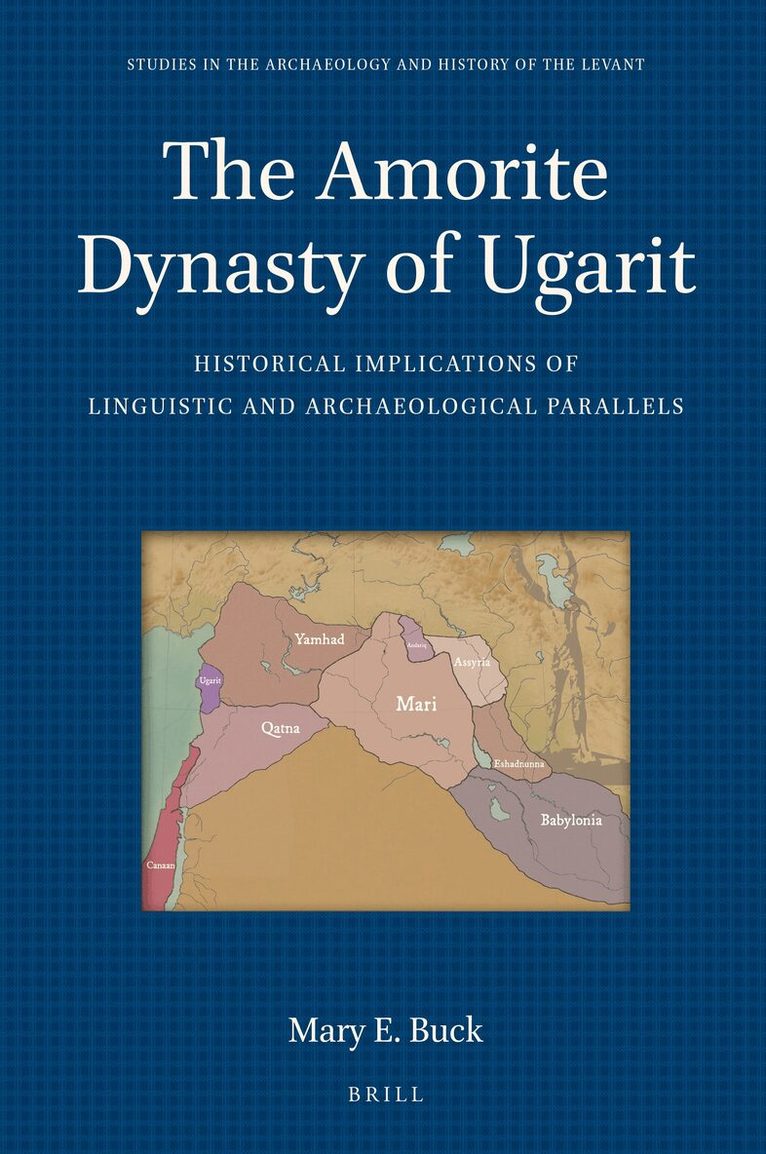
    Amorite Dynasty of Ugarit

    Historical Implications of Linguistic and Archaeological Parallels

    AvMary E. Buck

    Inbunden, Engelska, 2019

    Del 8 i serien Studies in the Archaeology and History of the Levant

    4 253 kr

    Beställningsvara. Skickas inom 5-8 vardagar. Fri frakt över 249 kr.

    Beskrivning

    In The Amorite Dynasty of Ugarit Mary Buck takes a new approach to the field of Amorite studies by considering whether the site of Ugarit shares close parallels with other sites and cultures known from the Bronze Age Levant. When viewed in conjunction, the archaeological and linguistic material uncovered in this study serves to enhance our understanding of the historical complexity and diversity of the Middle Bronze Age period of international relations at the site of Ugarit.With a deft hand, Dr. Buck pursues a nuanced view of populations in the Bronze Age Levant, with the objective of understanding the ancient polity of Ugarit as a kin-based culture that shares close ties with the Amorite populations of the Levant."The author covers a contentious area of scholarship with confidence and competence, and has produced a convincing case for the Amorite origins of Bronze Age Ugarit."-Nick Wyatt, Journal for the Study of the Old Testament 44.5 (2020)The Studies in the Archaeology and History of the Levant series publishes volumes from the Harvard Museum of the Ancient Near East. Other series offered by Brill that publish volumes from the Museum include Harvard Semitic Studies and Harvard Semitic Monographs, https://hmane.harvard.edu/publications.

    Produktinformation

    • Utgivningsdatum:2019-09-26
    • Mått:155 x 235 x 28 mm
    • Vikt:752 g
    • Format:Inbunden
    • Språk:Engelska
    • Serie:Studies in the Archaeology and History of the Levant
    • Antal sidor:378
    • Förlag:Brill
    • ISBN:9789004415102

    Utforska kategorier

    • Arkeologiska perioder och områden inom Historia och arkeologi

    Mer om författaren

    Mary E. Buck, Ph.D. (2018), completed her degree at the University of Chicago in Near Eastern Languages and Civilizations. She has published on ancient archaeology, papyri, and inscriptions, and is currently working on a manuscript regarding the history of the Canaanites.

    Recensioner i media

    “At every stage, the discussion gives a full account of scholarship on all the main points of controversy, and recognises the limitations of our knowledge so far. The study concludes with two appendices, a list of Amorite personal names, and an Amorite lexicon. The author covers a contentious area of scholarship with confidence and competence, and has produced a convincing case for the Amorite origins of Bronze Age Ugarit.” - Nick Wyatt, in Society for Old Testament Study Book List 2020

    Innehållsförteckning

    • AcknowledgementsList of Figures and TablesAbbreviations1 Introduction1.1 History of the Site of Ugarit1.2 Methodological Approach1.3 Material and Linguistic Sources: An Interdisciplinary Approach to History1.4 Uncharted Areas and Blind Spots: Aim and Trajectory of the Present Study2 Amorites, Canaanites, and the Emergence of Urbanism2.1 Introduction2.2 Interpretations for the Patterns of Urbanism2.3 The Genetic Classification of Ugaritic in the Semitic Language Tree2.4 The Historical Convergence of Material Culture and Linguistic Subgrouping3 Methodology and Terminology3.1 Archaeological Corpus, Methodology, and Definitions3.2 Historical Terminology3.3 Linguistic Corpus, Methodology, and Definitions3.4 Linguistic Terminology3.5 Conclusion4 The Amorite Cultural Koiné4.1 Archaeological Overview4.2 Middle Bronze IIB-Late Bronze I Material Assemblage of Ugarit4.3 The Amorite Material Koiné5 Northwest Semitic in the Bronze Age Levant5.1 Introduction5.2 Methodological Challenges5.3 Methodological Approach5.4 Central Semitic5.5 Northwest Semitic5.6 Aramaic and Canaanite Subbranches5.7 Historical Evidence for the Canaanite Languages5.8 Unique Features of Western Amorite5.9 The Genetic Subgrouping of Western Amorite5.10 Western Amorite Onomastic Evidence for the Middle Bronze Pantheon5.11 Conclusion6 Conclusion6.1 Historic Emergence of Ugarit, Canaan, and the Amorites6.2 Middle Bronze Age Material Assemblage of Ugarit6.3 Development of the Northwest Semitic Languages in the Bronze Age6.4 The Local Amorite Dynasty of Ugarit: Historical Conclusions6.5 Legacy of Complexity: Historical ImplicationsAppendix A: Western Amorite CorpusAppendix B: Western Amorite LexiconBibliography