• Fri frakt över 249 kr
  • •
  • Snabba leveranser
  • •
  • Billiga böcker
Kundservice

Du är på sajten för privatpersoner.

Företag, bibliotek eller offentlig verksamhet?

Du handlar på classic.bokus.com, där alla dina funktioner finns intakta.
Till classic.bokus.com
Bokus logotyp. Gå till startsidan.
  • Erbjudanden
  • Nyheter
  • Student
  • Topplistor
  • Barn & ungdom
  • Bokus Play
  • E-böcker
  • Pocketböcker
  • Spel & pussel

10% rabatt på allt med kod: NYSTART10 →

Sidfot

Mina sidor

    Hjälp

    • Kundservice
    • Vanliga frågor och svar
    • Frakt och leverans
    • Retur vid ångerrätt
    • Reklamera vara
    • Betalning
    • Köpvillkor
    • Allmänna villkor
    • Information om webbplatsens tillgänglighet

    Om Bokus

    • Om oss
    • Pressrum
    • För studenter
    • För företag
    • För bibliotek och offentlig verksamhet
    • För leverantörer
    • Hållbarhet

    Populärt

    • Aktuella erbjudanden
    • Presentkort
    • Studentlitteratur
    • Nya böcker
    • Topplistor
    • Signerade böcker
    • Engelska böcker

    Inspiration

    • Boktips
    • BookTok
    • Populära bokserier
    • Barnbokskaraktärer
    • Populära författare
    Logotyp för Bokus
    Följ oss på Facebook (extern länk)Följ oss på Instagram (extern länk)Följ oss på YouTube (extern länk)Följ oss på TikTok (extern länk)
    bokus @ CookiesAnpassa cookiesIntegritetspolicyKöpvillkor
    Till Citymail hemsida (extern länk)Till Budbee hemsida (extern länk)Till Postnord hemsida (extern länk)Till Schenker hemsida (extern länk)Till Early Bird hemsida (extern länk)Till Walleys hemsida (extern länk)
    1. Historia och arkeologi
    2. Historia

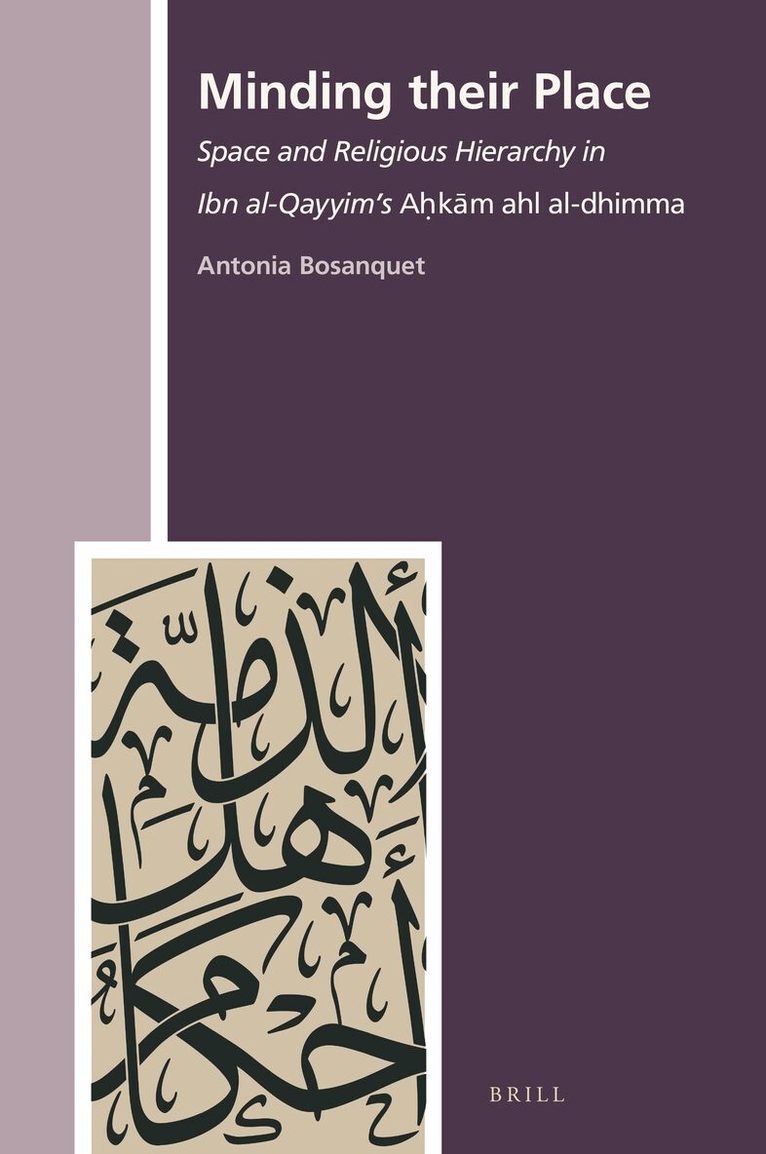
    Minding their Place

    Space and Religious Hierarchy in Ibn al-Qayyim’s Aḥkām ahl al-dhimma

    AvAntonia Bosanquet

    Inbunden, Arabiska, 2020

    Del 42 i serien History of Christian-Muslim Relations

    2 148 kr

    Beställningsvara. Skickas inom 5-8 vardagar. Fri frakt över 249 kr.

    Beskrivning

    Antonia Bosanquet’s Minding Their Place is the first full-length study of Ibn al-Qayyim’s (d. 751/1350) collection of rulings relating to non-Muslim subjects, Aḥkām ahl al-dhimma. It offers a detailed study of the structure, content and authorial method of the work, arguing that it represents the author’s personal composition rather than a synthesis of medieval rulings, as it has often been understood. On this basis, Antonia Bosanquet analyses how Ibn al-Qayyim’s presentation of rulings in Aḥkām ahl al-dhimma uses space to convey his view of religious hierarchy. She considers his answer to the question of whether non-Muslims have a place in the Abode of Islam, how this is defined and how his definition contributes to Ibn al-Qayyim’s broader theological world-view.

    Produktinformation

    • Utgivningsdatum:2020-08-27
    • Mått:155 x 235 x 31 mm
    • Vikt:797 g
    • Format:Inbunden
    • Språk:Arabiska, Engelska
    • Serie:History of Christian-Muslim Relations
    • Antal sidor:442
    • Förlag:Brill
    • ISBN:9789004423695

    Utforska kategorier

    • Historia inom Historia och arkeologi
    • Religion: allmänt inom Filosofi och religion
    • Kristendom inom Filosofi och religion

    Mer om författaren

    Antonia Bosanquet, PhD (2016), Freie Universität Berlin, is a research associate at Hamburg University. Her previous publications focus on inter-religious relations in Islamic thought, ranging from the 14th-century author Ibn al-Qayyim to the 20th-century author, Muḥammad Quṭb.

    Recensioner i media

    [...] Ihren ‚Platz‘ hat Bosanquets Studie somit gefunden: als eine wegweisende Arbeit im Bereich der wissenschaftlichen Erschließung derBeziehungen zwischen Islam und Nichtmuslimen in der Vormoderne.[...] Bosanquet's study has found its 'place' as a groundbreaking work in the academic field of relations between Islam and non-Muslims in the pre-modern period.Stephan Kokew, Westfälische Wilhelms-Universität Münster, in Der Islam, vol. 99, no. 1, 2022, pp. 242-246, https://doi.org/10.1515/islam-2022-0010

    Innehållsförteckning

    • AcknowledgementsList of Figure and TablesIntroduction1 Questions Raised in this Study2 Terms and Concepts3 Space and Aḥkām ahl al-dhimma4 Text as Space?5 Significance of this Study6 Method and Chapter Outlinepart 1: Aḥkām ahl al-dhimma: Text and Content1 Author, Text and Reception1 Ibn Qayyim al-Jawziyya2 The Text of Aḥkām ahl al-dhimma3 Reception4 Manuscripts and Editions2 Historical Background1 Muslims and non-Muslims in the Mamluk Empire2 The ʿUlamāʾ in the Mamluk Period3 Literary Precedents1 The Pact of ʿUmar and the Contract Genre2 The Fiqh Compendia3 Juristic Literature Focusing on the Ahl al-Dhimma4 Manuals of Governance and Statecraft5 Ādāb al-Muḥtasib6 Mamluk Prescriptive Literature7 Similarities and Differences Between the Literary Precedents for Aḥkām ahl al-dhimma8 Conclusions: Locating Aḥkām ahl al-dhimma4 Structure and Method1 Structure and Subject Division Within Aḥkām ahl al-dhimma2 Sources and Method3 Sources for Aḥkām Ahl al-Dhimma4 Source Incorporation and Authorial Agency5 The Dialectical Method6 Digression: its Uses and Functions7 Qur’anic Verses and Hadith8 Conclusion to Part Onepart 2: Space in Aḥkām ahl al-dhimma5 Separate Space1 Mosques, Churches and Dhimmi Homes2 Geographical Boundaries and Muslim Space3 Ṣulḥ Land, ʿAnwa Land and Dhimmi Space4 Tax5 Employment in State Administration6 Festivals7 Dhimmi Marriage8 The Dhimmi Wife and the Female Body9 Death, Burial and the Afterlife10 Conclusion: Separate Space and Private Space in Aḥkām ahl al-dhimma6 The Relational Space of Personal Interaction1 Greeting2 Visiting the Sick and Attending Funerals3 Commercial Exchange and Business Partnerships4 Conversion to Islam and Marriage Relations5 The Female Convert’s Relations with her Non-Muslim Family6 The Male Convert’s Relations with his Non-Muslim Family7 Mixed Marriages and Shared Households8 Conclusion: The Characterisation of the Dhimmi7 The Relational Space of Public Performance1 Structural Incorporation of the Pact of ʿUmar in Aḥkām Ahl al-Dhimma2 Ibn al-Qayyim’s Sources for the Pact of ʿUmar3 Ibn al-Qayyim’s Presentation of the Pact of ʿUmar4 Stage Props: Movable Religious Symbols5 Stage Backdrop: Non-Movable Religious Symbols6 Scripting Dhimmi Performance: Regulating Appearance and Comportment7 Conclusion8 The Contested Space of Non-Muslim Children1 Aḥkām Ahl al-Dhimma and the Question of Dhimmi Children2 Sources and Framing3 Children in This Abode: Legal Responsibility and Religious Education4 Legitimising the Non-Muslim Status of the Child5 Legitimising the Conversion of the Non-Muslim Child6 Sunni Positions on the Fate of Non-Muslim Children After Death7 Ibn al-Qayyim’s Review of the Positions8 ConclusionConclusion: Space, Religious Difference and Aḥkām ahl al-dhimma1 Space in Aḥkām ahl al-dhimma2 Muslims and non-Muslims in Aḥkām Ahl al-Dhimma3 The Place of Dhimmis in the Abode of Islam4 Identity, Alterity and Power5 Aḥkām Ahl al-Dhimma, Regulatory Discourse about Dhimmis and Ibn al-QayyimBibliographyAuthor IndexSubject Index