• Fri frakt över 249 kr
  • •
  • Snabba leveranser
  • •
  • Billiga böcker
Kundservice

Du är på sajten för privatpersoner.

Företag, bibliotek eller offentlig verksamhet?

Du handlar på classic.bokus.com, där alla dina funktioner finns intakta.
Till classic.bokus.com
Bokus logotyp. Gå till startsidan.
  • Erbjudanden
  • Nyheter
  • Student
  • Topplistor
  • Barn & ungdom
  • Bokus Play
  • E-böcker
  • Pocketböcker
  • Spel & pussel

10% studentrabatt med kod TERM26

Sidfot

Mina sidor

    Hjälp

    • Kundservice
    • Vanliga frågor och svar
    • Frakt och leverans
    • Retur vid ångerrätt
    • Reklamera vara
    • Betalning
    • Köpvillkor
    • Allmänna villkor
    • Information om webbplatsens tillgänglighet

    Om Bokus

    • Om oss
    • Pressrum
    • För studenter
    • För företag
    • För bibliotek och offentlig verksamhet
    • För leverantörer
    • Hållbarhet

    Populärt

    • Aktuella erbjudanden
    • Presentkort
    • Studentlitteratur
    • Nya böcker
    • Topplistor
    • Signerade böcker
    • Engelska böcker

    Inspiration

    • Boktips
    • BookTok
    • Populära bokserier
    • Barnbokskaraktärer
    • Populära författare
    Logotyp för Bokus
    Följ oss på Facebook (extern länk)Följ oss på Instagram (extern länk)Följ oss på YouTube (extern länk)Följ oss på TikTok (extern länk)
    bokus @ CookiesAnpassa cookiesIntegritetspolicyKöpvillkor
    Till Citymail hemsida (extern länk)Till Budbee hemsida (extern länk)Till Postnord hemsida (extern länk)Till Schenker hemsida (extern länk)Till Early Bird hemsida (extern länk)Till Walleys hemsida (extern länk)
    1. Filosofi och religion
    2. Religion och tro
    3. Buddhism

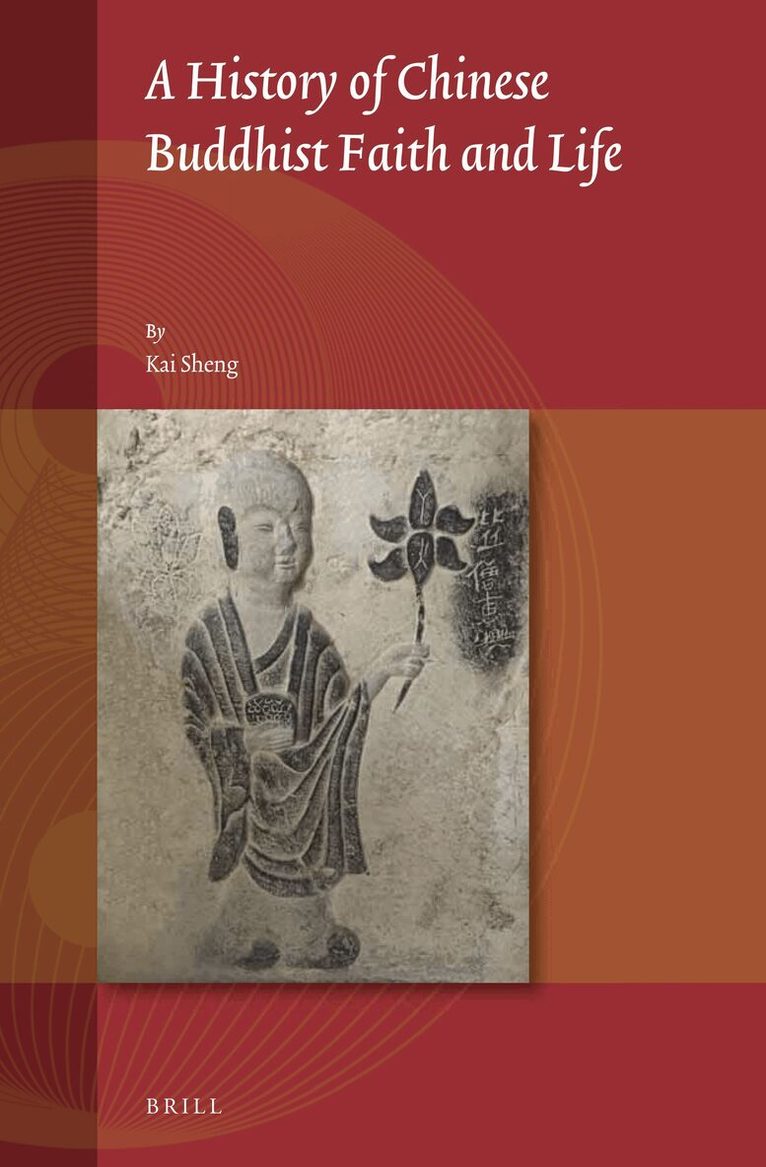
    History of Chinese Buddhist Faith and Life

    AvKai Sheng

    Inbunden, Engelska, 2020

    Del 3 i serien Studies on East Asian Religions

    2 943 kr

    Beställningsvara. Skickas inom 5-8 vardagar. Fri frakt över 249 kr.

    Beskrivning

    The goal of this book is to study the ways in which Chinese Buddhists expressed their religious faiths and how Chinese Buddhists interacted with society at large since the Northern and Southern dynasties (386-589), through the Ming (1368-1644) and the Qing (1644-1911), up to the Republican era (1912-1949). The book aims to summarize and present the historical trajectory of the Sinification of Buddhism in a new light, revealing the symbiotic relationship between Buddhist faith and Chinese culture.The book examines cases such as repentance, vegetarianism, charity, scriptural lecture, the act of releasing captive animals, the Bodhisattva faith, and mountain worship, from multiple perspectives such as textual evidence, historical circumstances, social life, as well as the intellectual background at the time.

    Produktinformation

    • Utgivningsdatum:2020-06-18
    • Mått:155 x 235 x 41 mm
    • Vikt:1 020 g
    • Format:Inbunden
    • Språk:Engelska
    • Serie:Studies on East Asian Religions
    • Antal sidor:596
    • Förlag:Brill
    • Medarbetare:Jinhua Chen
    • ISBN:9789004431522
    • Originaltitel:Zhongguo Fojiao xinyang yu shenghuo shi 中國佛教信仰與生活史, 2016.

    Utforska kategorier

    • Buddhism inom Filosofi och religion

    Mer om författaren

    Kai Sheng is a Professor in and currently the Vice Head of the Department of Philosophy, at Tsinghua University, as well as the Vice Director of the Institute for Ethics and Religious Studies (IERS) at that same university. His research areas include Buddhist schools of the South and North Dynasties in China, the relations between Confucianism, Buddhism and Taoism, the social history of Chinese Buddhism, Buddhism in the modern society, and Buddhism and western philosophy.

    Recensioner i media

    "This volume serves as an excellent historical overview of the nature of Chinese Buddhism." – Joseph Chadwin, Religious Studies 47.2 (June 2021)

    Innehållsförteckning

    • Contents List of FiguresIntroduction: Expression and Transformation of Chinese Buddhist Faith: Perspectives of Institutional History, Social History, Cultural History, and Scholarship History1 “Entire Buddhism” and the Sinicization of Buddhism2 The Perspective of Institutional History in Chinese Buddhist Faith3 The Perspective of Social History in Chinese Buddhist Faith4 The Perspective of Cultural History in Chinese Buddhist Faith1 The Faith and Lifestyles of Buddhists during the Northern and Southern Dynasties1 The Formation of Buddhist Repentance1.1 Daoan’s Regulations for Monks and Nuns and Confession of Transgressions1.2 Preaching in the Northern and Southern Dynasties1.3 Purification Gathering (Zhaihui齋會) and Repenting Transgressions (Huiguo悔過)1.4 The Formation of Repentance Rites in the Six Dynasties Period (222-589)1.5 Zhenguan真觀 (538-611) and the Formation of the Lianghuang Chan梁皇懺2 The Formation of the Tradition of Buddhist Vegetarianism2.1 The Scriptural Basis of Vegetarianism2.2 The Tradition of Monastic Vegetarianism before Liang Wudi2.3 Vegetarianism of Zhou Yong周顒 (?-493) and Shen Yue沈約 (441-513)2.4 The Thought of Liang Wudi in the “Duan Jiurou Wen”3 Buddhist Societies in the Northern and Southern Dynasties and Philanthropy3.1 Buddhist Societies of the Northern and Southern Dynasties3.2 Buddhist Merit Making in the Northern and Southern Dynasties983.3 Buddhist Philanthropy in the Northern and Southern Dynasties1014 The Cult of the Fahua jing in the Northern and Southern Dynasties1144.1 The Idea of Samādhi in the Fahua Jing4.2 The Contemplative Method of “Lotus Samādhi” in the Siwei Lüeyao Fa思惟略要法4.3 Idea of Repentance in the Puxian Guanjing普賢觀經4.4 The Popularity of the Cult of the Fahua Jing4.5 Huisi’s Fahua Jing Anlexing Yi 法華經安樂行義5 Cults of Bhaiṣajyaguru, Avalokiteśvara and Relics in the Northern and Southern Dynasties5.1 The Cult of Bhaiṣajyaguru in the Northern and Southern Dynasties1435.2 The Cult of Avalokiteśvara in the Northern and Southern Dynasties1485.3 The Cult of Relics during the Northern and Southern Dynasties1526 Concluding RemarksAppendix 1.1: The Translation of Avalokiteśvara’s Name and the Transmission of Related Scriptures2 Faith and Lifestyle of Buddhists in the Sui, Tang and Five Dynasties1 Buddhist Faith and Rituals in the Sui and Tang1.1 Zhiyi and the Compilation of Repentance Rites1.2 Zongmi and the Yuanjue Jing Daochang Xiuzheng Yi圓覺經道場修證儀1.3 Repentance Ritual of Chan Buddhism in the Tang Dynasty1.4 Daoxuan and the Repentance Ritual of the Vinaya School1.5 Shandao and Pure Land Rites of Worship and Praise1.6 Sui and Tang Medicine Buddha Altars and the Repentance Ritual of Worshiping the Medicine Buddha1.7 Maitreya Faith and Ritual of Maitreya Worship and Repentance2 Neidaochang 內道場 and Śarīra Worship in the Sui and Tang2.1 Origins of the Neidaochang內道場2.2 Yang Guang’s Huiri Daochang and Riyan Monastery2.3 Neidaochang in the Tang Dynasty2.4 Śarīra Worship of Emperor Wen of Sui2.5 Śarīra Worship of the Emperors in the Tang Dynasty3 Buddhist Social Philanthropy in the Sui and Tang Periods3.1 Buddhist Philanthropy in the Sui Dynasty3.2 Compassion-Field Infirmaries in the Tang Dynasty3.3 Monastery Boarding Houses in the Tang Dynasty4 Public Lectures and Illustrative Narrative in the Tang and Five Dynasties4.1 Ritual Procedures for Lecturing on Sūtras in the Tang and Five Dynasties4.2 Public Lectures in the Tang and Five Dynasties4.3 Illustrative Lecture and Illustrative Narrative in the Tang and Five Dynasties Period5 ConclusionAppendix 2.1: An English Translation of the Yaoshi Daochang Wen 藥師道場文 (Text of the Medicine Buddha Altar; B. 8719V), Based on Li Xiaorong’s Critical EditionAppendix 2.2: 34 Monastics Affiliated with Yang Guang’s Palace ChapelsAppendix 2.3: Monastics Involved in the Construction of Stūpas During the Renshou Era (601-604)Appendix 2.4: A Comparison of Descriptions of the Sūtra Lecturing by Ennin and Other Sources3 Buddhist Faith and Activities in the Song and Yuan Dynasties (960–1368)1 Buddhist Faith and Rituals in the Song and Yuan Periods1.1 The Creation and Practice of Tiantai Repentance Rituals in the Song Dynasty1.2 The Practice of Repentance in the Song Huayan School1.3 Buddhist and Pure Land Communes in the Song-Yuan Periods1.4 Niepan Hui涅槃會 (Nirvāṇa Gatherings) and the Niepan Lizan Wen 涅槃禮贊文 (Veneration Verses of the Nirvāṇa)1.5 The Development of the ‘Water and Land Rite’2 Buddhist Philanthropy in the Song and Yuan Periods2.1 Buddhist Social Programs during the Song Dynasty2.2 Song Dynasty Buddhism and Regional Charity3 The Practice of Life Release in Buddhism from the Song to Yuan Periods3.1 The Origins of the Life Release Practice3.2 Life Release Practices Before the Song Period3.3 The Popularity of the Life Release Practice in the Song Dynasty4324 ConclusionAppendix 3.1: Three Transgressions (Sampin zui 三品罪)Appendix 3.2: Three Methods of Repentance (Sanzhong Chanmen三種懺門)4 Buddhist Faith and Lifestyles in the Ming and Qing Dynasties1 Mount Jiang Dharma Services and the Consolidation of Yoga Teachings under Emperor Taizu of Ming1.1 The Creation and Procedures of the Mount Jiang Dharma Service4401.2 Ming Taizu’s Religious Views on Spirits and the Demands of “Rites” and “Time” in Sacrifices1.3 Regulation and Promotion of Buddhist Services by Ming Taizu2 Buddhist Services and Monastic Regulations under the Ming-Qing Periods2.1 The Popularity and Disorder of Buddhist Services in the Ming and Qing2.2 The Production and Perfection of Buddhist Repentance in the Ming and Qing2.3 The Revisions and Popularity of Morning and Evening Recitations2.4 Reflection and Criticism of Buddhist Services in the Ming, Qing, and Republican Periods3 Philanthropy and the Life-Release in Ming and Qing Buddhism3.1 Buddhist Philanthropy in the Ming and Qing3.2 The Custom of Life-Releasing in Ming and Qing Buddhism4 The Formation of the Belief in the Four Buddhist Sacred Mountains in Ming and Qing Periods4.1 The Time Frame in Which the Four Sacred Buddhist Mountains Concept Appeared4.2 The Significance of Veneration of the Four Great Sacred Peaks4.3 The Formation of Sacred Mountain Veneration and the Overcoming of the “Borderland Complex”5 ConclusionAppendix 4.1: The Times, Locations, Eminent Monks Participating in the Mount Jiang Dharma Service (Hasebe, kyōdanshi, 18-20)Appendix 4.2: Three Hindrances (Sanzhang 三障)Appendix 4.3: Morning and Evening ChantingConclusion: The Characteristics of Chinese Buddhist Faith1 Spatial Creation for Objects of Chinese Buddhist Faith2 Rituals of Chinese Buddhist Faith, Politics of Imperial Power and Systems of Ritual 3 Rationalism and Communalism as Chinese Buddhist Expressions of Faith4 Pragmatism as Chinese Buddhist Expression of FaithBibliographyIndex