• Fri frakt över 249 kr
  • •
  • Snabba leveranser
  • •
  • Billiga böcker
Kundservice

Du är på sajten för privatpersoner.

Företag, bibliotek eller offentlig verksamhet?

Du handlar på classic.bokus.com, där alla dina funktioner finns intakta.
Till classic.bokus.com
Bokus logotyp. Gå till startsidan.
  • Erbjudanden
  • Nyheter
  • Student
  • Topplistor
  • Barn & ungdom
  • Bokus Play
  • E-böcker
  • Pocketböcker
  • Spel & pussel

Må bättre, för mindre! Upp till 50% rabatt på hälsoböcker

Sidfot

Mina sidor

    Hjälp

    • Kundservice
    • Vanliga frågor och svar
    • Frakt och leverans
    • Retur vid ångerrätt
    • Reklamera vara
    • Betalning
    • Köpvillkor
    • Allmänna villkor
    • Information om webbplatsens tillgänglighet

    Om Bokus

    • Om oss
    • Pressrum
    • För studenter
    • För företag
    • För bibliotek och offentlig verksamhet
    • För leverantörer
    • Hållbarhet

    Populärt

    • Aktuella erbjudanden
    • Presentkort
    • Studentlitteratur
    • Nya böcker
    • Topplistor
    • Signerade böcker
    • Engelska böcker

    Inspiration

    • Boktips
    • BookTok
    • Populära bokserier
    • Barnbokskaraktärer
    • Populära författare
    Logotyp för Bokus
    Följ oss på Facebook (extern länk)Följ oss på Instagram (extern länk)Följ oss på YouTube (extern länk)Följ oss på TikTok (extern länk)
    bokus @ CookiesAnpassa cookiesIntegritetspolicyKöpvillkor
    Till Citymail hemsida (extern länk)Till Budbee hemsida (extern länk)Till Postnord hemsida (extern länk)Till Schenker hemsida (extern länk)Till Early Bird hemsida (extern länk)Till Walleys hemsida (extern länk)
    1. Djur och Natur
    2. Naturböcker
    3. Växtböcker

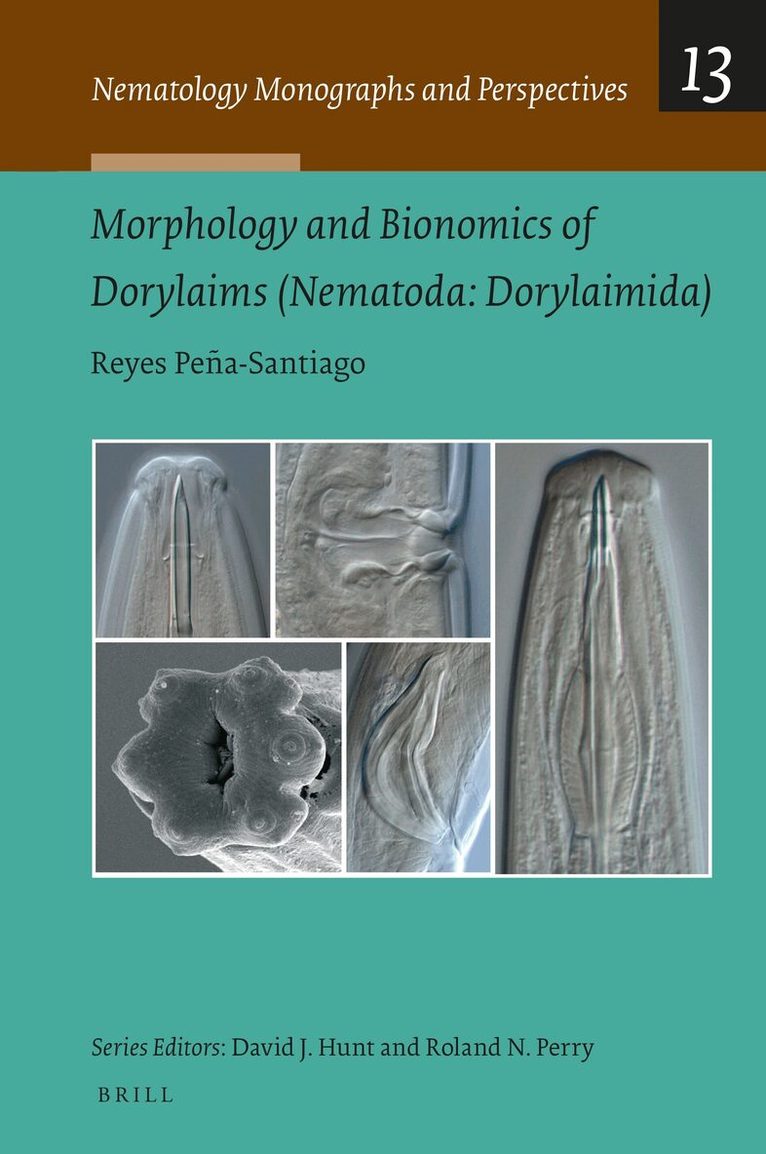
    Morphology and Bionomics of Dorylaims (Nematoda, Dorylaimida)

    AvReyes Peña Santiago

    Inbunden, Engelska, 2021

    Del 13 i serien Nematology Monographs and Perspectives

    2 072 kr

    Beställningsvara. Skickas inom 5-8 vardagar. Fri frakt över 249 kr.

    Beskrivning

    Dorylaims are probably the most diverse order of nematodes and are often an abundant component of the fauna in soils and freshwater habitats. As a result of their widespread distribution and many different feeding habits, they are considered as good bio-indicators of environmental quality and soil health. Their usefulness in this regard is only impeded by practical difficulties related to the accurate identification of the members of such a large and complex group. In this volume, Professor Reyes Peña-Santiago gives a detailed morphology of the dorylaims and provides a thorough overview of their feeding behaviour, reproduction, ecology, and diversity. You will learn what dorylaims are like and how they live, making this book an invaluable tool for nematologists, ecologists and other scientists who wish to embark on an in-depth study of the members of this fascinating group.

    Produktinformation

    • Utgivningsdatum:2021-01-07
    • Mått:155 x 235 x 20 mm
    • Vikt:677 g
    • Format:Inbunden
    • Språk:Engelska
    • Serie:Nematology Monographs and Perspectives
    • Antal sidor:278
    • Förlag:Brill
    • ISBN:9789004439993

    Utforska kategorier

    • Växtböcker inom Djur och Natur
    • Botanik inom Naturvetenskap och teknik
    • Djurböcker inom Djur och Natur

    Mer om författaren

    Reyes Peña-Santiago, Ph.D. (1983), University of Granada, is Senior Lecturer of Zoology at the University of Jaén (Spain). He is author of more than 250 contributions devoted to explore the diversity (mainly morphology and taxonomy) of dorylaims around the world.

    Innehållsförteckning

    • PrefaceAcknowledgements1. ConceptMorphological characterisation: distinctive featuresBiologyDistributionDiversity2. General aspectSizeShapeHabitusColour3. Body wall and pseudocoelCuticleStructure (layers)Surface ornamentationSpecialisations Body poresEpidermis and lateral chordsSomatic musculaturePseudocoel and its components4. Lip region and amphidsLip region shapeProfile (contour) Anterior margin Tapering Differentiation (separation from the adjoining body) Lips and their papillaeGeneral pattern Lips Papillae Oral aperture (mouth) Oral field AmphidsBasic structure Position Aperture Fovea 5. Stoma and feeding apparatusCheilostomDetailed structure General morphology Guiding ringGuiding sheathMural toothAxial odontostyleOdontophoreMusculature associated with stoma6. Digestive tractPharynxGeneral morphologySections Ultrastructure Anterior section Enlargement Basal expansion and pharyngeal glands Basic patterns Pharyngo-intestinal junctionIntestine properPrerectumRectum7. Female genital systemGeneral concept and terminologyOvaryOviductSphincterUterusBasic types Uterine special differentiations VaginaVulvaMalformations8. Male genital systemGeneral conceptTestesGenital tractSpiculesLateral guiding piecesGubernaculumGenital papillae (supplements) and other papillaeSpecialised musculatureGlands associated with male genital system9. Nervous system and receptorsCentral nervous systemNervesCephalic nervous systemPharyngeal nervous systemRecto-sympathetic nervous systemSensory structuresChemoreceptors Amphids Other chemoreceptive elements Mechanoreceptors Labial and cephalic papillae Other mechanoreceptive elements 10. Caudal regionGeneral conceptTail shapeTail sexual dimorphismPostembryonic changes in tail shapeFunctional and evolutionary aspects of tail shape11. Feeding habits and feeding behaviourMethodological constraints Feeding spectrum Feeding behaviour Food suitability and selection Feeding functional morphology Excretion and osmo-regulation in dorylaims 12. Reproduction and developmentBisexual vs monosexual species Gatemetogenesis and egg production Embryonic development and hatching Postnatal development – general aspects Moulting process Genital system development Other (minor) postnatal changes Life cycle and life span 13. Ecology and Biogeography Rationale – dorylaims as K-strategists Dorylaims as components of nematode communities Local distribution Vertical (depth) distribution Temporal (seasonal) distribution Regional distribution Global distribution .The distribution of particular taxa – some examplesHistoric biogeography Phylogeography Dispersal and transport Chorological relationships Biotic interactionsDorylaims as bioindicators in a global change scenario Notes on survival 14. DiversityHistorical outlineThe origins (1845-1920)The prodigious 1930s decade The order Dorylaimida setting The golden age of the exploration of dorylaimid diversity (1960-1990) A new era for an integrative approach The internal phylogeny of Dorylaimida Evolutionary relationships of Dorylaimida with other nematode taxa Dorylaims – members of the subclass Dorylaimia Mononchs – the closest relatives of dorylaims? Dorylaims and other animal-parasitic Dorylaimia Dorylaimida and other non-Dorylaimia Updated inventory of dorylaimid taxa Subject IndexCited Taxa Index