• Fri frakt över 249 kr
  • •
  • Snabba leveranser
  • •
  • Billiga böcker
Kundservice

Du är på sajten för privatpersoner.

Företag, bibliotek eller offentlig verksamhet?

Du handlar på classic.bokus.com, där alla dina funktioner finns intakta.
Till classic.bokus.com
Bokus logotyp. Gå till startsidan.
  • Erbjudanden
  • Nyheter
  • Student
  • Topplistor
  • Barn & ungdom
  • Bokus Play
  • E-böcker
  • Pocketböcker
  • Spel & pussel

10% rabatt på allt med kod: NYSTART10 →

Sidfot

Mina sidor

    Hjälp

    • Kundservice
    • Vanliga frågor och svar
    • Frakt och leverans
    • Retur vid ångerrätt
    • Reklamera vara
    • Betalning
    • Köpvillkor
    • Allmänna villkor
    • Information om webbplatsens tillgänglighet

    Om Bokus

    • Om oss
    • Pressrum
    • För studenter
    • För företag
    • För bibliotek och offentlig verksamhet
    • För leverantörer
    • Hållbarhet

    Populärt

    • Aktuella erbjudanden
    • Presentkort
    • Studentlitteratur
    • Nya böcker
    • Topplistor
    • Signerade böcker
    • Engelska böcker

    Inspiration

    • Boktips
    • BookTok
    • Populära bokserier
    • Barnbokskaraktärer
    • Populära författare
    Logotyp för Bokus
    Följ oss på Facebook (extern länk)Följ oss på Instagram (extern länk)Följ oss på YouTube (extern länk)Följ oss på TikTok (extern länk)
    bokus @ CookiesAnpassa cookiesIntegritetspolicyKöpvillkor
    Till Citymail hemsida (extern länk)Till Budbee hemsida (extern länk)Till Postnord hemsida (extern länk)Till Schenker hemsida (extern länk)Till Early Bird hemsida (extern länk)Till Walleys hemsida (extern länk)
    1. Språk och ordböcker
    2. Språkvetenskap och lingvistik

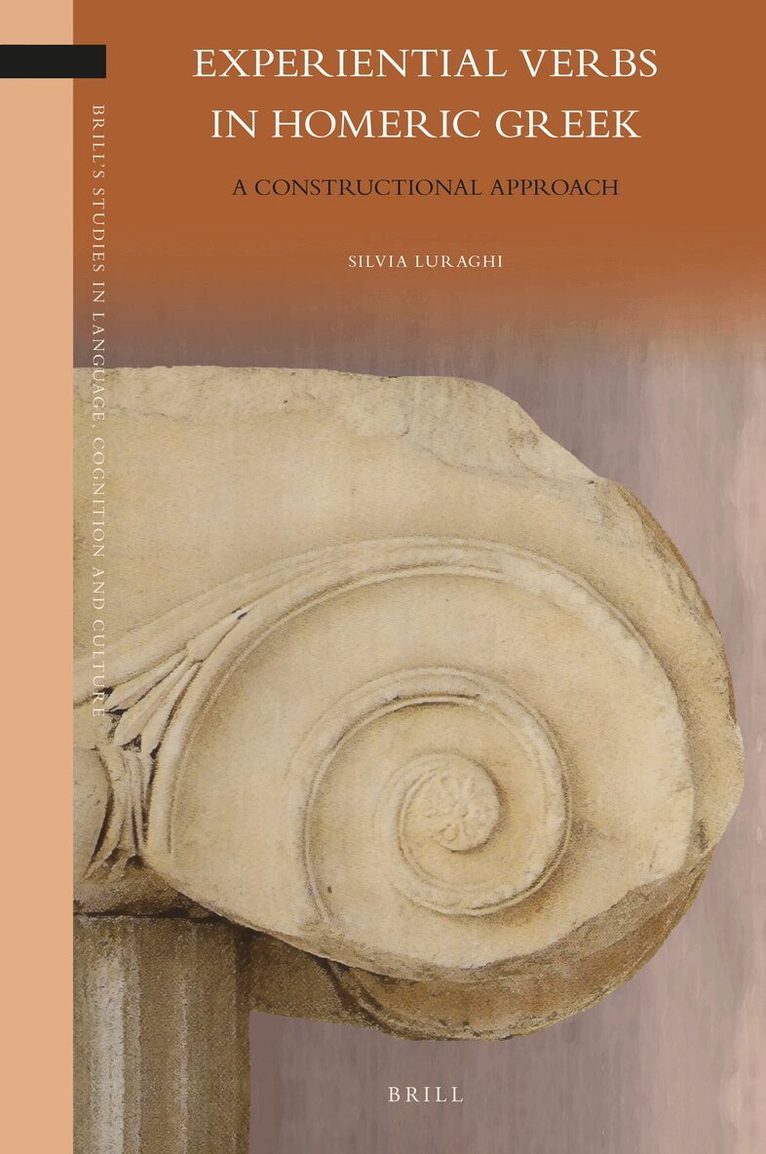
    Experiential Verbs in Homeric Greek

    A Constructional Approach

    AvSilvia Luraghi

    Inbunden, Engelska, 2020

    Del 27 i serien Brill's Studies in Language, Cognition and Culture

    2 641 kr

    Beställningsvara. Skickas inom 5-8 vardagar. Fri frakt över 249 kr.

    Beskrivning

    In Experiential Verbs in Homeric Greek:.A Constructional Approach Silvia Luraghi offers a comprehensive account of construction variation with two-place verbs belonging to different sub-domains of experience (including bodily sensation, perception, cognition, emotion and volitionality) in the Homeric language. Traditionally, variation is ascribed to the independent meaning of cases that mark the second argument, and explanations have focused on properties of the latter. By taking a constructional approach, the author shows that construction variation also brings about differences in the conceptualization of the subject/experiencer by pointing to different degrees of control and awareness. Variation is then shown to reflect the embodied construal of experience along with the social dimension of emotions.

    Produktinformation

    • Utgivningsdatum:2020-11-05
    • Mått:155 x 235 x 26 mm
    • Vikt:669 g
    • Format:Inbunden
    • Språk:Engelska
    • Serie:Brill's Studies in Language, Cognition and Culture
    • Antal sidor:312
    • Förlag:Brill
    • ISBN:9789004442481

    Utforska kategorier

    • Språkvetenskap och lingvistik inom Språk och ordböcker

    Mer om författaren

    Silvia Luraghi, Ph.D. (1987), University of Pavia, is Professor of Linguistics at that university. She has published extensively on Ancient Greek and Indo-European linguistics, and is associate editor of the Encyclopedia of Ancient Greek Language and Linguistics (Brill, 2014).

    Innehållsförteckning

    • PrefaceAbbreviationsList of Figures and Tables1 Introduction1.1 The Construal of Situations1.2 A Construction-Based View of Homeric Greek1.3 Embodiment and Domains of Experience1.4 Homeric Greek1.5 Outline of the Book2 Experiential Situations2.1 Experiential Situation Types2.2 Semantic Roles of Participants in Experiential Situations2.3 The Encoding of Experiential Situations Cross-linguistically2.4 Discussion3 Argument Structure Constructions in Homeric Greek3.1 Properties of Constructions3.2 Constructions and Construction Variation with Two-Place Verbs3.3 Complementation in Homeric Greek3.4 Discussion4 The Ancient Greek Verb4.1 Aspect and Tense4.2 Voice4.3 Discussion5 At the Edges of the Experiential Domain: Bodily Sensations and Volition5.1 Bodily Sensations5.2 Volitionality and Need5.3 Discussion6 Perception6.1 Visual Perception6.2 Aural Perception6.3 Other Types of Sensory Perception6.4 From Perception to Evidentiality6.5 Discussion7 Cognition7.1 Think7.2 Know / Learn7.3 Remember / Forget7.4 Discussion8 Emotions8.1 Verbs of Emotion with the NomDat Construction8.2 Verbs of Emotion with the NomGen Construction8.3 Verbs of Emotion with the NomAcc Construction8.4 Alternating Constructions8.5 Dative Experiencer Constructions8.6 Discussion9 Causative Verbs9.1 The (Anti)causative Alternation9.2 Animate Verbs9.3 Inanimate Verbs9.4 Discussion10 Concluding Remarks10.1 The Meaning of Construction Variation with Experiential Verbs10.2 Embodiment and Social Setting10.3 The Encoding of Experiential Situations in Homeric Greek10.4 Constructions’ Productivity10.5 Verbal Voice10.6 OutlookReferencesIndex