• Fri frakt över 249 kr
  • •
  • Snabba leveranser
  • •
  • Billiga böcker
Kundservice

Du är på sajten för privatpersoner.

Företag, bibliotek eller offentlig verksamhet?

Du handlar på classic.bokus.com, där alla dina funktioner finns intakta.
Till classic.bokus.com
Bokus logotyp. Gå till startsidan.
  • Erbjudanden
  • Nyheter
  • Student
  • Topplistor
  • Barn & ungdom
  • Bokus Play
  • E-böcker
  • Pocketböcker
  • Spel & pussel

10% rabatt på allt med kod: NYSTART10 →

Sidfot

Mina sidor

    Hjälp

    • Kundservice
    • Vanliga frågor och svar
    • Frakt och leverans
    • Retur vid ångerrätt
    • Reklamera vara
    • Betalning
    • Köpvillkor
    • Allmänna villkor
    • Information om webbplatsens tillgänglighet

    Om Bokus

    • Om oss
    • Pressrum
    • För studenter
    • För företag
    • För bibliotek och offentlig verksamhet
    • För leverantörer
    • Hållbarhet

    Populärt

    • Aktuella erbjudanden
    • Presentkort
    • Studentlitteratur
    • Nya böcker
    • Topplistor
    • Signerade böcker
    • Engelska böcker

    Inspiration

    • Boktips
    • BookTok
    • Populära bokserier
    • Barnbokskaraktärer
    • Populära författare
    Logotyp för Bokus
    Följ oss på Facebook (extern länk)Följ oss på Instagram (extern länk)Följ oss på YouTube (extern länk)Följ oss på TikTok (extern länk)
    bokus @ CookiesAnpassa cookiesIntegritetspolicyKöpvillkor
    Till Citymail hemsida (extern länk)Till Budbee hemsida (extern länk)Till Postnord hemsida (extern länk)Till Schenker hemsida (extern länk)Till Early Bird hemsida (extern länk)Till Walleys hemsida (extern länk)
    1. Filosofi och religion
    2. Religion och tro
    3. Kristendom

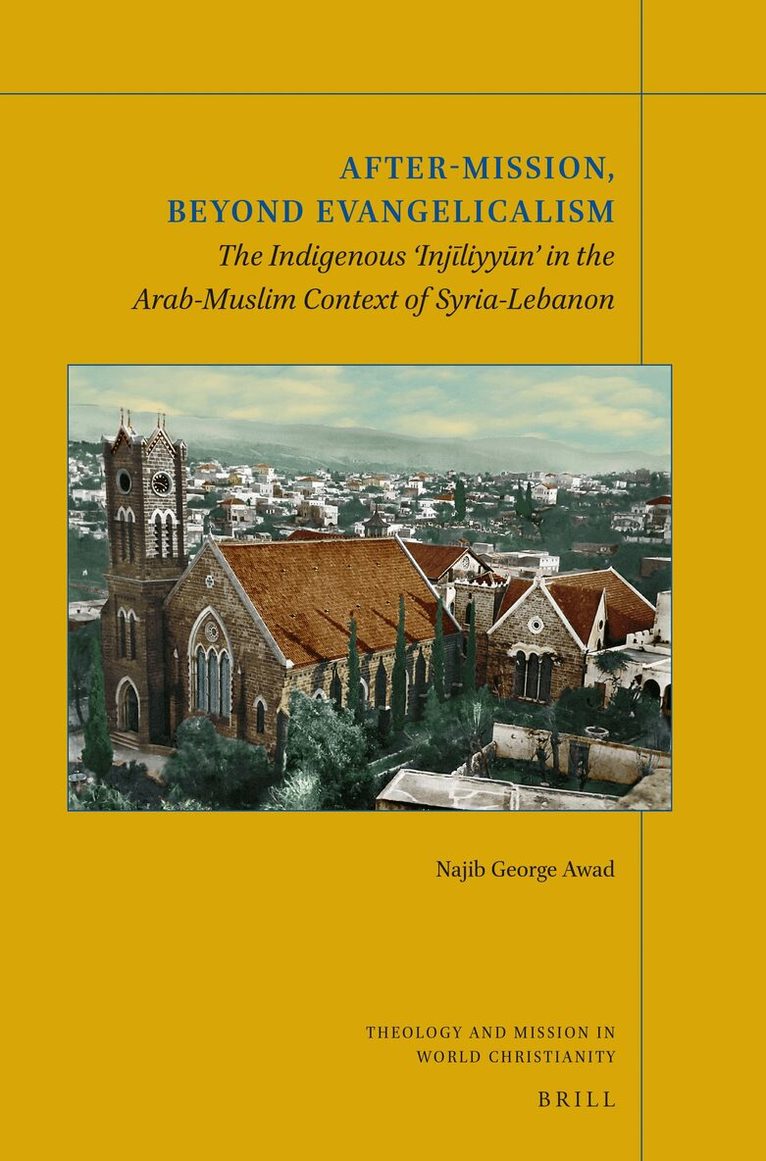
    After-Mission, Beyond Evangelicalism

    The Indigenous ‘Injīliyyūn’ in the Arab-Muslim Context of Syria-Lebanon

    AvNajib George Awad

    Häftad, Arabiska, 2020

    Del 18 i serien Theology and Mission in World Christianity

    1 189 kr

    Beställningsvara. Skickas inom 5-8 vardagar. Fri frakt över 249 kr.

    Beskrivning

    After-Mission touches on on three questions.The first question is about self-perception and identity-formation strategies, and the various views that we have on the Protestants’ relation to their Arab Muslim Middle Eastern context. This will furnish the basis for the ensuing parts, as it will provide the study with coherent and analytical readings of the cultural situation and intellectual views of the Arab Eastern Protestants in their Sitz im Leben from the perspective of the hermeneutic tripod of ‘identity–othering–relationality’.The second question, about the theological dimension, asks what kind of a theological discourse do the Protestants need to develop, and how do they need to re-form their own theological heritage, in such a manner that will allow them to heal the historical enmity and suspicion towards them from the Eastern Orthodox Christian community in the region? How should they re-think their traditional view on theological subjects common to them and the Eastern Christian tradition? Traditional Protestant attitudes towards Eastern Christianity, which have been viewed through the lens of evangelicalism and mission, have failed to grant the Protestants an influential and truly indigenous presence in the region and have led to them being constantly accused of being a foreign transplant and alien entity. In the light of this, it is clear that going beyond missiology and traditional evangelicalism demands re-thinking certain mutually shared but contentious theological subjects from a new perspective with the focus on more constructive attempts to build fellowship through dialogue.Finally, the third question touches on the Protestants’ future in the Arab Muslim Middle East by viewing this inquiry from a broader perspective that is related to all the Middle Eastern Christian communities’ presence and role in the Muslim-majority context. It will discuss questions about the kind of presence and role that Christians, Protestants included, should hope to play in order to guarantee survival and a continuing presence in the region. The question of identity formation, and the managing of difference without trapping it in the mud of ‘otherizing and self-otherizing’, will also be tackled, so that the theological dimension is integrated with the broader, multifaceted contextual one.

    Produktinformation

    • Utgivningsdatum:2020-10-29
    • Mått:155 x 235 x 24 mm
    • Vikt:679 g
    • Format:Häftad
    • Språk:Arabiska, Engelska
    • Serie:Theology and Mission in World Christianity
    • Antal sidor:390
    • Förlag:Brill
    • ISBN:9789004444355

    Utforska kategorier

    • Kristendom inom Filosofi och religion
    • Religion: allmänt inom Filosofi och religion

    Mer om författaren

    Prof. Dr. Najib George Awad, (Prof. Dr. Phil; Dr. Theol. Habil) is Professor of Christian Theology and Eastern Christian Thought and the Director of the PhD Program in Islamic Studies and Christian-Muslim Relations at Hartford Seminary, Connecticut USA. He had his first PhD from King’s College University of London, UK (2007) and his second Dr. Theol. Habil. from the Philipp University of Marburg, Germany (2014). His monographs in English are Orthodoxy in Arabic Terms: A Study of Theodore Abū Qurrah’s Trinitarian and Christological Doctrines in an Islamic Context(De Gruyter, 2015); and Umayyad Christianity: John of Damascus as a Contextual Example of Identity-Formation in Early Islam (Gorgias Press, 2018). Right now, he is working on a research project about Mu’tazilite kalām in the 3rd/9th century Abbasid era.

    Innehållsförteckning

    • PrefaceIntroductionPart 1: Mission, Evangelicalism and Injīliyya as ‘Identity Formation’1 ‘After Mission, Beyond Evangelicalism’ in Context1 Approaching Mission in this Study2 ‘After Mission’ as Context3 ‘Beyond Evangelicalism’ as Outcome4 After Reactionary Survival, Beyond Pragmatic Denial5 Where To Go from Here?2 The So-Called ‘Nominal Christians’ in the Arab Orient1 Introduction2 The ‘Nominal’ Christians3 From ‘Proselytism’ to ‘Reform from Within’4 The Project of Reforming the ‘Nominal Christians’5 Questionable Weltanschauung, Problematic Achievement3 The Arab Eastern Protestants Critically Appraised in Their Homeland1 Introduction2 ‘Who Are We? What Do We Represent?’ Protestants in Their Own Eyes3 The Protestants in the Eyes of Easterners (1): a Colonial-Imperialist Instrument4 Eastern Protestants Respond to the ‘Colonial-Imperialist’ Accusation5 The Protestants in the Eyes of Easterners (2): Culturally Alienated and Contextually Estranged Entities6 Eastern Protestants Respond to the ‘Cultural Alienation’ Accusation7 Protestants in Syria and Lebanon: Asking the Same Question Again?4 Where Do the Injīliyyūn Stand? What Needs To Be Remedied?1 Introduction2 Identity Formation and the Otherizing Practice3 From Euangeliun to Injīliy4 When ‘Evangelical’ Became a Cultural Ideology5 Identity as ‘Difference’: between Distinction and Opposition6 Revising Western ‘Evangelicalism’ and Its Relevance to Arab Eastern Protestantism7 Detaching from History and the Trap of ‘Amnesiac Identity’8 Promising Potential Changes upon the Horizon?9 Injīliyya as Identity Crisis: Final RemarksPart 2: Witness as Theologization: toward a Theological Self-PerceptionIntroduction to Part 25 The Injīliyyūn and Their Relation to the Ecclesial Past: Tracing the Roots of a Worldview1 A Church without Roots? Or, Autobiographical Anamnesis2 Why This Detachment from History?3 What Would the Stance of the Protestant Reformers Have Been?4 Suspicion toward the Past: a Possible Change upon the Horizon?5 Frameworking a Diagnosed Crisis: Concluding Remarks6 Towards an Arab Eastern Protestant Neo-Patristic Synthesis: a Proposal1 Introduction2 Why Neo-Patristic Synthesis?3 On the Core Discourse of Neo-Patristic Synthesis4 Protestant Neo-Patristic Synthesis: an Example of Implication5 The Two Theological Outcomes of a Protestant Neo-Patristic Synthesis6 Concluding RemarksPart 3: Presence as Symbiosis: towards a Future Relational RoleIntroduction to Part 37 The Injīliyyūn’s Presence and Role in the Land of Islam: Intellectual and Contextual Analysis1 Introduction2 Sketching the Reformation’s First Encounter with Islam3 Protestant Missionaries’ Encounter with Islam in the Middle East4 The Injīliyyūn, Arab Eastern Christians and Islam Today5 What Makes Relational Presence with Muslims a Challenge?8 Are the Injīliyyūn Truly Surviving in a Post-Christendom Context?1 Introduction2 Setting the Scene: on Post-Christendom3 ‘Post-Christendom’ and the Christians in Early Muslim Greater Syria4 Post-Christendom and the Christians of Greater Syria Today5 Conclusion9 The Injīliyyūn’s Presence: Is ‘Minority’ Status Truly Applicable to Them?1 Introduction2 The Present Scene and the ‘Alliance of Minorities’ Slogan3 On the Meaning of ‘Minority’ and on Being a ‘Minority’ in the Middle East4 Philosophical Reflections on ‘Minoritization’ as a Practice5 Who Are the ‘Minority’ in the Context of Syria and Lebanon?6 Concluding RemarksPostscriptBibliographyIndex of PersonsIndex of Subjects