• Fri frakt över 249 kr
  • •
  • Snabba leveranser
  • •
  • Billiga böcker
Kundservice

Du är på sajten för privatpersoner.

Företag, bibliotek eller offentlig verksamhet?

Du handlar på classic.bokus.com, där alla dina funktioner finns intakta.
Till classic.bokus.com
Bokus logotyp. Gå till startsidan.
  • Erbjudanden
  • Nyheter
  • Student
  • Topplistor
  • Barn & ungdom
  • Bokus Play
  • E-böcker
  • Pocketböcker
  • Spel & pussel

10% studentrabatt med kod TERM26

Sidfot

Mina sidor

    Hjälp

    • Kundservice
    • Vanliga frågor och svar
    • Frakt och leverans
    • Retur vid ångerrätt
    • Reklamera vara
    • Betalning
    • Köpvillkor
    • Allmänna villkor
    • Information om webbplatsens tillgänglighet

    Om Bokus

    • Om oss
    • Pressrum
    • För studenter
    • För företag
    • För bibliotek och offentlig verksamhet
    • För leverantörer
    • Hållbarhet

    Populärt

    • Aktuella erbjudanden
    • Presentkort
    • Studentlitteratur
    • Nya böcker
    • Topplistor
    • Signerade böcker
    • Engelska böcker

    Inspiration

    • Boktips
    • BookTok
    • Populära bokserier
    • Barnbokskaraktärer
    • Populära författare
    Logotyp för Bokus
    Följ oss på Facebook (extern länk)Följ oss på Instagram (extern länk)Följ oss på YouTube (extern länk)Följ oss på TikTok (extern länk)
    bokus @ CookiesAnpassa cookiesIntegritetspolicyKöpvillkor
    Till Citymail hemsida (extern länk)Till Budbee hemsida (extern länk)Till Postnord hemsida (extern länk)Till Schenker hemsida (extern länk)Till Early Bird hemsida (extern länk)Till Walleys hemsida (extern länk)
    1. Skönlitteratur
    2. Litteraturvetenskap
    3. Litteraturteori

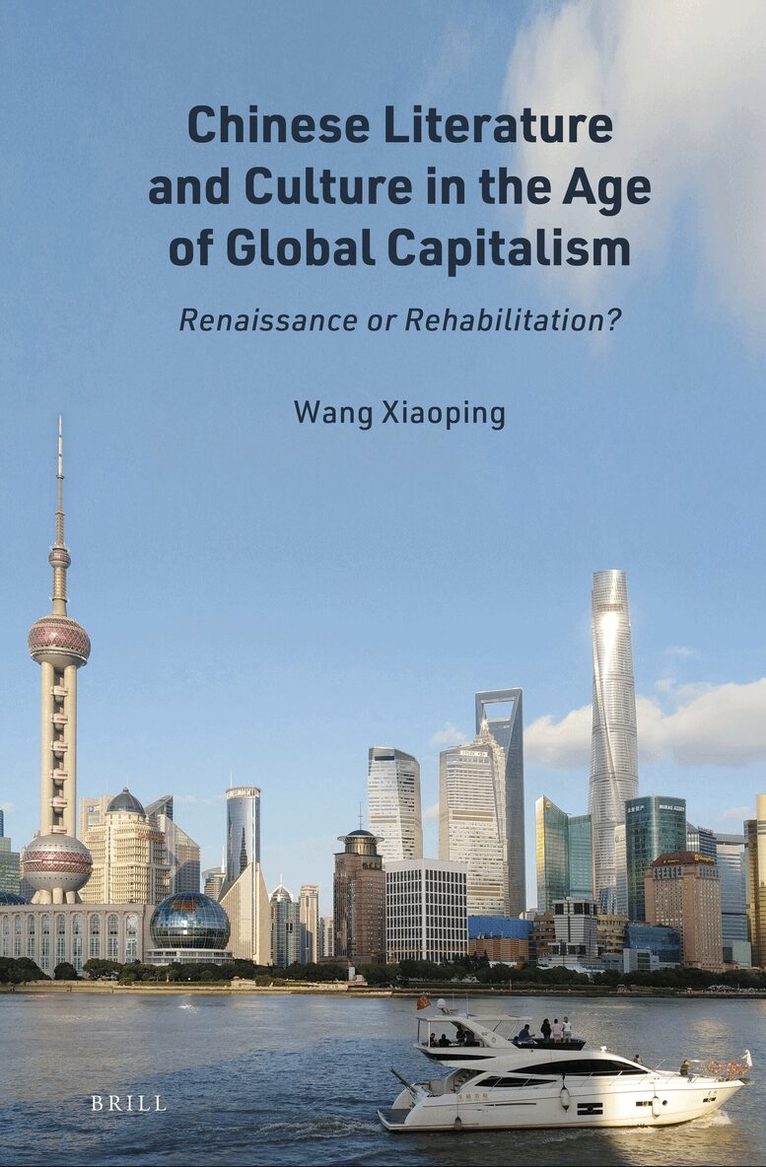
    Chinese Literature and Culture in the Age of Global Capitalism

    Renaissance or Rehabilitation?

    AvXiaoping Wang

    Inbunden, Engelska, 2021

    Del i serien Brill

    2 712 kr

    Beställningsvara. Skickas inom 5-8 vardagar. Fri frakt över 249 kr.

    Beskrivning

    Combining anatomies of textual examples with broader contextual considerations related with the social, political and economic developments of post-Mao China, Xiaoping Wang intends to explore newly emerging social and cultural trends in contemporary China, and find the truth content of Chinese society and culture in the age of global capitalism. Through in-depth textual analyses covering a variety of media, ranging from fiction, poetry, film to theoretical works as well as cultural phenomena which mirror social and cultural occurrences and reflect the present ideological proclivities of the Chinese society, this study offers timely interpretations of China in the age of globalization, its political inclinations, social fashions and cultural tendencies, and provides thought-provoking messages of China’s socio-economic and political reality.

    Produktinformation

    • Utgivningsdatum:2021-07-16
    • Mått:155 x 235 x 30 mm
    • Vikt:772 g
    • Format:Inbunden
    • Språk:Engelska
    • Serie:Brill
    • Antal sidor:376
    • Förlag:Brill
    • ISBN:9789004461185

    Utforska kategorier

    • Litteraturteori inom Skönlitteratur
    • Litteraturvetenskap inom Skönlitteratur

    Mer om författaren

    Xiaoping Wang, Ph.D. (2010), University of Texas at Austin, is distinguished professor of comparative literature at Tongji University, and adjunct professor of the Institute of Arts and Humanities of Shanghai Jiaotong University, China. He has published more than 100 articles and numerous monographs, including Contending for the "Chinese Modern": The Writing of Fiction in the Great Transformative Epoch of Modern China 1937-1949 (Brill, 2019); Postsocialist Conditions: Ideas and History in China’s “Independent Cinema”, 1988-2008 (Brill, 2018); Ideology and Utopia in China’s New Wave Cinema: Globalization and Its Chinese Discontents (Palgrave Macmillan, 2018); and China in the Age of Global Capitalism: Jia Zhangke's Filmic World(Routledge, 2019).

    Innehållsförteckning

    • AcknowledgementsList of FiguresIntroduction: Mapping the Multivalence of Contemporary Chinese Culture in the Age of Global Capitalism1 Post-New Period, Postmodernism and Postsocialism2 Raymond Williams’ Three Cultures and the Chinese Variations3 Structural Outline of the Five Featurespart 1: The Structure of Feeling of the Traditional Socialist Era1 A Lyrical Poet in the Era of Postsocialism: On Some Motifs of Fanken Chen’s Poems1 Attachment to a “Cultural China” and Yearning for a “Political China”2 A Heroic Complex with the Plebeian Consciousness3 The Motifs of Patriotism and Homesickness4 Affective Economy and the Spiritual World of the Socialist Era5 Conclusion2 On the Historical-Cultural Connotations of “Chinese New Poetry”: Fu Tianhong’s Poems as a Case-Study1 The Formation of the Rebellious Personality and Critical Consciousness2 Pioneering Spirit, Perseverance and the Desire for Freedom3 Critique of the Alienation of a Commercialized Society4 Historical Retrospection and Social Activities5 Conclusionpart 2: The Historical Consciousness of the New Liberal Humanism3 Anatomizing China’s “Avant-Garde Fiction”: Articulating Historical Experience in Formal Experimentation1 Ma Yuan: The Dispersion of Meaning during Secularization2 Ge Fei: Disintegration and Dispersion of the Subject3 Yu Hua: Historical Projection of a Post-Revolutionary Secular Society4 Su Tong: Retrospection on Revolution by the New Bourgeois Class5 Conclusion4 Sampling the “New Historical Fiction”: White Deer Plain as a Representative Text of New Historicism1 A Patriarchal Clan System Consisting of Master-Slave Relationships2 The Opening of the Gate of Desire3 Three Rebels Fighting against Existing Institutions4 Three Political Forces: An Incomprehensive Representation5 A Rebel’s Tragic Ending and the Incompleteness of History6 The Textual Blankness and the Vacancy of Political Belief7 “Cultural-Psychological Structure” and the Culturalist Mentality8 Historical Revisionism and New Historicist Fiction9 Conclusionpart 3: From Post-Revolutionary Passion to Postmodern Consumerism5 Two Kinds of Bildungsroman: On the Avant-Garde Films of China’s Sixth-Generation Auteurs1 Dirt (1992): A Bildungsroman of Youth in the Early 1990s2 The Making of Steel (1997): Why Could the Steel Not Be Successfully Made?3 Conclusion6 “Postmodern” Love Stories: Articulating the Self-Consciousness of the Entrepreneurial Class in China’s Pop Cinema1 A Hedonistic and Yuppy Life Philosophy: Romance on Lushan Mountain 2010 as a Tale of China’s Entrepreneurial Class2 Nihilists and the Pragmatic Principle: So Young (2013) as a Symptomatic “Youth Film”part 4: Middle Class Tastes and Intellectual Trends7 Making a Historical Fable: The Narrative Strategy of Lust, Caution and Its Social Repercussions1 A Précis of the Surface Plotline2 Projection of Social Institutions in Historical Representation3 Displacement of Party Politics by Sexual Politics4 Appropriation of Historical Allegory through Identity Deconstruction5 Conclusion6 Coda8 Social Democracy or Neoliberal Freedom? Globalization and Contemporary Chinese Intellectual Thought1 Dialectics of Postmodernism and (Post-)Nationalism2 Cooperation of Neo-Statism and “Corporatism”3 Conflicts between New Left and New Right4 Outcry for New Socialism and the Urge for Neoliberal Capitalism5 Conclusionpart 5: Cultural Identity and Subjectivity in the Age of Global Capitalism9 The Exploration of “Cultural Politics” and Its Crossroads: On the Discussions of “Chinese Identity” in the Era of Globalization1 Why to Take German Thinkers as the Object of Research?2 Totality and the Dialectics of Historical Materialism3 The Dialectic between Universality and Particularity4 Cultural Diversity and Pluralism5 How to Transcend the Nation-State System and Rebuild Continuity?6 What is Cultural Politics?7 Tensions and Dilemmas: Whose Cultural Politics?8 Conclusion10 Establishing the Subjectivity of Modern Chinese Culture: Zhou Ning’s Research as a Case Study1 Critique of Sinologism and Modern Academic Institutions2 From “Study of the Chinese Image in the West” to “Cross-Cultural Study”3 The Problems of “Self-Orientalization” and “Universal Value”4 The Pitfalls of Genealogical Study and Culturalist Mentality5 Exploring the Subjectivity of Modern Chinese Culture6 ConclusionConclusion: In Search of the Renaissance of China’s Socialist CultureSelected BibliographyIndex