• Fri frakt över 249 kr
  • •
  • Snabba leveranser
  • •
  • Billiga böcker
Kundservice

Du är på sajten för privatpersoner.

Företag, bibliotek eller offentlig verksamhet?

Du handlar på classic.bokus.com, där alla dina funktioner finns intakta.
Till classic.bokus.com
Bokus logotyp. Gå till startsidan.
  • Erbjudanden
  • Nyheter
  • Student
  • Topplistor
  • Barn & ungdom
  • Bokus Play
  • E-böcker
  • Pocketböcker
  • Spel & pussel

10% studentrabatt med kod TERM26

Sidfot

Mina sidor

    Hjälp

    • Kundservice
    • Vanliga frågor och svar
    • Frakt och leverans
    • Retur vid ångerrätt
    • Reklamera vara
    • Betalning
    • Köpvillkor
    • Allmänna villkor
    • Information om webbplatsens tillgänglighet

    Om Bokus

    • Om oss
    • Pressrum
    • För studenter
    • För företag
    • För bibliotek och offentlig verksamhet
    • För leverantörer
    • Hållbarhet

    Populärt

    • Aktuella erbjudanden
    • Presentkort
    • Studentlitteratur
    • Nya böcker
    • Topplistor
    • Signerade böcker
    • Engelska böcker

    Inspiration

    • Boktips
    • BookTok
    • Populära bokserier
    • Barnbokskaraktärer
    • Populära författare
    Logotyp för Bokus
    Följ oss på Facebook (extern länk)Följ oss på Instagram (extern länk)Följ oss på YouTube (extern länk)Följ oss på TikTok (extern länk)
    bokus @ CookiesAnpassa cookiesIntegritetspolicyKöpvillkor
    Till Citymail hemsida (extern länk)Till Budbee hemsida (extern länk)Till Postnord hemsida (extern länk)Till Schenker hemsida (extern länk)Till Early Bird hemsida (extern länk)Till Walleys hemsida (extern länk)
    1. Kultur
    2. Scenkonst och film
    3. Teater

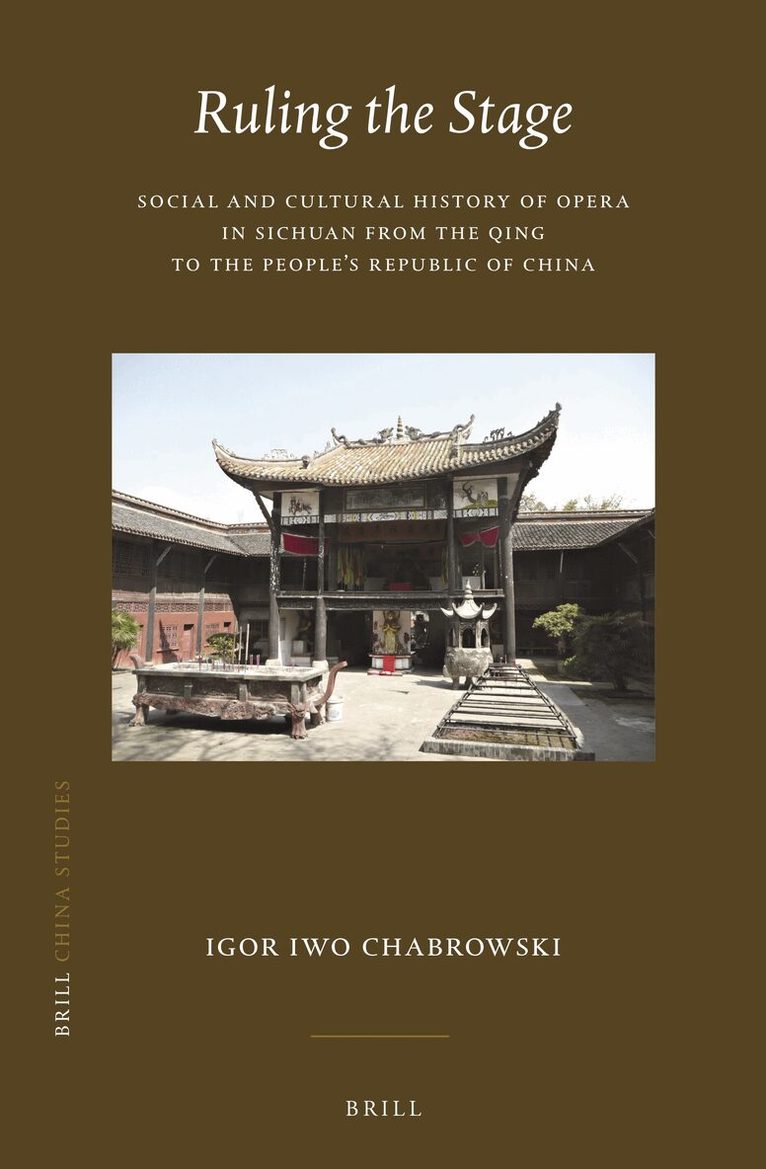
    Ruling the Stage: Social and Cultural History of Opera in Sichuan from the Qing to the People's Republic of China

    AvIgor Iwo Chabrowski

    Inbunden, Engelska, 2022

    Del 49 i serien China Studies

    2 017 kr

    Beställningsvara. Skickas inom 5-8 vardagar. Fri frakt över 249 kr.

    Beskrivning

    Through an innovative interdisciplinary reading and field research, Igor Chabrowski analyses the history of the development of opera inSichuan, arguing that opera serves as a microcosm of the profound transformation of modern Chinese culture between the 18th centuryand 1950s. He investigates the complex path of opera over this course of history: exiting the temple festivals, becoming a public obsessionon commercial stages, and finally being harnessed to partisan propaganda work. The book analyzes the process of cross-regional integrationof Chinese culture and the emergence of the national opera genre. Moreover, opera is shown as an example of the culture wars that raged insideChina’s popular culture.

    Produktinformation

    • Utgivningsdatum:2022-06-02
    • Mått:155 x 235 x 29 mm
    • Vikt:749 g
    • Format:Inbunden
    • Språk:Engelska
    • Serie:China Studies
    • Antal sidor:362
    • Förlag:Brill
    • ISBN:9789004519381

    Utforska kategorier

    • Teater inom Kultur
    • Samhälle och kultur inom Samhälle och politik

    Mer om författaren

    Igor Iwo Chabrowski, Ph.D. (2013, EUI) is Assistant Professor at the Faculty of History, University of Warsaw. He has previously publishedSinging on the River: Sichuan Boatmen and Their Work Songs, 1880s – 1930s (Brill, 2015) and journal articles on the histories of China and Thailand.

    Recensioner i media

    "Chabrowski’s book is a formidable and highly original addition to the literature on the social organization of traditional Chinese opera from the last years of imperial Qing rule in the 19th century to the impact of Western-style spoken dramas in the years of the Republic (1912–1949), and up to the consolidation of Communist control over the performing arts in the 1950s. Based on dedicated in-depth archival study, the author presents a rich, stimulating and important account of operatic practices and contexts in Sichuan... [T]he great part of the volume is a succession of vibrantly detailed and coherent case studies which will readily inspire other researchers into deepening their understandings of this subject area."-Jonathan P. J. Stock, University College Cork, The China Quarterly (2023), 1–2

    Innehållsförteckning

    • AcknowledgmentsList of Plates, Table and MapsIntroductionPART 1: Opera in Qing-Era Sichuan1 Development of Opera in Qing-Era Sichuan1The Role of Opera in Qing Society2Opera and Construction of the Community3The Nineteenth-Century Flourishing: The Role of Opera in Shaping Local Religious Practice4Opera and Shaping of the Material and Social Landscape5A Market Town: A Temple-Centered Society, An Opera-Centered Society6The Big City Perspective7Opera between the Elites and the Commoners8Opera, Officials, and the Social (Dis)Order9Concluding RemarksPART 2: The New Institutionalization: Law, Market, Politics, and Culture of Commercialized Art, 1902–19372 A Transformed Relationship: Theater and Power after the Qing New Policies1The Three Forces of Change: Destruction of Temples, Commercialization, and the New Legal Order2New Policies and a Novel Way of Doing Business in Sichuan3The Protecting Power of Official Greed: Republican Commercial Theater4Taxing5Helping Hand6Women on the Show7Rectifying Opera3 Commercial Opera: Shaping the City and Shaping the Actors1Theaters and Urban Zoning: Researching the Social Background of the Audiences2Early Transformation in the Social and Spatial Geography of Opera3Republican Theaters and Urban Zoning: Crystallization of the Opera’s Public4Commercial Theater and Actors’ Careers5Concluding Remarks4 The Culture of the Commercial Opera1The Methods of Studying Opera: Troupes, Talent, and Repertoires2Watching the Commercial Show: How Was It Served?3Favorite Plays and the Cultural Universe of Sichuan Audiences4Gods, Emperors, Heroes…5Time and Place6Concluding RemarksIllustration QuirePART 3: Creating the New World5 The Divide: Local Intellectuals and the Cultural Conflict1Commercial Daily’s Explorations and Experimentations with New Drama2Dissatisfaction, Estrangement, Elitism, and a Turn to the Left3Radicalization and Rejection4Concluding Remarks6 The Times of the Nationalists (1937–1949) and the War1Performing Arts Culture2Military Emergency and China’s Migration to the Southwest3Inventing the Wartime Theater4Putting Words into Action5Living through Frustration: Playwrights and the War6An All Too Visible Context: Sichuan Opera and the War7Concluding Remarks7 Revolution: Communist “People’s Art”1Communist Conquest of Sichuan: A New Political Context2Political and Ideological Basis of the Opera Reform3Breaking the “Superstitious” Opera4Adjusting to the New Party-State Policies5Seizing Control over the Opera Companies6Opera Becomes Useful to the Communist State7Policy in Action: Chongqing, 1951–19528Concluding Remarks8 ConclusionBibliographyIndex