• Fri frakt över 249 kr
  • •
  • Snabba leveranser
  • •
  • Billiga böcker
Kundservice

Du är på sajten för privatpersoner.

Företag, bibliotek eller offentlig verksamhet?

Du handlar på classic.bokus.com, där alla dina funktioner finns intakta.
Till classic.bokus.com
Bokus logotyp. Gå till startsidan.
  • Erbjudanden
  • Nyheter
  • Student
  • Topplistor
  • Barn & ungdom
  • Bokus Play
  • E-böcker
  • Pocketböcker
  • Spel & pussel

10% rabatt på allt med kod: NYSTART10 →

Sidfot

Mina sidor

    Hjälp

    • Kundservice
    • Vanliga frågor och svar
    • Frakt och leverans
    • Retur vid ångerrätt
    • Reklamera vara
    • Betalning
    • Köpvillkor
    • Allmänna villkor
    • Information om webbplatsens tillgänglighet

    Om Bokus

    • Om oss
    • Pressrum
    • För studenter
    • För företag
    • För bibliotek och offentlig verksamhet
    • För leverantörer
    • Hållbarhet

    Populärt

    • Aktuella erbjudanden
    • Presentkort
    • Studentlitteratur
    • Nya böcker
    • Topplistor
    • Signerade böcker
    • Engelska böcker

    Inspiration

    • Boktips
    • BookTok
    • Populära bokserier
    • Barnbokskaraktärer
    • Populära författare
    Logotyp för Bokus
    Följ oss på Facebook (extern länk)Följ oss på Instagram (extern länk)Följ oss på YouTube (extern länk)Följ oss på TikTok (extern länk)
    bokus @ CookiesAnpassa cookiesIntegritetspolicyKöpvillkor
    Till Citymail hemsida (extern länk)Till Budbee hemsida (extern länk)Till Postnord hemsida (extern länk)Till Schenker hemsida (extern länk)Till Early Bird hemsida (extern länk)Till Walleys hemsida (extern länk)
    1. Skönlitteratur
    2. Litteraturvetenskap
    3. Litteraturvetenskap

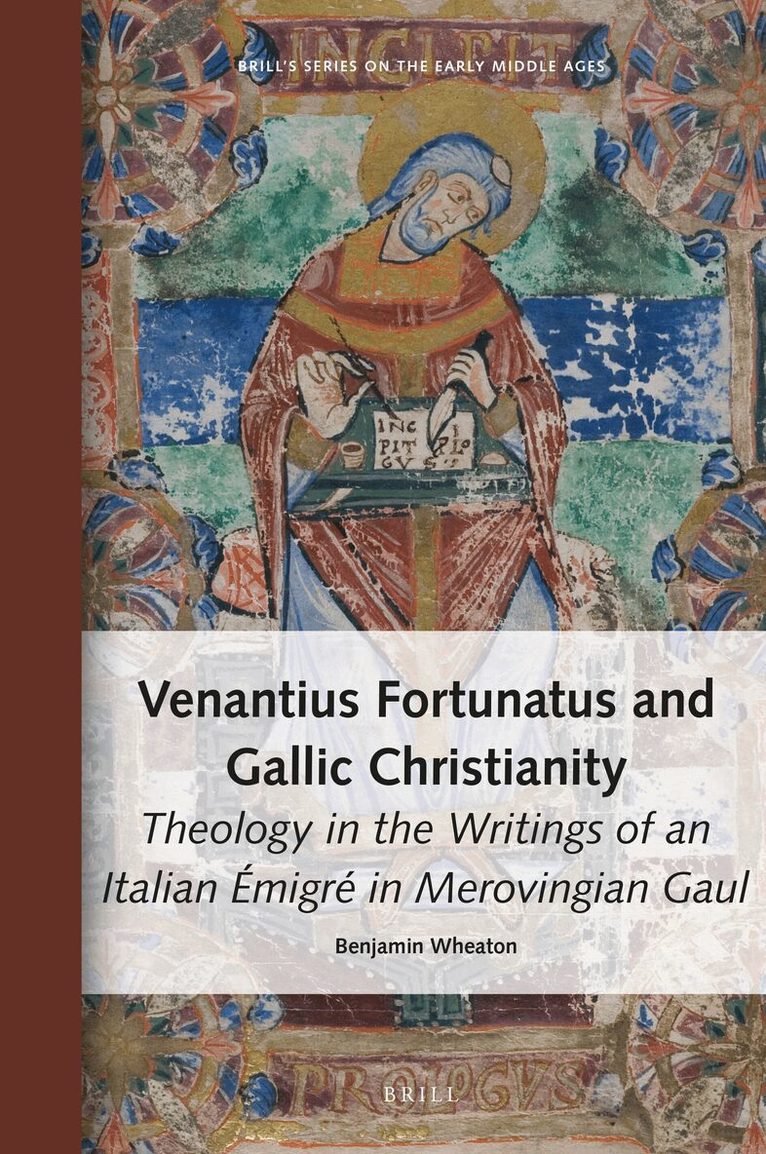
    Venantius Fortunatus and Gallic Christianity

    Theology in the Writings of an Italian Émigré in Merovingian Gaul

    AvBenjamin Wheaton

    Inbunden, Engelska, 2022

    Del 29 i serien Brill's Series on the Early Middle Ages

    2 021 kr

    Beställningsvara. Skickas inom 5-8 vardagar. Fri frakt över 249 kr.

    Beskrivning

    A wandering “Orpheus among the barbarians,” a lively flatterer of the powerful and an appreciator of good food and pleasant company: the sixth-century poet Venantius Fortunatus is known to us today for being all these things. Yet in the Middle Ages people knew and loved “Fortunatus the priest:” a man of the Church and a teacher of Christian dogma.This book for the first time looks at this other side of Fortunatus’ character through the lens of what he wrote when he was bishop of Poitiers at the end of his life: two sermons and a hymn to the Virgin Mary. Here you will encounter something unexpected: Bishop Fortunatus the stern yet skillful preacher of Augustinian grace and Chalcedonian orthodoxy.

    Produktinformation

    • Utgivningsdatum:2022-09-15
    • Mått:155 x 235 x 25 mm
    • Vikt:633 g
    • Format:Inbunden
    • Språk:Engelska
    • Serie:Brill's Series on the Early Middle Ages
    • Antal sidor:294
    • Förlag:Brill
    • ISBN:9789004521940

    Utforska kategorier

    • Litteraturvetenskap inom Skönlitteratur

    Mer om författaren

    Benjamin Wheaton, Ph.D. (2018), University of Toronto, specializes in theology and society in Late Antiquity. He has published articles on Gregory of Tours, Nicetius of Trier and Venantius Fortunatus.

    Innehållsförteckning

    • ContentsAcknowledgmentsList of AbbreviationsIntroduction1 The Religious Writings of Venantius Fortunatus2 The Composition of the Final Two Books of the Carmina3 The Purpose of the Sermons in the Carmina4 Outline of the Book1 The Expositio Symboli: Religious and Literary Context1.0 Introduction to the Expositio symboli1.1 The Symbol in Italy and Gaul1.2 Symbol Sermons in Italy and Gaul1.3 Rufinus and His Summarizers1.4 Conclusion2 The Expositio symboli of Rufinus of Aquileia and the Expositio symboli of Venantius Fortunatus2.0 Introduction2.1 Venantius Fortunatus and Rufinus of Aquileia Compared2.2 The Medieval Reception of the Expositio symboli2.3 Conclusion3 Background to the Expositio orationis dominicae3.0 Introduction3.1 The Sources of the Expositio orationis dominicae3.2 The Content of the Expositio orationis dominicae3.3 The Authenticity of the Expositio orationis dominicae3.4 Conclusion4 The Expositio orationis dominicae of Venantius Fortunatus and the Semi-Pelagian Controversy4.0 Introduction4.1 The Pelagian and Semi-Pelagian Controversies in the Fifth and Sixth Centuries4.2 The Semi-Pelagian Controversy in Sixth-Century Gaul4.3 The Freedom of the Will in the Expositio orationis dominicae4.4 The Augustinianism of Venantius Fortunatus, Compared with Gregory of Tours4.5 Conclusion5 Venantius Fortunatus and the Three Chapters Controversy5.0 Introduction5.1 The Second Council of Constantinople (553) and the Three Chapters Controversy5.2 Venantius Fortunatus and the Three Chapters Schism5.3 The Christology of the Carmina5.4 The Panegyric Ad Iustinum iuniorem imperatorem et Sophiam Augustos and the Three Chapters Controversy5.5 Conclusion6 Vision of A Chalcedonian Christendom: The In laudem sanctae Mariae of Venantius Fortunatus6.0 Introduction6.1 The Authenticity of the In laudem sanctae Mariae6.2 Content and Structure of the In laudem sanctae Mariae6.3 The Sources of the In laudem sanctae Mariae6.4 The Vision of the In laudem sanctae Mariae: A United Chalcedonian Christendom6.5 ConclusionConclusionAppendix: In laudem sanctae Mariae: Text, Translation and SourcesBibliographyIndex of Biblical CitationsGeneral Index