• Fri frakt över 249 kr
  • •
  • Snabba leveranser
  • •
  • Billiga böcker
Kundservice

Du är på sajten för privatpersoner.

Företag, bibliotek eller offentlig verksamhet?

Du handlar på classic.bokus.com, där alla dina funktioner finns intakta.
Till classic.bokus.com
Bokus logotyp. Gå till startsidan.
  • Erbjudanden
  • Nyheter
  • Student
  • Topplistor
  • Barn & ungdom
  • Bokus Play
  • E-böcker
  • Pocketböcker
  • Spel & pussel

10% studentrabatt med kod TERM26

Sidfot

Mina sidor

    Hjälp

    • Kundservice
    • Vanliga frågor och svar
    • Frakt och leverans
    • Retur vid ångerrätt
    • Reklamera vara
    • Betalning
    • Köpvillkor
    • Allmänna villkor
    • Information om webbplatsens tillgänglighet

    Om Bokus

    • Om oss
    • Pressrum
    • För studenter
    • För företag
    • För bibliotek och offentlig verksamhet
    • För leverantörer
    • Hållbarhet

    Populärt

    • Aktuella erbjudanden
    • Presentkort
    • Studentlitteratur
    • Nya böcker
    • Topplistor
    • Signerade böcker
    • Engelska böcker

    Inspiration

    • Boktips
    • BookTok
    • Populära bokserier
    • Barnbokskaraktärer
    • Populära författare
    Logotyp för Bokus
    Följ oss på Facebook (extern länk)Följ oss på Instagram (extern länk)Följ oss på YouTube (extern länk)Följ oss på TikTok (extern länk)
    bokus @ CookiesAnpassa cookiesIntegritetspolicyKöpvillkor
    Till Citymail hemsida (extern länk)Till Budbee hemsida (extern länk)Till Postnord hemsida (extern länk)Till Schenker hemsida (extern länk)Till Early Bird hemsida (extern länk)Till Walleys hemsida (extern länk)
    1. Samhälle och politik
    2. Sociologi och antropologi

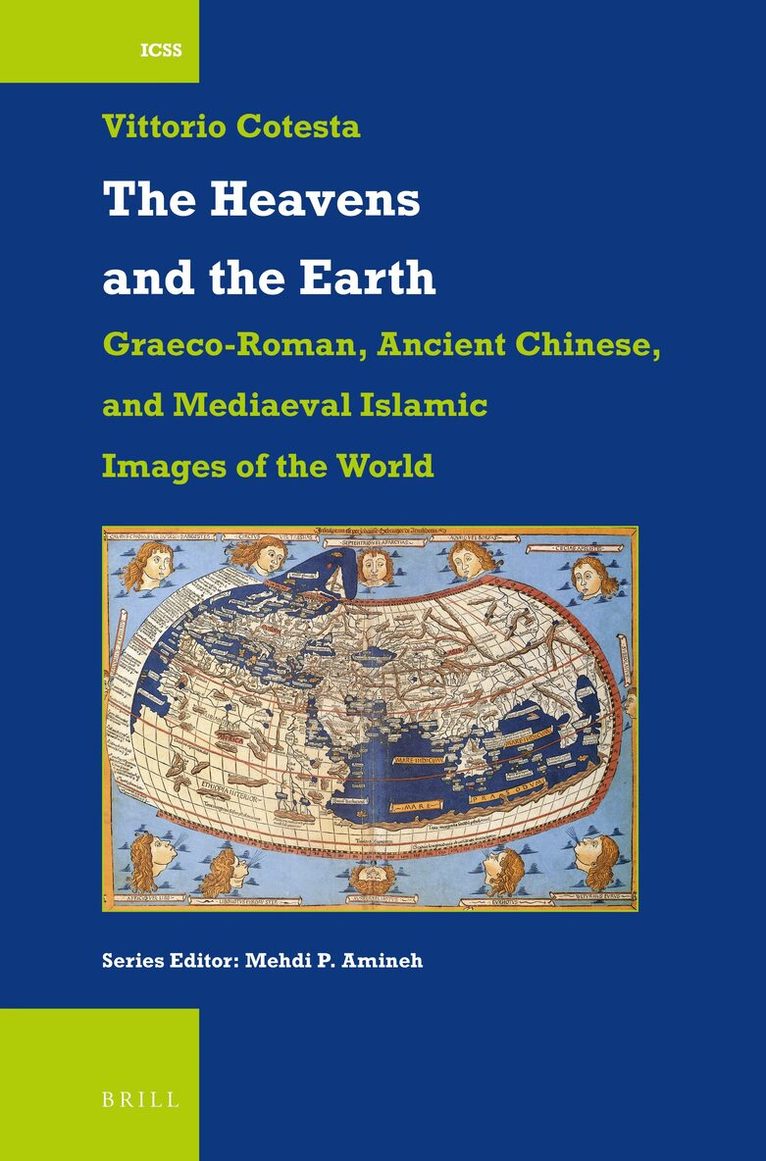
    Heavens and the Earth: Graeco-Roman, Ancient Chinese, and Mediaeval Islamic Images of the World

    AvVittorio Cotesta

    Häftad, Engelska, 2023

    Del 52 i serien International Comparative Social Studies

    1 449 kr

    Beställningsvara. Skickas inom 5-8 vardagar. Fri frakt över 249 kr.

    Fler format och utgåvor

    Inbunden

    4 253 kr

    Beskrivning

    Vittorio Cotesta’s The Heavens and the Earth traces the origin of the images of the world typical of the Graeco-Roman, Ancient Chinese and Medieval Islamic civilisations. Each of them had its own peculiar way of understanding the universe, life, death, society, power, humanity and its destiny. The comparative analysis carried out here suggests that they all shared a common human aspiration despite their differences: human being is unique; differences are details which enrich its image.Today, the traditions derived from these civilisations are often in competition and conflict. Reference to a common vision of humanity as a shared universal entity should lead, instead, to a quest for understanding and dialogue.

    Produktinformation

    • Utgivningsdatum:2023-04-20
    • Mått:155 x 235 x 38 mm
    • Vikt:1 093 g
    • Format:Häftad
    • Språk:Engelska
    • Serie:International Comparative Social Studies
    • Antal sidor:640
    • Förlag:Brill
    • ISBN:9789004677531
    • Översättare:Catherine Mc Carthy, Catherine MC Carthy

    Utforska kategorier

    • Sociologi och antropologi inom Samhälle och politik
    • Allmän historia och världshistoria inom Historia och arkeologi

    Mer om författaren

    Vittorio Cotesta is Professor of Sociology at Università degli Studi Roma Tre (Rome). His main fields of interest are Global Society, Human Rights, Modernity, and Civilizations. Among his publications: Max Weber on China. Modernity and Capitalism in a Global Perspective (Cambridge Scholar Publishing, 2018); Kings into Gods. How Prostration Shaped Eurasian Civilizations (Brill, 2015); Global Society and Human Rights (Brill, 2012); Global Society, Cosmopolitanism and Human Rights (ed.) (Cambridge Scholar Publishing, 2013).

    Recensioner i media

    "This is a magisterial overview of the formulations of important philosophical topics in three world civilizations. It is framed as a comparative study of the emergence among philosophers, historians, and geographers of a universalistic humanism in these three traditions. Its focus is on the conceptualizations of human nature and the ways in which philosophers, geographers and historians thought about ‘others.’ But it also provides an insightful and enlightening overview of ontology, geography, scientific and historical epistemology – the nature of reality, the known world, time, space and theories of eternity and creation." — Christopher Chase-Dunn, University of California-Riverside"A monumental work on the longue durée of the Eurasian world history and civilizations." — Mehdi P. Amineh, University of Amsterdam

    Innehållsförteckning

    • ContentsPrefaceList of Illustrations and TablesIntroduction: The Axial Age and Global SocietyPart 1: The Greek and Roman Vision of the WorldSection 1: The Greek Vision of the World1 The Universe, Nature and Humanity in Ancient Greece2 The Political Constitution and Forms of Government1 Plato’s Utopic Model2 Aristotle’s politeia as a Form of Mixed Government3 Herodotus and the Greek Image of a Global Society4 The Image of Mankind and the Social Bond5 Chance and Necessity1 The Movement of Atoms and the Origins of the Universe2 Life, Death, Happiness6 God, Nature, Providence1 The Epistemological Model of Stoicism2 The Origin and Structure of the Universe3 Humanity, Society and the State4 The Happy Life5 Natural Law and Human RightsSection 2: The Roman Vision of the World, Society and Mankind7 Polybius and the Roman View of the World1 The Paradoxes of Polybius’ Existence, from Hostage to Cantor of the Destiny of Rome2 Polybius and History as a Science of Prevision3 Rome: Sole World Power8 Conflict over Rome’s Cultural Identity1 Tradition and Innovation: Cato the Censor and Scipio Africanus2 Scipio’s Dream and the Destiny of Rome9 The Image of Rome and of Her Mission in the World According to Cicero1 Society, the State and the Law. Rome’s Universal Destiny2 Global Graeco-Roman Society and Cosmopolitan Law10 The Empire and Rome’s New Vision of the World11 Rome and Christianity1 Incomprehension, Conflict, Convergence12 The Hellenistic Scientific Revolution and the New World View1 The Inhabited World Is a Chlamys. On Eratosthenes and His Critics2 The Star Canopus and New Measurements of the Earth13 The Geography of the Century of Augustus and First Diplomatic Contact with China1 Strabo: “Pragmatic” Geography2 Juba of Mauretania and Exploration of the Sources of the Nile3 Pliny the Elder: Chinese Silk and the Transparent Robes of the Roman Matrons4 The Periplous of the Erythrean Sea and the Silent Barter between the Kiratas and the Chinese5 First Diplomatic Contact with China14 Claudius Ptolemy and Astrological Previsions of Peoples’ DestiniesPart 2: Harmony as the Core of Chinese Image of the World1 Confucius: The Origin of the Axial Revolution in China1 The Virtues of the Good Ruler2 The Dao: The Way to Humanity2 Mozi and Universal Love3 Xunzi: The Dark Side of Human Nature4 Zhuangzi and Lao Tzu: Harmony in Taoist Philosophy1 The Dao Has No Name2 Non-action as a Principle of World Governance5 Legalism: How to Create a Well-Ordered Society1 Society, History, Power6 Sima Qian: History and the Identity of Ancient China1 Herodotus and Sima Qian2 History and Power in Sima Qian’s Life3 Dynastic Cycles and History4 The Social Organisation of the Mongols and Chinese IdentityPart 3: Intermezzo1 Convergences and Divergences between China and Greece1 The Universe, Heaven and Earth2 Society and Humanity3 The State, Power and Politics2 The Formation of a Eurasian World-System3 A Shift in the Meaning of “Axial Revolution”Section 1: The Global World from the Islamic Point of ViewSection 2: Origin and Structure of the Islamic Vision of the World1 The Preaching of Muhammad and the Birth of Islam2 God, The Universe and the World According to Islam3 Al-Kindi: Muhammad and Aristotle1 The Quest for Truth2 God and the Creation of the World4 Al-Farabi I. God, The Universe, The World and the Way to Happiness1 Introduction2 God and the Universe3 Man and Society4 Happiness, The “Virtuous City”5 Al-Farabi II. Political Theory and the Doctrine of Perfect Imam1 Political Regimes2 The Theory of the Perfect Imam3 Peace and (Just) War6 Avicenna I. God, The Cosmos and the World1 An Adventurous and Dangerous Life2 God, The Universe, The World7 Avicenna II. Man, Society and Governance1 The Happy Life and Man’s Return to God2 Reason and Mysticism8 Al-Biruni. I. A Eurasian Vision of the World Biographical, Cultural and Epistemological Premises1 The Adventurous Life of al-Biruni2 Time, History and Society3 The Study of India and of the Identity of Peoples9 Al-Biruni. II. A Eurasian Vision of the World A Sociological and Anthropological Analysis1 The Sciences and Social Classes2 The Indian Castes and the Hierarchical Societies of Eurasia10 The Islamic Vision of the World and History Al-YaʿQubi, al-Tabari’s and al-MasʿUdi’s Contributions1 Al-YaʿQubi2 Al-Tabari3 Al-MasʿUdi11 The Islamic Vision of the World and Geography Al-Khwarizmi, Ferdowsi, al-Muqaddasi, al-Idrisi1 Al-Khwarizmi2 Ferdowsi, al-Faqih and Other Persian Geographers and Historians3 Al-Muqaddasi4 Al-Idrisi’s Universalist Perspective12 Reason and Mysticism. Al-Ghazali’s Battle against Philosophy1 The Life of al-Ghazali2 The Battle against Reason3 The Virtues of the IntellectualThe Western Islamic Vision of the World13 The Western Pathway to the Construction of the Islamic Image of the World1 Introduction14 Alternative Ways to Happiness. Ibn Bajja and Ibn Tufayl1 The Outsider and the Way to Happiness: Ibn Bajja2 Ibn Tufayl: Mysticism as a Way to Happiness15 Averroes. I. The Defense of Reason1 Introduction2 The Controversy with al-Ghazali and the Decisive Treaty16 Averroes. II. A Project for a New World1 The Ideal City and the Happy Life2 Societies, Forms of Government, the Virtues of the Good Ruler (Imam)3 Some Final Observations, in Brief17 Ibn Khaldun. I. Truth and History1 A Life Lived between Politics and Study2 Ibn Khaldun’s Epistemological Model of History3 Fake News and Historical Truth18 Ibn Khaldun II. Religions, Society, and Civilisations. Islam’s Universal Mission1 The Shape of the Earth and the Characteristics of Peoples2 Cooperation and Society3 Nomadism and Civilisation4 Religion as a Factor of Civilisation and of the Universal Mission of IslamConclusions1 The Problems and the Research Method2 The Universe3 The Issue of Time4 The Heavens and the Earth5 The Form of the oikoumene6 Humanity, Society and Forms of Government7 Human Nature and Human Rights. Universalism by HalvesBibliographyIndex of Proper NamesIndex of Selected Topics, Cities, Countries and Continents