• Fri frakt över 249 kr
  • •
  • Snabba leveranser
  • •
  • Billiga böcker
Kundservice

Du är på sajten för privatpersoner.

Företag, bibliotek eller offentlig verksamhet?

Du handlar på classic.bokus.com, där alla dina funktioner finns intakta.
Till classic.bokus.com
Bokus logotyp. Gå till startsidan.
  • Erbjudanden
  • Nyheter
  • Student
  • Topplistor
  • Barn & ungdom
  • Bokus Play
  • E-böcker
  • Pocketböcker
  • Spel & pussel

Må bättre, för mindre! Upp till 50% rabatt på hälsoböcker

Sidfot

Mina sidor

    Hjälp

    • Kundservice
    • Vanliga frågor och svar
    • Frakt och leverans
    • Retur vid ångerrätt
    • Reklamera vara
    • Betalning
    • Köpvillkor
    • Allmänna villkor
    • Information om webbplatsens tillgänglighet

    Om Bokus

    • Om oss
    • Pressrum
    • För studenter
    • För företag
    • För bibliotek och offentlig verksamhet
    • För leverantörer
    • Hållbarhet

    Populärt

    • Aktuella erbjudanden
    • Presentkort
    • Studentlitteratur
    • Nya böcker
    • Topplistor
    • Signerade böcker
    • Engelska böcker

    Inspiration

    • Boktips
    • BookTok
    • Populära bokserier
    • Barnbokskaraktärer
    • Populära författare
    Logotyp för Bokus
    Följ oss på Facebook (extern länk)Följ oss på Instagram (extern länk)Följ oss på YouTube (extern länk)Följ oss på TikTok (extern länk)
    bokus @ CookiesAnpassa cookiesIntegritetspolicyKöpvillkor
    Till Citymail hemsida (extern länk)Till Budbee hemsida (extern länk)Till Postnord hemsida (extern länk)Till Schenker hemsida (extern länk)Till Early Bird hemsida (extern länk)Till Walleys hemsida (extern länk)
    1. Skönlitteratur
    2. Litteraturvetenskap

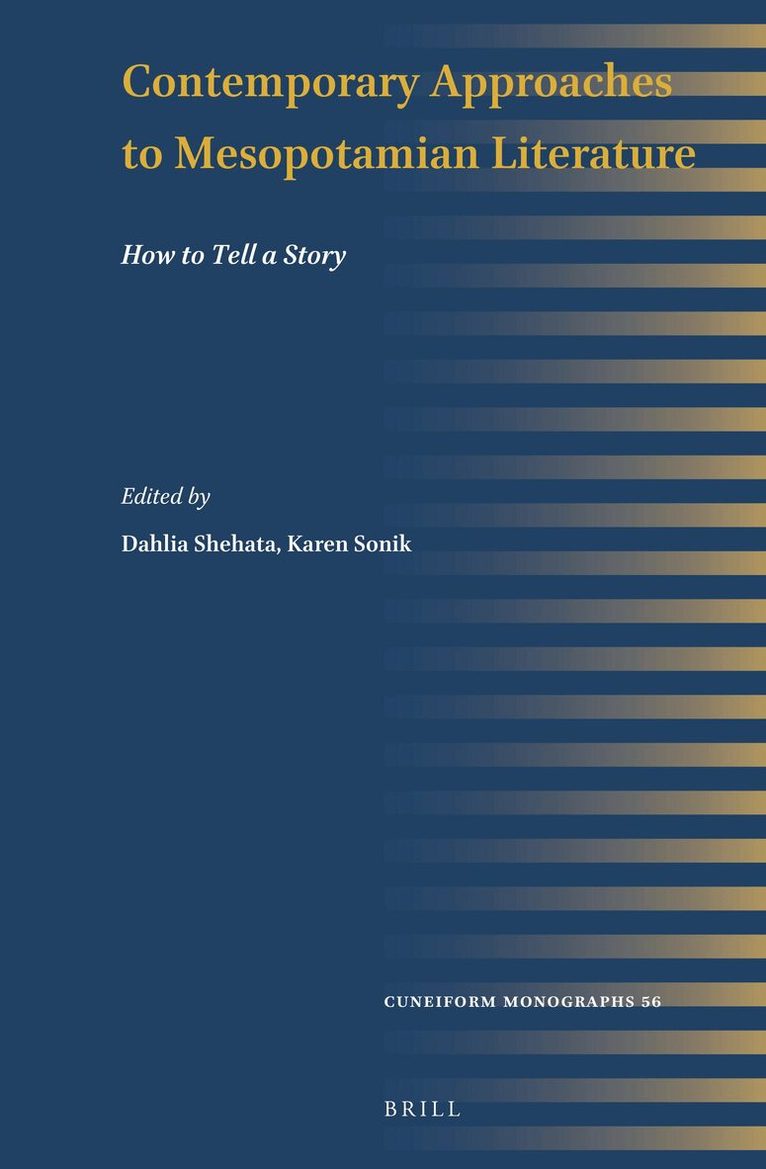
    Contemporary Approaches to Mesopotamian Literature

    How to Tell a Story

    AvDahlia Shehata,Karen Sonik

    Inbunden, Engelska, 2024

    Del 56 i serien Cuneiform Monographs

    2 048 kr

    Beställningsvara. Skickas inom 5-8 vardagar. Fri frakt över 249 kr.

    Beskrivning

    This volume lays theoretical and methodological groundwork for the analysis of Mesopotamian literature. A comprehensive first chapter by the editors explores critical contemporary issues in Sumerian and Akkadian narrative analysis, and nine case studies written by an international array of scholars test the responsiveness of Sumerian and Akkadian narratives to diverse approaches drawn from literary studies and theories of fiction. Included are intertextual and transtextual analyses, studies of narrative structure and focalization, and treatments of character and characterization. Works considered include the Standard Babylonian Gilgamesh Epic and many other Sumerian and Akkadian narratives of gods, heroes, kings, and monsters.

    Produktinformation

    • Utgivningsdatum:2024-08-15
    • Mått:155 x 235 x 26 mm
    • Vikt:669 g
    • Format:Inbunden
    • Språk:Engelska
    • Serie:Cuneiform Monographs
    • Antal sidor:314
    • Förlag:Brill
    • ISBN:9789004697560

    Utforska kategorier

    • Litteraturvetenskap inom Skönlitteratur
    • Litteraturteori inom Skönlitteratur

    Mer om författaren

    Dahlia Shehata, PhD University of Göttingen, completed her habilitation and is Assistant Professor at the University of Würzburg, where she teaches Sumerian, Akkadian, and Mesopotamian history. Her research explores Mesopotamian languages and culture, with particular emphasis on literature and music history. Karen Sonik, PhD University of Pennsylvania, is Associate Professor at Auburn University. Her research explores Mesopotamian literature, with an emphasis on the Sumerian and Akkadian Gilgamesh narratives and Enuma elish, as well as the visual arts, aesthetics, and emotions in Mesopotamia.Contributors are: Johannes Bach, Gösta Gabriel, Stefan Jakob, Gina Konstantopoulos, Martin Lang, Anne Löhnert, Jamie Novotny, Dahlia Shehata, Karen Sonik and Selena Wisnom.

    Innehållsförteckning

    • AcknowledgementsList of Figures and TablesAbbreviationsNotes on ContributorsIntroduction: How to Tell a Story in Ancient MesopotamiaDahlia Shehata and Karen SonikPart 1 Issues, Theories, and Methods1 Mesopotamian Literature: Theories, Methods, and Issues of Sumerian and Akkadian Narrative AnalysisKaren Sonik and Dahlia ShehataPart 2 Sumerian Narratives: Narratological Approaches2 Focalization and “Story Time”: Techniques of Sumerian NarrativeAnne Löhnert3 There and Back Again: Journeying and Narrative Structure in the Sumerian Lugalbanda EpicsGina KonstantopoulosPart 3 Akkadian Gilgamesh Narratives: Contextual and Intertextual Approaches4 Gilgamesh and the Forest of Gemstones: Symbolic Value—History of Tradition—IntertextualityMartin Lang5 Journey towards Death: The Cedar Forest in the SB Gilgamesh Epic from an Intertextual PerspectiveSelena Wisnom6 Allusion or No Allusion: Commenting on the Interpretations of SB Gilgamesh Epic V1–26 and IX171–194Gösta Ingvar GabrielPart 4 Assyrian Royal Narratives: Contextual and Intertextual Approaches7 The Good, the Bad, (and the Ugly?): Propaganda and the Tukulti-Ninurta EpicStefan Jakob8 A Methodology for the Transtextual Analysis of Assyrian Royal Narrative TextsJohannes Bach9 Making the Invisible Visible: Propaganda, Ideology, and Intertextuality in Assyrian Royal NarrativeJamie Novotny and Karen SonikPart 5 Sumerian and Akkadian Narratives: Novel Approaches10 Characterization and Identity in Mesopotamian Literature: The Gilgamesh Epic, Enuma elish, and Other Sumerian and Akkadian NarrativesKaren SonikIndex