• Fri frakt över 249 kr
  • •
  • Snabba leveranser
  • •
  • Billiga böcker
Kundservice

Du är på sajten för privatpersoner.

Företag, bibliotek eller offentlig verksamhet?

Du handlar på classic.bokus.com, där alla dina funktioner finns intakta.
Till classic.bokus.com
Bokus logotyp. Gå till startsidan.
  • Erbjudanden
  • Nyheter
  • Student
  • Topplistor
  • Barn & ungdom
  • Bokus Play
  • E-böcker
  • Pocketböcker
  • Spel & pussel

10% studentrabatt med kod TERM26

Sidfot

Mina sidor

    Hjälp

    • Kundservice
    • Vanliga frågor och svar
    • Frakt och leverans
    • Retur vid ångerrätt
    • Reklamera vara
    • Betalning
    • Köpvillkor
    • Allmänna villkor
    • Information om webbplatsens tillgänglighet

    Om Bokus

    • Om oss
    • Pressrum
    • För studenter
    • För företag
    • För bibliotek och offentlig verksamhet
    • För leverantörer
    • Hållbarhet

    Populärt

    • Aktuella erbjudanden
    • Presentkort
    • Studentlitteratur
    • Nya böcker
    • Topplistor
    • Signerade böcker
    • Engelska böcker

    Inspiration

    • Boktips
    • BookTok
    • Populära bokserier
    • Barnbokskaraktärer
    • Populära författare
    Logotyp för Bokus
    Följ oss på Facebook (extern länk)Följ oss på Instagram (extern länk)Följ oss på YouTube (extern länk)Följ oss på TikTok (extern länk)
    bokus @ CookiesAnpassa cookiesIntegritetspolicyKöpvillkor
    Till Citymail hemsida (extern länk)Till Budbee hemsida (extern länk)Till Postnord hemsida (extern länk)Till Schenker hemsida (extern länk)Till Early Bird hemsida (extern länk)Till Walleys hemsida (extern länk)
    1. Ekonomi och Ledarskap
    2. Nationalekonomi
    3. Ekonomisk historia

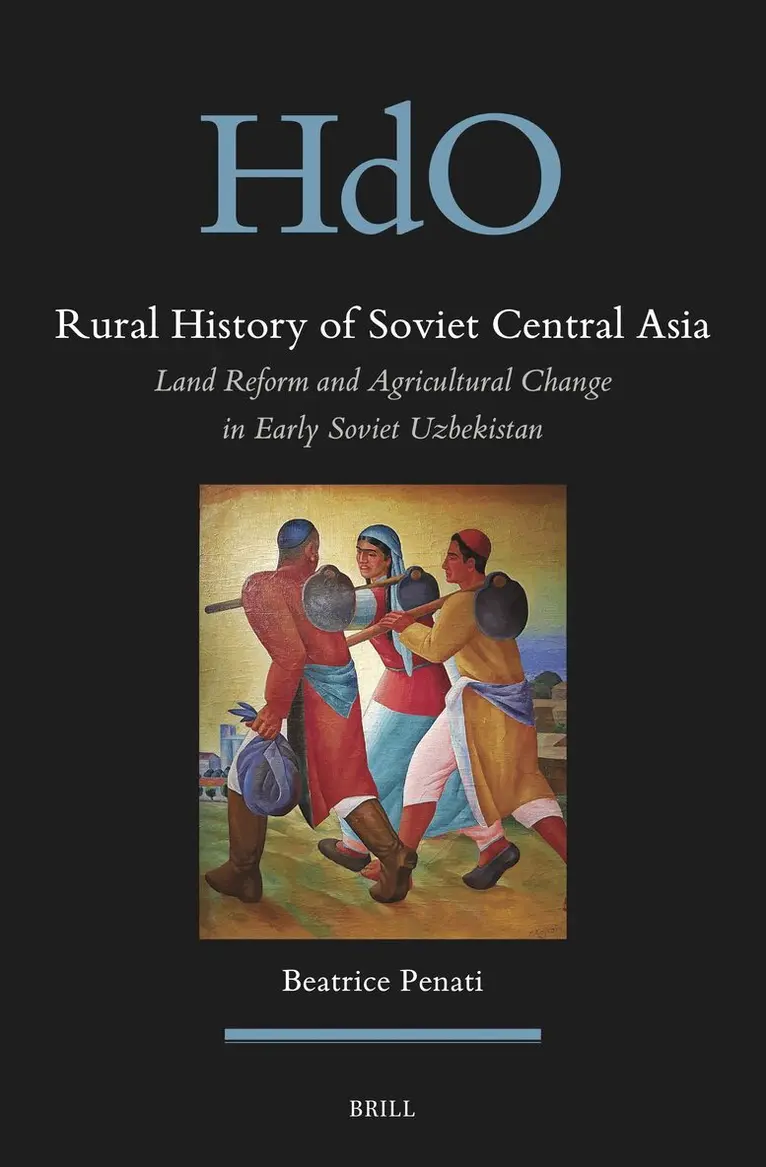
    Rural History of Soviet Central Asia: Land Reform and Agricultural Change in Early Soviet Uzbekistan

    AvBeatrice Penati

    Inbunden, Engelska, 2024

    Del 31 i serien Handbook of Oriental Studies. Section 8 Uralic & Central Asian Studies

    3 016 kr

    Beställningsvara. Skickas inom 3-6 vardagar. Fri frakt över 249 kr.

    Beskrivning

    In the mid-1920s, Uzbekistan’s countryside experienced a ‘land reform’, which aimed at solving rural poverty and satisfying radical fringes among peasants and Party, while sustaining agricultural output, especially for cotton. This book analyses the decision-making process underpinning the reform, its implementation, and economic and social effects. The reform must be understood against the background of the wreckage caused by war and revolution, and linked to subsequent policies of ‘land organisation’ and regime-sponsored ‘class struggle’. Overall, this is the first comprehensive account of early Soviet policy in Central Asia’s agricultural heartland, encompassing land rights, irrigation, credit, resettlement, and the co-operative system.

    Produktinformation

    • Utgivningsdatum:2024-12-12
    • Mått:155 x 235 x 48 mm
    • Vikt:1 292 g
    • Format:Inbunden
    • Språk:Engelska
    • Serie:Handbook of Oriental Studies. Section 8 Uralic & Central Asian Studies
    • Antal sidor:690
    • Förlag:Brill
    • ISBN:9789004697775

    Utforska kategorier

    • Ekonomisk historia inom Ekonomi och Ledarskap

    Mer om författaren

    Dr Beatrice Penati is Senior Lecturer in Russian and Eurasian History at the University of Liverpool. She has published widely on the history of taxation, cotton, economic policy, and resources use in Tsarist and early Soviet Central Asia.

    Recensioner i media

    From the peer review reports: "This book is the result of masterful research. It will become a milestone in studies of the economic and social history of modern Central Asia and for studies of agricultural policies during the New Economic Policy in the Soviet Union more broadly." - Niccolò Pianciola, University of Padua "This volume is a much needed and appreciated contribution to the fields of Central Asian history and Soviet history, but will also surely be welcomed and prized by economic historians, and historians of agriculture, labour or social relations with comparative interests in Eurasia and the Middle East." - Flora Roberts, Assistant Professor of Environmental History, Utrecht University "With clarity, rigor, and an unflinching eye for contradiction and complexity, this book demonstrates that land reform was a pivotal moment in state-building, mass inclusion, and contested rural development in a region that was considered the last frontier of Russian colonial conquest and that was later transformed into an active subject of the new ethnofederal state forged by the Bolsheviks. Providing both an Uzbek-centered narrative and a comparative reflection that links the case to other contexts – such as Mexico, Zimbabwe, or Iran – Penati shows the global relevance of agrarian reform and socialist transformation of rural societies, opening new research paths for further studies and marking a milestone in the historiography of Central Asia and in the comparative history of agrarian reforms worldwide." - RICCARDO MARIO CUCCIOLLA, Cahiers d’histoire russe, est-européenne, caucasienne et centrasiatique [Online] 66/4 (2025), DOI: https://doi.org/10.4000/15k82.

    Innehållsförteckning

    • ContentsAcknowledgementsList of Maps, Figures, Charts, and TablesAbbreviationsIntroduction1 A Contested Field2 Between Land Organization and Class Struggle3 Economic Growth and State-Building4 Redistributive Agrarian Reform5 A Note on Sources1 The Collapse of Central Asian Agriculture (1915–1921)1 Land, Water, and People2 Between War and Revolution3 Economic Effects of the Civil War and Basmachi Struggle4 Restoring the Grain-Cotton Nexus2 An Unfinished Reform (1921–1924)1 Between ‘Toiling Land Usage’ and Decolonization2 A ‘Fundamental Land Law’ po-turkestanski?3 Shifting Ground: Ruling Land Organization4 Water Legislation: Controversial Points3 Bolsheviks as Firemen (1924–1925)1 Peasant Living Standards in the First Half of the 1920s2 Land Crisis? Land Squatting and Invasions between 1924 and 19253 An Embarrassed Chain of Command4 ‘We Need to Create an Illusion’5 Decreeing the Reform6 The Perils of Factionalism4 The First Wave: Samarkand, Tashkent, and Fergana (1925–1926)1 The Soviets Discover the Countryside2 Between ‘Land Commissions’ and the Narkomzem3 The Party and the Koshchi Union4 Mobilising for (and against) the Reform5 The Reform in Action6 Certificates, Implements, and Livestock5 Results and Immediate Impact of the Reform1 ‘Victims’ and Beneficiaries2 The Land Stock and Its Destiny3 The Cotton Sector4 Social Effects5 Money Matters6 Expanding and Deepening the Reform (1926–1927)1 Land Policies in the People’s Soviet Republics of Bukhara and Khorezm2 Preparing and Executing the Reform in the Zeravshan Province3 Grappling with chairikërstvo, Protecting Labour4 Re-capturing the Peasantry: Credit and Co-operatives5 The Cotton Procurement Mechanism7 Promised Land: New and Restored Irrigation in the 1920s1 The Rush to Irrigate2 Drying Marshes and Reshuffling Villages in the Samarkand Province3 New Irrigation in Fergana4 Sand Storms and Immigration: the Zeravshan Province5 Land Reform vs. Irrigation? Dal’verzin and the Hungry Steppe6 Political Consequences7 The Limits of Modernisation: Water Duties, Labour, and Technology8 The Cultivation of Class Struggle (1927–1929)1 Land Reform and Class Ascription2 ‘There Are No pomeshchiki in Uzbekistan’3 Wrapping Up the Land Reform: the dolikvidatsia4 The Rest of Uzbekistan Catches Up9 ‘Land Organization’ Hijacked (1927–1930)1 Plans and Cotton Plans2 ‘Wholesale Land Organization’ after the Land Reform3 The Assaka ‘Experimental District’4 The Experiment Spills Over5 New Irrigation, Resettlement, and State Farms in Dal’verzin6 Reconsidering pereselenie7 Toward Wholesale CollectivizationConclusion1 A Summary2 Cotton Duties and Land Rights3 Citizenship and Subalternity4 Development and MobilisationArchivesBibliography