• Fri frakt över 249 kr
  • •
  • Snabba leveranser
  • •
  • Billiga böcker
Kundservice

Du är på sajten för privatpersoner.

Företag, bibliotek eller offentlig verksamhet?

Du handlar på classic.bokus.com, där alla dina funktioner finns intakta.
Till classic.bokus.com
Bokus logotyp. Gå till startsidan.
  • Erbjudanden
  • Nyheter
  • Student
  • Topplistor
  • Barn & ungdom
  • Bokus Play
  • E-böcker
  • Pocketböcker
  • Spel & pussel

10% rabatt på allt med kod: NYSTART10 →

Sidfot

Mina sidor

    Hjälp

    • Kundservice
    • Vanliga frågor och svar
    • Frakt och leverans
    • Retur vid ångerrätt
    • Reklamera vara
    • Betalning
    • Köpvillkor
    • Allmänna villkor
    • Information om webbplatsens tillgänglighet

    Om Bokus

    • Om oss
    • Pressrum
    • För studenter
    • För företag
    • För bibliotek och offentlig verksamhet
    • För leverantörer
    • Hållbarhet

    Populärt

    • Aktuella erbjudanden
    • Presentkort
    • Studentlitteratur
    • Nya böcker
    • Topplistor
    • Signerade böcker
    • Engelska böcker

    Inspiration

    • Boktips
    • BookTok
    • Populära bokserier
    • Barnbokskaraktärer
    • Populära författare
    Logotyp för Bokus
    Följ oss på Facebook (extern länk)Följ oss på Instagram (extern länk)Följ oss på YouTube (extern länk)Följ oss på TikTok (extern länk)
    bokus @ CookiesAnpassa cookiesIntegritetspolicyKöpvillkor
    Till Citymail hemsida (extern länk)Till Budbee hemsida (extern länk)Till Postnord hemsida (extern länk)Till Schenker hemsida (extern länk)Till Early Bird hemsida (extern länk)Till Walleys hemsida (extern länk)
    1. Juridik
    2. Internationell rätt

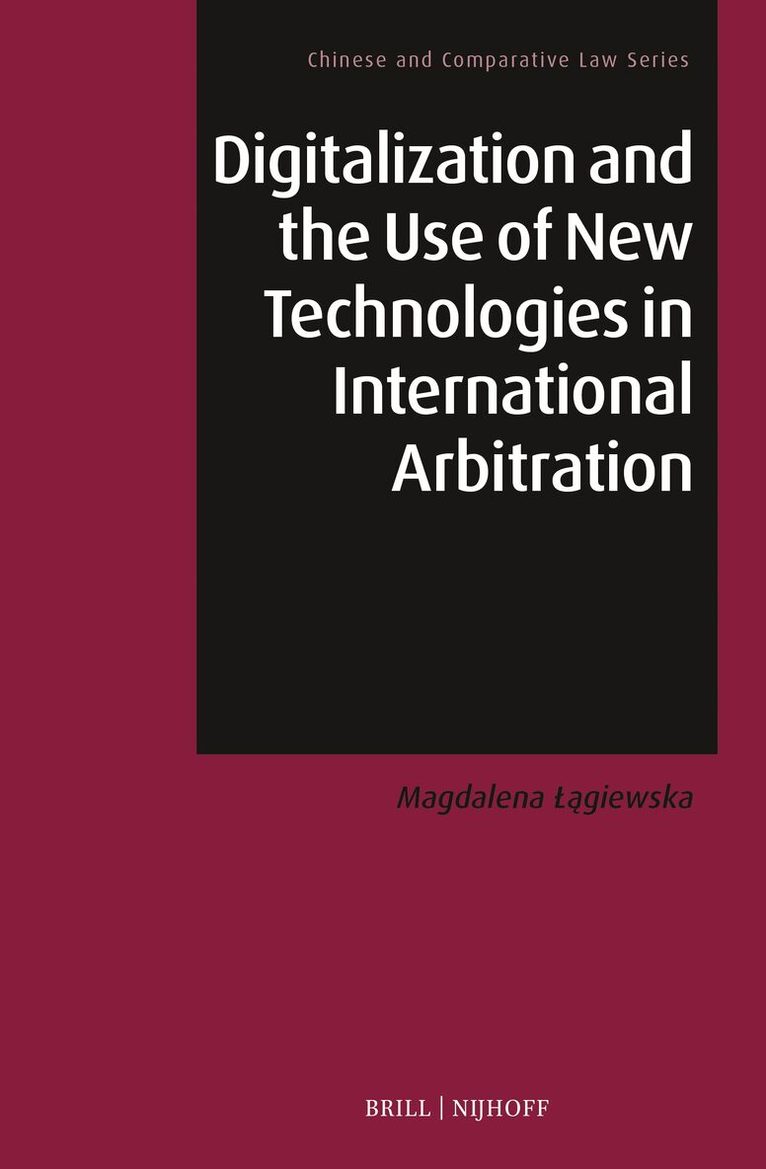
    Digitalization and the Use of New Technologies in International Arbitration

    AvMagdalena Łągiewska

    Inbunden, Engelska, 2024

    Del 13 i serien Chinese and Comparative Law Series

    1 872 kr

    Beställningsvara. Skickas inom 5-8 vardagar. Fri frakt över 249 kr.

    Beskrivning

    Digital advancements are changing the face of international dispute resolution. This book examines the impact of digitalization and new technologies on international arbitration, discussing both advantages and challenges. It seeks to answer the question of whether international law in the field of international commercial arbitration is keeping pace with technological change. It takes a fresh look at issues that have recently emerged in the international arbitration landscape by focusing on the innovative use of artificial intelligence, particularly in relation to blockchain and ODR. Against this background, the Chinese solutions are worth analyzing and watching.

    Produktinformation

    • Utgivningsdatum:2024-06-14
    • Mått:155 x 235 x 19 mm
    • Vikt:491 g
    • Format:Inbunden
    • Språk:Engelska
    • Serie:Chinese and Comparative Law Series
    • Antal sidor:210
    • Förlag:Brill
    • ISBN:9789004700703

    Utforska kategorier

    • Internationell rätt inom Juridik
    • Folkrätt inom Juridik

    Mer om författaren

    Magdalena Łągiewska, Ph.D. in Law (University of Gdańsk 2017, East China University of Political Science and Law 2020), is Assistant Professor at the University of Gdańsk, Research Associate in the "China, Law and Development" project at the University of Oxford and Associate of the Chartered Institute of Arbitrators (ACIArb).

    Innehållsförteckning

    • List of FiguresIntroduction1 General Approach to Digitalization in International Dispute Resolution1 Introduction2 Law and Technology3 Technology and Dispute Resolution4 Notion of Digitalization5 Types of International Dispute Resolution5.1 International Commercial Arbitration5.1.1 Geneva Protocol5.1.2 Geneva Convention5.1.3 New York Convention5.1.4 UNCITRAL Model Law5.1.5 Delocalized Arbitration5.2 International Investment Arbitration5.3 International Commercial Mediation5.4 International Negotiation6 Twofold Approaches to the Use of New Technologies in International Arbitration7 Online Arbitration8 Conclusion2 New Technologies in Arbitral Tribunals: An Overview1 Introduction2 IT Tools in Arbitral Tribunals2.1 Online Filing System2.1.1 AAA-ICDR2.1.2 ICC Case Connect2.1.3 WIPO eADR2.1.4 SCC Platform2.1.5 E-Arbitration-T2.1.6 ICSID2.2 Remote Hearings2.2.1 Definition of Remote Hearings2.2.2 Regulations on Remote Hearings2.2.3 Seoul Protocol on Video Conferencing in International Arbitration2.2.4 Twofold Standpoint on Remote Hearings2.2.5 Right to a Hearing in International Arbitration2.2.4 Need of Handling Remote Hearings2.2.5 Challenges Related to Remote Hearings2.2.6 Remote Hearings and Post-Arbitration Problems2.3 Electronically Stored Information3 Significance of AI in Arbitration3.1 Definition of AI3.2 AI in International Arbitration: General Approach3.3 AI Arbitrator’s Selection Tools3.4 ChatGPT in International Arbitration: a Game-Changer?3.5 Risks of AI4 Conclusion3 Advantages of Digitalization in International Arbitration1 Introduction2 Rule of Law and Access to Justice3 Transparency4 Efficiency, Flexibility, and Low Costs5 Effectiveness and Convenience6 Enhanced Diversity in International Arbitration7 Conclusion4 Challenges Related to Digitalization in International Arbitration1 Introduction2 Electronic Arbitration Agreement: An Overview2.1 Electronic Consent to Arbitration2.2 Accessibility of the Arbitration Agreement2.3 Electronic Form of the Arbitration Agreement3 Seat of Arbitration4 Procedural Challenges5 E-proceedings6 E-evidence in Arbitration6.1 Definition of Electronic Evidence6.2 Definition of Blockchain6.3 Collecting of E-evidence 6.4 E-evidence before an Arbitral Tribunal6.4.1 Admissibility of E-evidence6.4.2 Illegally Obtained or “hacked” Evidence7 Digital Arbitral Award7.1 Form of the Digital Arbitral Award7.2 Enforcement of the Digital Arbitral Award8 Cybersecurity9 Data Protection10 Inability to Observe Parties’ Demeanour and Credibility11 Conclusion5 Future of International Arbitration1 Introduction2 Digitalization of International Arbitration in View of the UN Sustainable Development Goals2.1 Definition of the UN Sustainable Development Goals2.2 Digitalization and 16th SDG s3 From “smart courts” to “smart arbitration”4 Green Arbitration5 AI-arbitrators: Pipe Dream or Realistic Future?6 Blockchain-based Arbitration6.1 Definition of Blockchain-based Arbitration6.2 Types of Blockchain-based Arbitration6.3 Challenges Related to Blockchain-based Arbitration7 ConclusionFinal Conclusions and RecommendationsReferencesIndex