• Fri frakt över 249 kr
  • •
  • Snabba leveranser
  • •
  • Billiga böcker
Kundservice

Du är på sajten för privatpersoner.

Företag, bibliotek eller offentlig verksamhet?

Du handlar på classic.bokus.com, där alla dina funktioner finns intakta.
Till classic.bokus.com
Bokus logotyp. Gå till startsidan.
  • Erbjudanden
  • Nyheter
  • Student
  • Topplistor
  • Barn & ungdom
  • Bokus Play
  • E-böcker
  • Pocketböcker
  • Spel & pussel

10% studentrabatt med kod TERM26

Sidfot

Mina sidor

    Hjälp

    • Kundservice
    • Vanliga frågor och svar
    • Frakt och leverans
    • Retur vid ångerrätt
    • Reklamera vara
    • Betalning
    • Köpvillkor
    • Allmänna villkor
    • Information om webbplatsens tillgänglighet

    Om Bokus

    • Om oss
    • Pressrum
    • För studenter
    • För företag
    • För bibliotek och offentlig verksamhet
    • För leverantörer
    • Hållbarhet

    Populärt

    • Aktuella erbjudanden
    • Presentkort
    • Studentlitteratur
    • Nya böcker
    • Topplistor
    • Signerade böcker
    • Engelska böcker

    Inspiration

    • Boktips
    • BookTok
    • Populära bokserier
    • Barnbokskaraktärer
    • Populära författare
    Logotyp för Bokus
    Följ oss på Facebook (extern länk)Följ oss på Instagram (extern länk)Följ oss på YouTube (extern länk)Följ oss på TikTok (extern länk)
    bokus @ CookiesAnpassa cookiesIntegritetspolicyKöpvillkor
    Till Citymail hemsida (extern länk)Till Budbee hemsida (extern länk)Till Postnord hemsida (extern länk)Till Schenker hemsida (extern länk)Till Early Bird hemsida (extern länk)Till Walleys hemsida (extern länk)
    1. Språk och ordböcker
    2. Språkvetenskap och lingvistik

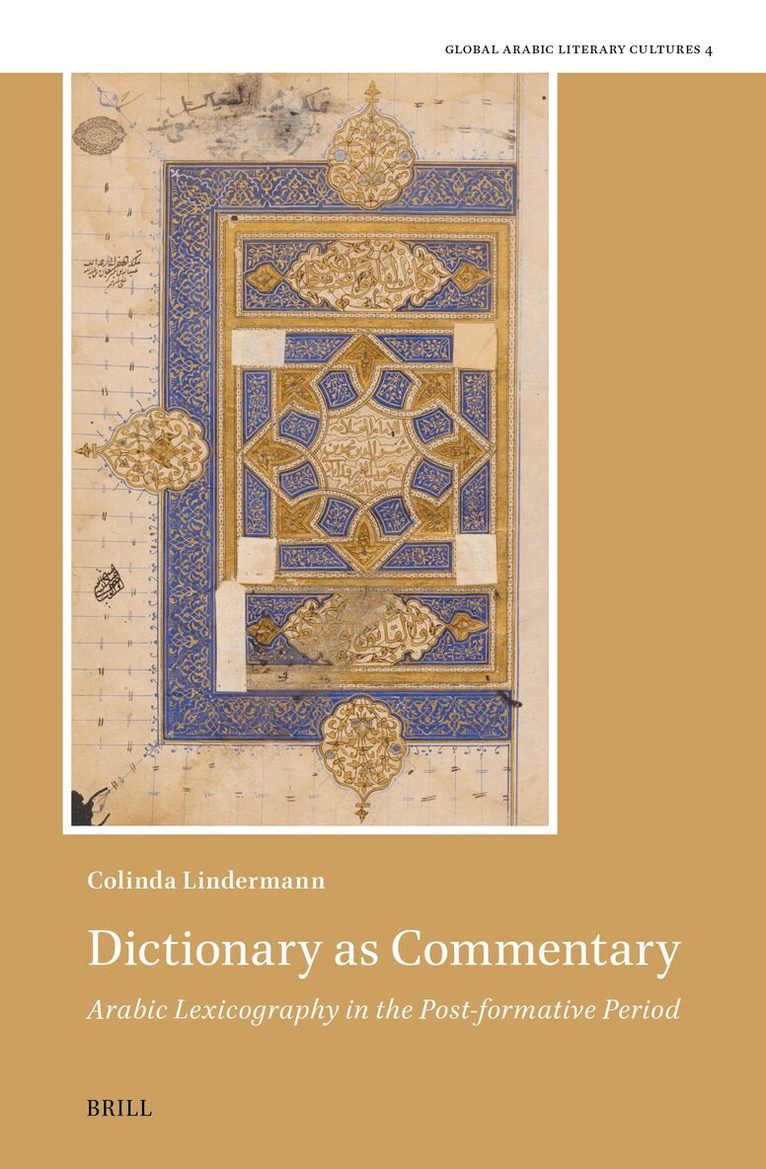
    Dictionary as Commentary - Arabic Lexicography in the Post-Formative Period

    AvColinda Lindermann

    Inbunden, Engelska, 2025

    Del 4 i serien Global Arabic Literary Cultures

    1 907 kr

    Beställningsvara. Skickas inom 3-6 vardagar. Fri frakt över 249 kr.

    Beskrivning

    This is the first book-length study of Arabic lexicography in the post-formative period (ca. 1200-1800). It provides a window into the dynamics of the discipline and the intellectual debates that unfolded in the study of the Arabic language. With a focus on speech errors and loanwords, the author explains how scholars integrated new language phenomena into tradition. By reading the dictionary as a form of commentary that departs from its master text to expand and challenge its content, this book offers a new understanding of the vibrant field of Arabic lexicography and commentary culture at large.

    Produktinformation

    • Utgivningsdatum:2025-07-24
    • Mått:155 x 235 x 17 mm
    • Vikt:455 g
    • Format:Inbunden
    • Språk:Engelska
    • Serie:Global Arabic Literary Cultures
    • Antal sidor:184
    • Förlag:Brill
    • ISBN:9789004729018

    Utforska kategorier

    • Språkvetenskap och lingvistik inom Språk och ordböcker
    • Dramatik inom Skönlitteratur
    • Litteraturvetenskap inom Skönlitteratur

    Mer om författaren

    Colinda Lindermann (Dr. phil., Freie Universität Berlin, 2025) works as a postdoctoral researcher at Ghent University, Belgium. Her research interests include Islamic intellectual history and history of knowledge, Arabic language scholarship and comparative philology, and pre-Islamic poetry.

    Innehållsförteckning

    • AcknowledgementsList of FiguresNote on Transliteration and TranslationIntroduction: From Legend to Discipline1 The Return to Philology2 The End of the Formative Period3 Aspects of adab4 The Boundaries of Language in the Post-formative Period1 The Dictionary as a Commentary1 The Commentary Tradition2 How to Invite Commentary3 A Focus on ḥadīth4 Conclusion2 Anthologies of Errors: Laḥn al-ʿāmma in the Post-formative Period1 Laḥn al-ʿāmma in the Post-formative Period2 A Genre of Its Own: Engagement with al-Ḥarīrī’s Durrat al-ghawwāṣ3 From the Classic to the Contemporary: ghalaṭ mashhūr4 Benevolent Approaches to laḥn5 Conclusion3 The Social Life of Loanwords: Five Hundred Years of taʿrīb1 Taʿrīb Historically2 From al-Jawālīqī to al-Muḥibbī: Loanwords in the Post-formative Period3 Loanwords as Pretext4 ConclusionConclusionAbstract — ملخصBibliographyIndex of Names and WorksIndex of Subjects and Terms