• Fri frakt över 249 kr
  • •
  • Snabba leveranser
  • •
  • Billiga böcker
Kundservice

Du är på sajten för privatpersoner.

Företag, bibliotek eller offentlig verksamhet?

Du handlar på classic.bokus.com, där alla dina funktioner finns intakta.
Till classic.bokus.com
Bokus logotyp. Gå till startsidan.
  • Erbjudanden
  • Nyheter
  • Student
  • Topplistor
  • Barn & ungdom
  • Bokus Play
  • E-böcker
  • Pocketböcker
  • Spel & pussel

10% rabatt på allt med kod: NYSTART10 →

Sidfot

Mina sidor

    Hjälp

    • Kundservice
    • Vanliga frågor och svar
    • Frakt och leverans
    • Retur vid ångerrätt
    • Reklamera vara
    • Betalning
    • Köpvillkor
    • Allmänna villkor
    • Information om webbplatsens tillgänglighet

    Om Bokus

    • Om oss
    • Pressrum
    • För studenter
    • För företag
    • För bibliotek och offentlig verksamhet
    • För leverantörer
    • Hållbarhet

    Populärt

    • Aktuella erbjudanden
    • Presentkort
    • Studentlitteratur
    • Nya böcker
    • Topplistor
    • Signerade böcker
    • Engelska böcker

    Inspiration

    • Boktips
    • BookTok
    • Populära bokserier
    • Barnbokskaraktärer
    • Populära författare
    Logotyp för Bokus
    Följ oss på Facebook (extern länk)Följ oss på Instagram (extern länk)Följ oss på YouTube (extern länk)Följ oss på TikTok (extern länk)
    bokus @ CookiesAnpassa cookiesIntegritetspolicyKöpvillkor
    Till Citymail hemsida (extern länk)Till Budbee hemsida (extern länk)Till Postnord hemsida (extern länk)Till Schenker hemsida (extern länk)Till Early Bird hemsida (extern länk)Till Walleys hemsida (extern länk)
    1. Historia och arkeologi
    2. Historia

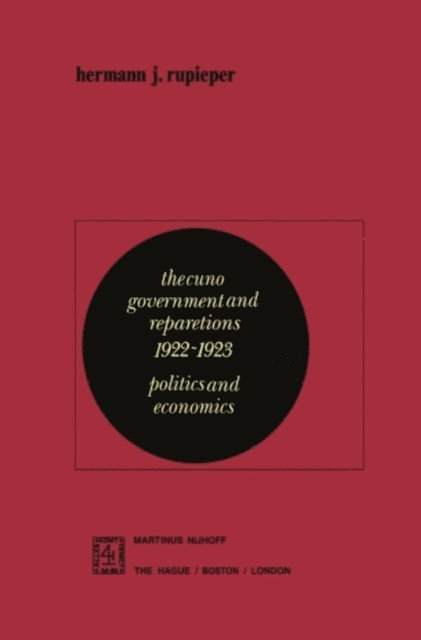
    Cuno Government and Reparations 1922–1923

    Politics and Economics

    AvH.J. Rupieper

    Häftad, Engelska, 1979

    Del i serien Studies in Contemporary History

    1 674 kr

    Beställningsvara. Skickas inom 10-15 vardagar. Fri frakt över 249 kr.

    Fler format och utgåvor

    E-bok

    2 105 kr

    Beskrivning

    When the First World War ended, the political and economic system of prewar Europe lay in ruins. Though Allied politicians tried at various post­ war conferences to create a new and stable European order they failed because of conflicting and competing national interests. The peace settle­ ments neither established security from renewed attacks by the defeated nations nor did they lay the groundwork for a reconstruction of Europe's devastated economic system, because the members of the Allied war coali­ tion could not agree on the goals to be pursued by the treaties or on the means to enforce their settlement. In this context, reparations played a most signi­ ficant role. The conflict between the European protagonists France, Great Britain and Germany reached its peak at the beginning of 1923 when Franco­ Belgian troops occupied the Ruhr district in a last attempt to implement strategies developed in 1919 for a control ofthe German economic potential until reparations had been paid and to show to the Anglo-Saxon powers that any modification of Allied policy toward Germany could not be attained against French objections or without a simultaneous adjustment of French war debts. By focusing on the reparation issue during the period of the Cuno Cabinet, this book attempts to contribute both to the literature on Cuno and to the interrelationship of political and economic problems after W orId War I.

    Produktinformation

    • Utgivningsdatum:1979-02-28
    • Mått:155 x 235 x 17 mm
    • Vikt:464 g
    • Format:Häftad
    • Språk:Engelska
    • Serie:Studies in Contemporary History
    • Antal sidor:290
    • Upplaga:1979
    • Förlag:Springer
    • ISBN:9789024721146

    Utforska kategorier

    • Historia inom Historia och arkeologi

    Innehållsförteckning

    • Introduction: International Aspects of Reparations 1919–1922.- I. The Formation of the Cuno Government.- II. German Industry and Reparations.- 1. The Rdl Program of 1922.- 2. German Feelers in Paris.- 3. The London Conference.- 4. The Reparation Commission before the Occupation.- 5. Cuno and Industry.- 6. The Proposal for a Non-Aggression Pact.- 7. The German Offer and the Allied Meeting.- III. France before the Occupation.- 1. French Preparations for Occupation.- 2. The Ruhr Committee.- 3. French Strategies at the End of 1922.- IV. Problems of Passive Resistance.- 1. Reactions to the Occupation.- 2. The Organization of Resistance.- 3. Preliminary “Stabilization” of the Currency.- 4. The Economic War 1923.- 5. British and American Attitudes.- 6. French Reactions to Passive Resistance.- V. Diplomatic Interludes.- 1. German Feelers in Washington and London.- 2. The Loucheur Mission.- 3. Parliamentary Discussions in Germany.- 4. The Meeting of the International Chamber of Commerce in Rome.- 5. Private Initiatives of German Industry.- 6. Preparations for the German Note of May 2.- 7. New Reparation Plans.- 8. John F. Dulles as Mediator.- VI. Financial Chaos and the Resignation of Cuno.- 1. Party Attitudes towards Taxation.- 2. Financial Alternatives in the Summer of 1923.- 3. Stabilization Plans.- 4. The Resignation of the Cabinet.- VII. The Return of Coalition Diplomacy.- 1. British Preparations.- 2. The New Opponents: Stresemann and Poincaré.- 3. The Creation of the Dawes Committee.- 4. The End of Coercion.- Conclusions.