• Fri frakt över 249 kr
  • •
  • Snabba leveranser
  • •
  • Billiga böcker
Kundservice

Du är på sajten för privatpersoner.

Företag, bibliotek eller offentlig verksamhet?

Du handlar på classic.bokus.com, där alla dina funktioner finns intakta.
Till classic.bokus.com
Bokus logotyp. Gå till startsidan.
  • Erbjudanden
  • Nyheter
  • Student
  • Topplistor
  • Barn & ungdom
  • Bokus Play
  • E-böcker
  • Pocketböcker
  • Spel & pussel

10% studentrabatt med kod TERM26

Sidfot

Mina sidor

    Hjälp

    • Kundservice
    • Vanliga frågor och svar
    • Frakt och leverans
    • Retur vid ångerrätt
    • Reklamera vara
    • Betalning
    • Köpvillkor
    • Allmänna villkor
    • Information om webbplatsens tillgänglighet

    Om Bokus

    • Om oss
    • Pressrum
    • För studenter
    • För företag
    • För bibliotek och offentlig verksamhet
    • För leverantörer
    • Hållbarhet

    Populärt

    • Aktuella erbjudanden
    • Presentkort
    • Studentlitteratur
    • Nya böcker
    • Topplistor
    • Signerade böcker
    • Engelska böcker

    Inspiration

    • Boktips
    • BookTok
    • Populära bokserier
    • Barnbokskaraktärer
    • Populära författare
    Logotyp för Bokus
    Följ oss på Facebook (extern länk)Följ oss på Instagram (extern länk)Följ oss på YouTube (extern länk)Följ oss på TikTok (extern länk)
    bokus @ CookiesAnpassa cookiesIntegritetspolicyKöpvillkor
    Till Citymail hemsida (extern länk)Till Budbee hemsida (extern länk)Till Postnord hemsida (extern länk)Till Schenker hemsida (extern länk)Till Early Bird hemsida (extern länk)Till Walleys hemsida (extern länk)
    1. Kultur
    2. Arkitektur

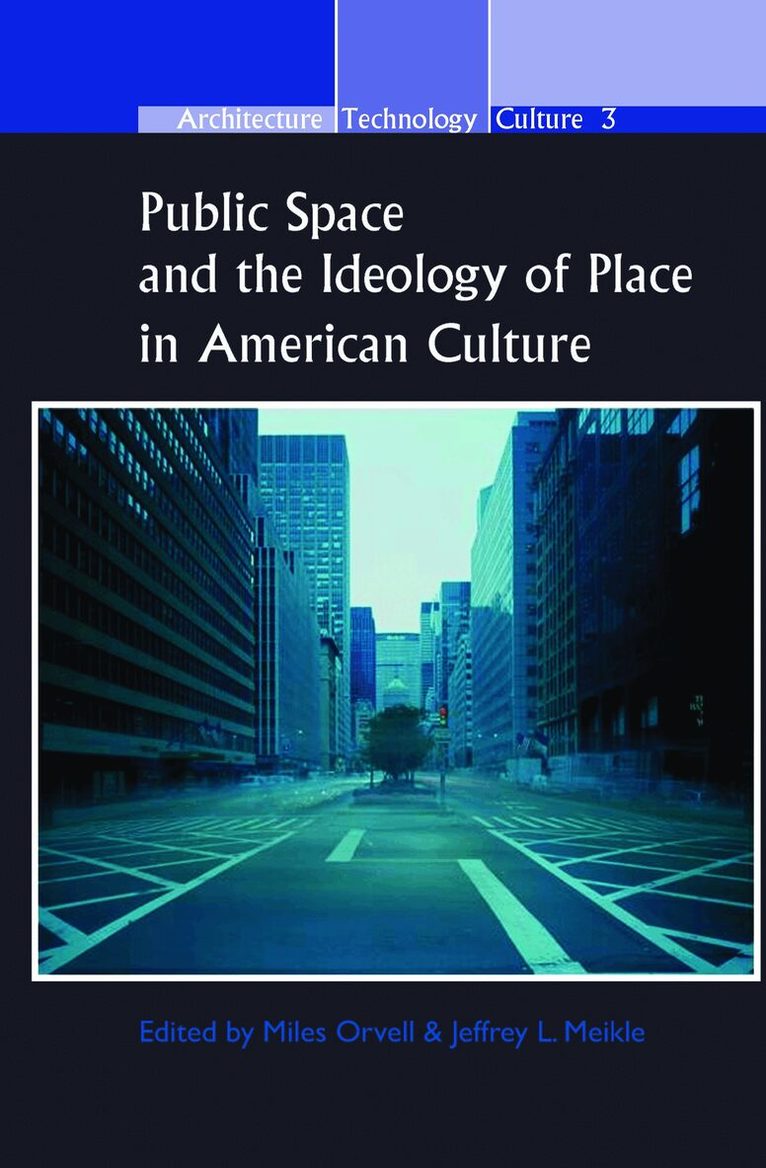
    Public Space and the Ideology of Place in American Culture

    Inbunden, Engelska, 2009

    Del 3 i serien Architecture – Technology – Culture

    2 511 kr

    Beställningsvara. Skickas inom 5-8 vardagar. Fri frakt över 249 kr.

    Beskrivning

    We typically take public space for granted, as if it has continuously been there, yet public space has always been the expression of the will of some agency (person or institution) who names the space, gives it purpose, and monitors its existence. And often its use has been contested. These new essays, written for this volume, approach public space through several key questions: Who has the right to define public space? How do such places generate and sustain symbolic meaning? Is public space unchanging, or is it subject to our subjective perception? Do we, given the public nature of public space, have the right to subvert it? These eighteen essays, including several case studies, offer convincing evidence of a spatial turn in American studies. They argue for a re-visioning of American culture as a history of place-making and the instantiation of meaning in structures, boundaries, and spatial configurations. Chronologically the subjects range from Pierre L’Enfant’s initial majestic conceptualization of Washington, D.C. to the post-modern realization that public space in the U.S. is increasingly a matter of waste. Topics range from parks to cities to small towns, from open-air museums to airports, encompassing the commercial marketing of place as well as the subversion and re-possession of public space by the disenfranchised. Ultimately, public space is variously imagined as the site of social and political contestation and of aesthetic change.

    Produktinformation

    • Utgivningsdatum:2009-01-01
    • Mått:155 x 235 x 38 mm
    • Vikt:890 g
    • Format:Inbunden
    • Språk:Engelska
    • Serie:Architecture – Technology – Culture
    • Antal sidor:460
    • Förlag:Brill
    • ISBN:9789042025745

    Utforska kategorier

    • Arkitektur inom Kultur
    • Kulturvetenskap inom Samhälle och politik

    Innehållsförteckning

    • Miles ORVELL & Jeffrey L. MEIKLE: IntroductionPart One: Public Space as SymbolAnna MINTA: Planning a National Pantheon: Monuments in Washington, D.C., and the Creation of Symbolic SpaceJohn F. SEARS: ‘How the Devil It Got There’: The Politics of Form and Function in the Smithsonian ‘Castle’Torben Huus LARSEN: The Museum of Appalachia and the Invention of an Idyllic PastMiles ORVELL: Constructing Main Street: Utopia and the Imagined PastJeffrey L. MEIKLE: Pasteboard Views: Idealizing Public Space in American Postcards, 1931–1953Part Two: Contesting Public Space Nadine KLOPFER: ‘Terra Incognita’ in the Heart of the City? Montreal and Mount Royal around 1900Peter B. HALES: Grid, Regulation, Desire Line: Contests Over Civic Space in ChicagoLaura LAWSON: The Precarious Nature of Semi-Public Space: Community Garden Appeal, Complacency, and Implications for Sustaining User-Initiated PlacesKay F. EDGE: Buy, Sell, Roam: The Airport Calculus of RetailBryant SIMON: Consuming Third Place: Starbucks and the Illusion of Public SpaceRickie SANDERS: The Public Space of Urban CommunitiesPart Three: The Mutability of Public SpaceEric J. SANDEEN: Walking the High LineKerstin SCHMIDT: The Search for a Democratic Architecture: A New Sense of Space and the Reconfiguration of American ArchitectureTimothy DAVIS: Designed Space vs. Social Space: Intention and Appropriation in an American Urban ParkDavid E. NYE: Public Space Transformed: New York’s BlackoutsSarah LURIA: Air and SpaceAndrew S. GROSS: Imagining the Interstate: Henry Miller, Post-Tourism, and the Disappearance of American PlaceKlaus BENESCH: Writing Grounds: Ecocriticism, Dumping Sites, and the Place of Literature in a Posthuman Age